
African Sanctus — David Fanshawe's choral work blending Mass and African field recordings
African Sanctus (1972) by David Fanshawe juxtaposes the Latin Mass with field recordings made along the Nile, scored for choir, soloists, orchestra and prerecorded tape.
African Sanctus is a large-scale choral work by British composer David Fanshawe, completed in 1972. It sets sections of the traditional Latin Mass against a continuous backdrop of field recordings Fanshawe made on journeys along the Nile between 1969 and 1973. The score calls for an SATB choir, soloists, full orchestra and a prerecorded tape that plays recordings of indigenous songs and rituals; these live and recorded elements are woven together to create contrasting textures and a cross-cultural sound world.
Image gallery
1 Image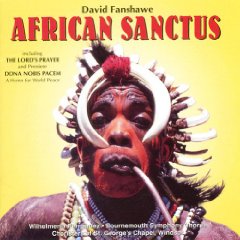
Structure and musical characteristics
The composition interleaves sung Mass texts—such as the Kyrie, Gloria, Sanctus and Agnus Dei—with recorded African vocal and instrumental material. Rather than presenting the Mass as a single continuous liturgy, Fanshawe alternates or superimposes fragments of Latin liturgical text and Western choral writing with field-recorded music from different communities. The prerecorded tape is treated as a fixed musical layer; the choir and orchestra interact with, respond to and sometimes imitate the rhythms and timbres of the recordings, producing deliberate juxtapositions of style and language.
Origins and fieldwork
Fanshawe conceived African Sanctus after extended travels up the Nile, during which he made numerous tape recordings of local singing and instrumental performance. He described the route of his journey as forming the shape of a cross, an image that held significance for him as he brought together Christian liturgical material and African traditions. Recordings incorporated into the work were captured in Egypt, the Sudan, Uganda and Kenya and represented many musical practices that had rarely been documented at the time.
Premiere, recordings and reception
The work was first performed in London in July 1972 by the Saltarello Choir. It later reached wider audiences through radio broadcasts and a documentary film that followed the composition and performance process. African Sanctus became Fanshawe's best-known piece: praised for its immediacy and inventive pairing of sources, it also prompted discussion about context, authorship and the ethics of using field recordings in concert works. Over the decades it has been performed by amateur and professional choirs worldwide and remains a striking example of cross-cultural composition.
Forces, movements and notable facts
- Forces: SATB chorus, soloists, orchestra and prerecorded tape (choir, soloists, orchestra, tape).
- Field recordings sourced from Egypt, the Sudan, Uganda and Kenya.
- First performed in London (July 1972); later broadcast on BBC Radio on United Nations Day.
- Originally titled African Revelations before being renamed African Sanctus.
Fanshawe's method—recording people singing in situ and incorporating those recordings unchanged into concert works—encouraged listeners to hear diverse musical practices within a Western concert setting. Those interested in further detail, score availability, archival recordings or critical commentary can consult specialist resources and recordings listed below.
Further resources
- Background on Fanshawe's Nile journeys
- The cross-shaped route and its significance
- Fanshawe's biography and British context
- Information on the Christian Mass texts used
- Overview of the Latin Mass
- Details for choral parts and performance
- Guidance on soloist roles
- Orchestral scoring notes
- Discussion of the prerecorded tape element
- Recordings from Egypt
- Recordings from the Sudan
- Recordings from Uganda
- Recordings from Kenya
- Premiere and performance history
- Broadcast history and documentary references
Questions and answers
Q: What is African Sanctus?
A: African Sanctus is a musical composition for choir, soloists, orchestra and prerecorded tape by David Fanshawe.
Q: When was African Sanctus composed?
A: African Sanctus was composed in 1972.
Q: What is the religious meaning of the shape of Fanshawe's journey?
A: The shape of Fanshawe's journey forms the shape of a cross, which had a religious meaning for him.
Q: What did Fanshawe record on tape during his journeys to Africa?
A: Fanshawe recorded people singing their traditional music on tape during his journeys to Africa.
Q: Where were the recordings for African Sanctus made?
A: The recordings for African Sanctus were made in Egypt, the Sudan, Uganda and Kenya.
Q: What was the original title of African Sanctus?
A: The original title of African Sanctus was African Revelations.
Q: When was African Sanctus first performed and where?
A: African Sanctus was first performed in London by the Saltarello Choir in July 1972.
Tags
Related articles
Author
AlegsaOnline.com African Sanctus — David Fanshawe's choral work blending Mass and African field recordings Leandro Alegsa
URL: https://en.alegsaonline.com/art/1274