
Aida (opera)
Aida, an Italian opera by Giuseppe Verdi premiered in Cairo in 1871. A grand four-act drama set in ancient Egypt, celebrated for its choruses, pageantry and powerful arias.
Overview
Aida is an Italian-language opera in four acts composed by Giuseppe Verdi. The work combines intimate emotional scenes with large-scale ceremonial music and has become a staple of the international operatic repertoire. Its story of love, loyalty and conflict is presented through Verdi's rich orchestration and memorable vocal lines. The piece is commonly referred to simply as Aida, the name of its central character, and remains one of Verdi's most performed stage works.
Image gallery
10 Images


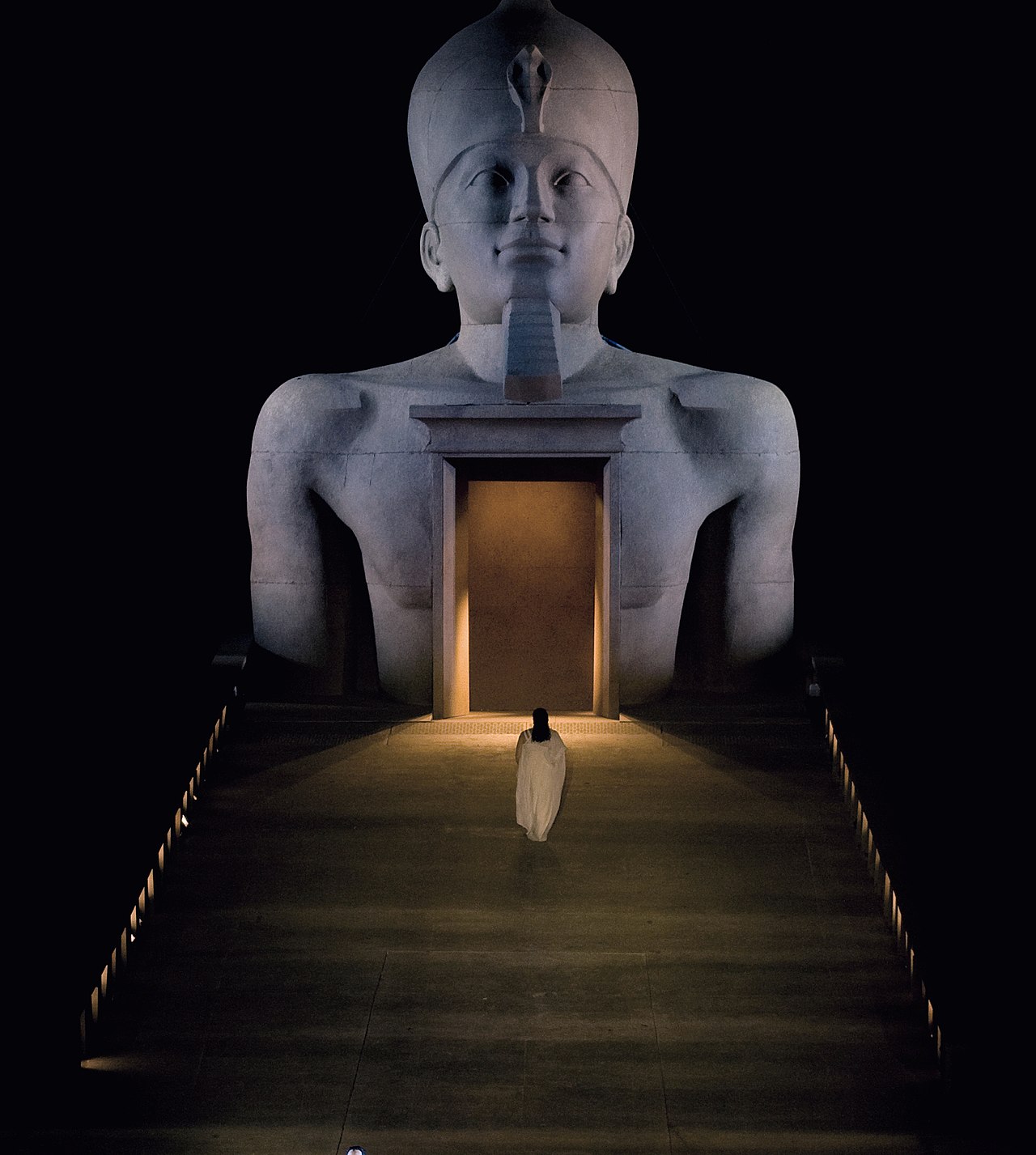
Origins and creators
The drama was the product of a collaboration between Verdi and his librettist Antonio Ghislanzoni, who supplied the opera's text. The narrative is adapted from an outline by the French Egyptologist Auguste Mariette, and the finished libretto frames the plot in the realm of ancient Egypt and neighboring Ethiopia. Commissioned for performance in Egypt, the premiere took place at the Khedivial Opera House in Cairo on December 24, 1871.
Plot and principal characters
The opera follows Aida, an Ethiopian princess held captive in Egypt, who is secretly in love with the Egyptian commander Radamès. Their relationship is threatened by political rivalry and by Amneris, the Egyptian king's daughter, who also loves Radamès. Amonasro, Aida's father and the Ethiopian king, plays a crucial role when the conflict between the two nations escalates. The drama moves between private, emotional scenes and public, ceremonial tableaux.
- Aida — enslaved Ethiopian princess
- Radamès — Egyptian military leader
- Amneris — Egyptian princess
- Amonasro — King of Ethiopia
Music, style and highlights
Musically, Aida mixes lyric arias, tense ensembles and large choral and orchestral scenes. It contains famous numbers such as Radamès's opening aria, which introduces his yearning for glory and love, and the spectacular "Triumphal March," a scene of public celebration that showcases Verdi's gift for theatrical spectacle. The score requires significant forces—soloists, chorus and often a ballet—making productions ambitious and visually striking.
Performance history and reception
Since its first staging, which featured singers Antonietta Anastasi-Pozzoni, Pietro Mongini, Eleonora Grossi and Francesco Seller, Aida has been a mainstay of opera houses worldwide. Its mix of intimate tragedy and grand pageantry has ensured frequent revivals for both traditional and modern stagings. Directors often emphasize its themes of cultural encounter, loyalty and sacrifice when mounting new productions.
Notable facts and cultural notes
The name "Aida" (pronounced "ah-EE-dah") belongs to the title character and is thought to derive from an Arabic-rooted girl's name meaning "visitor" or "returning"; this linguistic connection is sometimes noted in program notes and commentary about the role. For background reading on the genre and the work's place in Verdi's output, see discussions of 19th-century Italian opera and studies of the composer. The opera's librettistic genesis from a French Egyptologist's tale and its Egyptian setting have contributed to scholarly interest in orientalist themes in European art—topics explored in musical, historic and cultural studies (story source, linguistic notes, name meaning).
Because of its visual demands and large casts, Aida often appears at major festivals and in gala productions. It remains a touchstone for performers and audiences alike, demonstrating Verdi's ability to balance private emotion with monumental public spectacle.
Questions and answers
Q: Who wrote the music for Aida?
A: Giuseppe Verdi wrote the music for Aida.
Q: What is Aida?
A: Aida is an Italian opera in four acts.
Q: Who wrote the libretto for Aida?
A: Antonio Ghislanzoni wrote the libretto for Aida.
Q: When was Aida first performed?
A: Aida was first performed at the Opera House in Cairo on December 24, 1871.
Q: Who were the main cast members in the production of Aida?
A: The main cast members in the production of Aida were Antonietta Anastasi-Pozzoni as Aida, Pietro Mongini as Radames, Eleonora Grossi as Amneris, and Francesco Seller as Amonasro.
Q: What is the meaning of the name Aida?
A: Aida is an Arabic girl's name meaning "visitor" or "returning".
Q: Who wrote the story that Aida is based on?
A: Aida is based on a story written by the French Egyptologist Auguste Mariette.
Tags
Related articles
Author
AlegsaOnline.com Aida (opera) Leandro Alegsa
URL: https://en.alegsaonline.com/art/1529