
Great Britain (island in the North Atlantic)
Great Britain is the largest island in the British Isles, containing England, Scotland and Wales; this article summarizes its geography, geology, climate, history, political status and common naming confusions.
Great Britain is the largest island in the British Isles and the biggest island in Europe. It lies off the north‑west coast of continental Europe between the North Atlantic and the North Sea. The landmass commonly called Great Britain comprises three historic and modern countries—England, Scotland and Wales—and has shaped much of the region's physical geography, human settlement and cultural history.
Image gallery
10 Images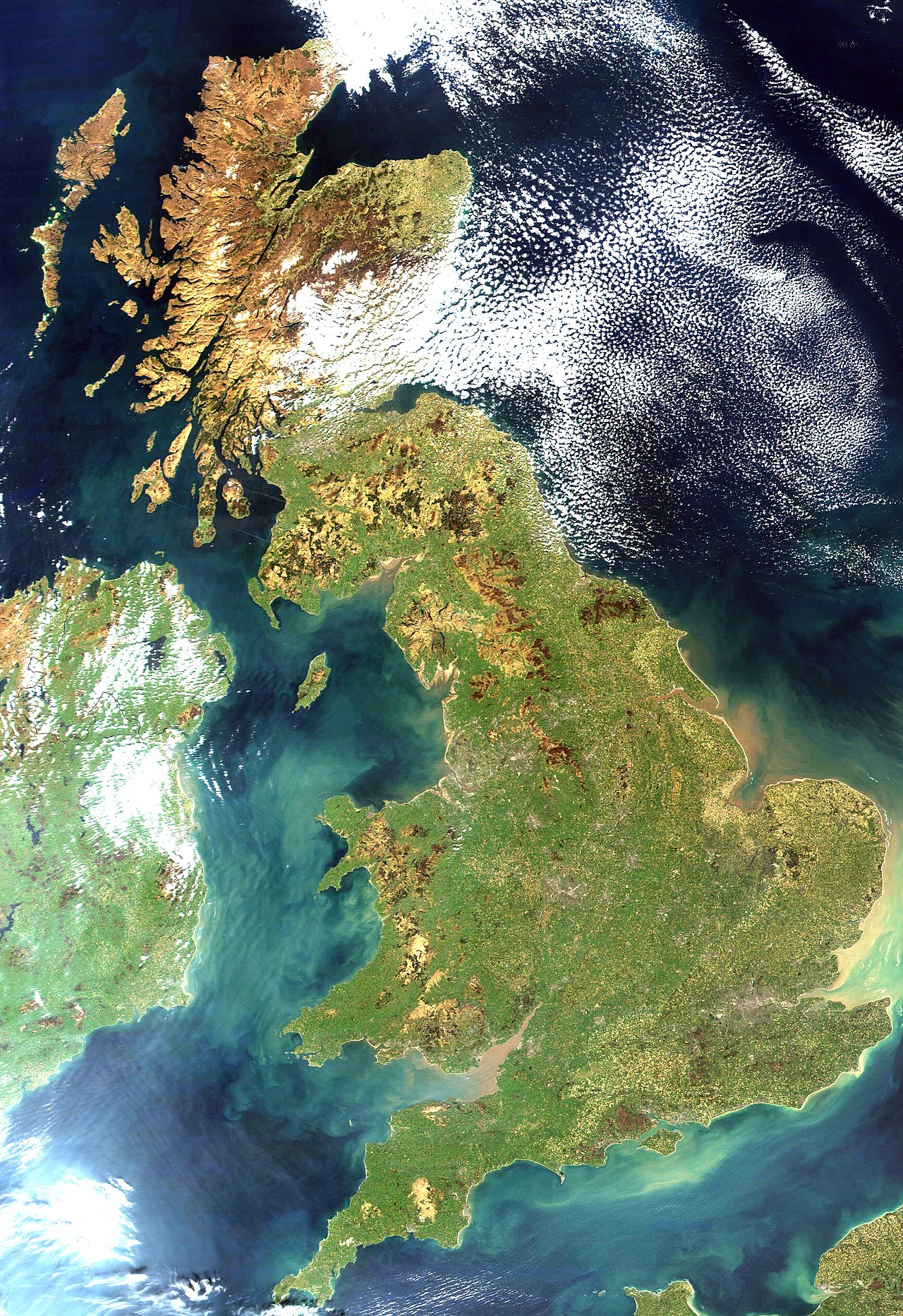


Geography and landscapes
The island stretches predominantly north–south and presents a wide variety of landscapes. Lowland plains and river valleys dominate much of eastern and central England, while the north and west are characterised by upland and mountain regions. Major upland areas include the Scottish Highlands and the Pennines in northern England, together with the mountainous regions of Wales such as Snowdonia. The highest point on the island is Ben Nevis in Scotland. Coastlines are irregular and indented by bays, estuaries and peninsulas, producing rich marine margins and significant natural harbours.
Geology and climate
Geologically, Great Britain has an ancient and complex structure. The oldest rocks appear in the north and west and were shaped by repeated mountain‑building events and glaciations; younger sedimentary rocks underlie much of the lowland east and south. The island's climate is temperate maritime: weather is influenced by oceanic air masses and the Gulf Stream, producing mild winters and cool summers compared with continental areas at similar latitudes. Local variation in rainfall and temperature is marked by altitude and exposure to prevailing winds.
Rivers, coasts and islands
Rivers have been crucial to settlement, transport and industry. Major rivers that rise and flow across the island include the Thames, the Severn and the Clyde; their estuaries have long supported ports and trade. Surrounding seas include the Irish Sea to the west, the English Channel to the south and the North Sea to the east. Numerous smaller islands and archipelagos lie off Great Britain’s coasts, contributing to marine biodiversity and local economies.
Flora, fauna and conservation
Habitats across the island range from upland heaths and moors to lowland woodlands and coastal saltmarshes. Native species and human‑influenced landscapes have produced distinctive ecological communities. There are many protected areas and national parks—examples include the Lake District, the Peak District, Snowdonia and the Cairngorms—established to conserve landscape, wildlife and cultural heritage while supporting recreation and tourism.
Population, cities and economy
Great Britain is home to the majority of the population of the United Kingdom. Urban centres are concentrated in several regions: London is the largest city and the country's principal economic, political and cultural centre, while other major cities include Birmingham, Manchester, Liverpool, Leeds, Glasgow, and Edinburgh. Historically the island was the birthplace of the Industrial Revolution, and its economy today is diverse, with strong services sectors (finance, education, creative industries), manufacturing, and regional variations in prosperity.
Transport and connections
Transport networks link towns and cities by road and rail, and there are busy ports and airports providing internal and international connections. A fixed rail link beneath the English Channel, commonly called the Channel Tunnel, provides direct rail connections to continental Europe. Ferry services cross the Irish Sea and other channels to neighbouring islands and ports.
Political composition and governance
Great Britain is a geographic island, not a sovereign state. Three of the United Kingdom's constituent countries occupy most of the island: England covers a large central and southern area; Scotland occupies the northern third; and Wales lies to the west. The island is therefore central to the political organisation of the United Kingdom of Great Britain and Northern Ireland. Devolved governments in Scotland and Wales exercise powers in a range of domestic areas, while the UK Parliament at Westminster retains reserved matters for the whole state.
History and cultural influence
The island's human history includes prehistoric settlement, Roman administration in part of the island, the period of Anglo‑Saxon and Norse influence in the east and north, and the Norman conquest of large areas in the medieval period. Over centuries Great Britain became a centre of global trade and industrial innovation, and its languages, institutions and legal traditions have had broad international influence. Political unions in the early modern period brought England and Scotland together into a single kingdom, later extended in different forms to include other parts of the islands.
Name, usage and common confusions
Terminology can be confusing. "Great Britain" strictly denotes the island containing England, Scotland and Wales. The "United Kingdom" is the sovereign state that includes Northern Ireland as well as the three countries on Great Britain. The "British Isles" is a geographical term for the whole archipelago that includes Ireland and many smaller islands. Because these names overlap in everyday use, care is often needed to avoid misunderstanding or offence—people from Northern Ireland or other territories may object when the state is called simply "Great Britain."
Neighbours and maritime context
Great Britain is close to the island of Ireland to the west and lies across short sea passages from continental Europe to the south and east. Across the English Channel are the coasts of France, and across the North Sea are low countries and other European states. Maritime routes, fisheries and shared environmental issues make the surrounding seas important for trade, security and cooperation with neighbouring states.
Further reading and reference links
- Great Britain (the island)
- Northwest Atlantic
- North Atlantic Ocean
- British Isles (archipelago)
- Europe (continent)
- Coastal position
- Continental Europe
- Ireland (to the west)
- Ireland (island)
- Irish Sea
- English Channel
- Southern approaches
- France (across the Channel)
- North Sea
- Eastern approaches
- Belgium (across the North Sea)
- Netherlands
- Germany
- Denmark
- Norway
- United Kingdom (state)
- Sovereign state
- Countries of the UK
- England
- Scotland
- Wales
- Capital city: London
- Northern regions
- Historical use: Great Britain (state name)
- Acts of Union 1707
- Republic of Ireland
- Present-day naming conventions
Questions and answers
Q: What is Great Britain?
A: Great Britain is an island in the north-west Atlantic Ocean, one of the British Isles. It is the biggest European island, off the coast of Continental Europe.
Q: What countries are located to the west and south of Great Britain?
A: To the west of Great Britain is Ireland, across the Irish Sea. Across the English Channel to the south of Great Britain is France.
Q: What countries are located to east of Great Britain?
A: Across the North Sea to the east are Belgium, The Netherlands, Germany, Denmark and Norway.
Q: What other names does this area have?
A: Together with many other smaller islands, Great Britain and Ireland have been given collective name British Isles. The United Kingdom also shares its name with this island - 'Britain'.
Q: Which three countries make up most of Great Britain?
A: Three of United Kingdom's countries are mostly on Great Britain - England, Scotland and Wales.
Q:What is London's role in relation to this area?
A:London is both capital city for United Kingdom as well as England which makes it a major hub for all activities related to these areas.
Q:When did 'Great Britain' become part of official name for UK ?
A:The name 'Great Britian' was used between Acts Of Union 1707 and Act Of Union 1800 when it became part of official name for United Kingdom .
Tags
Related articles
Author
AlegsaOnline.com Great Britain (island in the North Atlantic) Leandro Alegsa
URL: https://en.alegsaonline.com/art/40472
Sources
- direct.gov.uk : "Key facts about the United Kingdom"
- books.google.com : Bareboat Charter (ship) Registration
- xe.com : "GBP Currency Information"