
Dniester River: course, history, ecology and human uses
The Dniester is a major Eastern European river rising in the Carpathians, flowing through Ukraine, Moldova and Transnistria to the Black Sea. Overview, course, ecology, history and contemporary issues.
Overview
The Dniester is one of Eastern Europe's principal rivers. It rises on the northern slopes of the Carpathian Mountains and runs generally southeast to the Black Sea. The river drains a large basin shared by Ukraine and Moldova and passes through the internationally sensitive region of Transnistria. In its lower reaches it forms a notable estuary before entering the Black Sea.
Image gallery
8 Images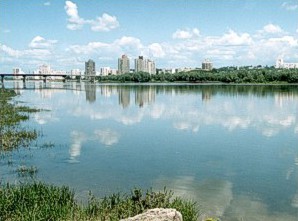


Course and main features
From headwaters in the Carpathians the river flows through uplands, broad valleys and a wide coastal plain. It travels across differing geology and climates, producing a mix of fast mountain streams in the upper basin and slower meandering sections downstream. The lower Dniester broadens into marshes and lagoons near the mouth.
- Source region: northern Carpathians — the river begins in a mountainous, forested area and gathers numerous mountain streams.
- Countries crossed: major parts of the watershed lie in Ukraine and Moldova, and the river flows along or through the breakaway region of Transnistria.
- Mouth: opens into the Black Sea via an estuarine delta adjacent to coastal Ukraine and the city of Bilhorod-Dnistrovskyi.
Tributaries, towns and navigation
The Dniester receives a number of tributaries along its length, including rivers known locally for feeding agricultural plains and wetlands. Notable population centers on or near the Dniester include urban and historic towns such as Tiraspol and Bender in Transnistria and several Ukrainian riverside towns. Navigation is mainly important on the lower stretches and estuary; upper reaches are often too shallow or rapid for large vessels.
History and cultural significance
For centuries the river shaped settlement, trade routes and frontier lines in Eastern Europe. Its valley hosted fortresses, trading posts and farming communities. The Dniester has featured in regional folklore and literature and has served as a convenient natural boundary at different moments in history.
Ecology, uses and modern challenges
The river supports diverse habitats — forested headwaters, riparian woodlands, wetlands and coastal lagoons — and is important for fish, amphibians and migratory birds. Human uses include freshwater supply, irrigation, small-scale hydropower and fisheries. Contemporary issues include water quality pressures from agriculture and urban runoff, management of shared water resources between states, and habitat conservation. Where political boundaries complicate coordinated action, cooperative basin management and environmental monitoring are increasingly emphasized by scientists and planners.
Further reading and resources
Maps, detailed hydrological studies and conservation reports can provide in-depth information about river flow, seasonal variation and biodiversity. For general geographic summaries see an overview page on the Dniester and regional entries about the Carpathian source region. Additional regional or country-specific resources are available for Ukraine, Moldova and the Transnistrian area, while coastal and marine data appear in materials about the Black Sea.
For comparative river basins and further context consult thematic repositories and environmental organizations that monitor European rivers and freshwater ecosystems (overview).
Related articles
Author
AlegsaOnline.com Dniester River: course, history, ecology and human uses Leandro Alegsa
URL: https://en.alegsaonline.com/art/28080