
Carl Maria von Weber
German composer (1786–1826) whose operas and orchestral writing helped define early Romanticism; best known for Der Freischütz and for advancing the role of the orchestra and clarinet.
Overview
Carl Maria von Weber (1786–1826) was a central figure in early German Romantic music. He is best remembered as a pioneering opera composer whose stage works fused folk-inspired drama, atmosphere and vivid orchestration. Weber also produced influential instrumental pieces, particularly for the clarinet, and helped shape the development of German national opera in the decades before Wagner.
Image gallery
6 Images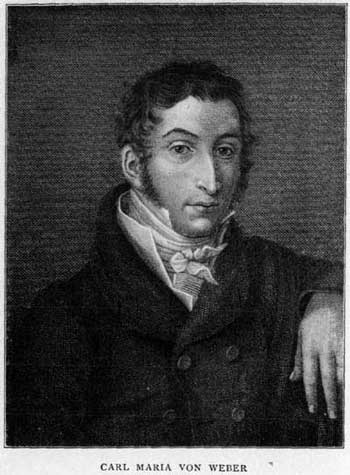


Life and career
Born in Eutin in northern Germany in 1786 and baptized shortly afterward, Weber grew up in a musical environment. He trained as a pianist and conductor, worked in a succession of provincial theaters, and by his thirties had secured important conducting posts, most notably in Dresden. His professional life combined composing, conducting, and music administration; travel and theatrical duties exposed him to the diverse operatic and orchestral practices of German-speaking Europe.
Major works and musical characteristics
Weber’s most famous operas are Der Freischütz, Euryanthe and Oberon. Der Freischütz (premiered 1821) established a template for German Romantic opera by mixing supernatural subjects, rustic settings and strongly characterized orchestral color. Weber’s instrumental output includes concert pieces, chamber works and several compositions that highlight the clarinet’s lyrical and technical possibilities. His orchestration is notable for transparent textures, imaginative timbral effects and a dramatic use of wind instruments.
Influence and legacy
Weber’s combination of national legend, theatrical pacing and orchestral imagination influenced later Romantic composers and helped legitimize opera sung in German. Composers and conductors who followed him adapted his approach to drama and orchestral color; his clarinet works remain central to that instrument’s repertoire. Though he died in London in 1826 shortly after the premiere of Oberon, his impact on 19th-century opera and orchestral practice persisted.
Selected works and further reading
- Operas: Der Freischütz, Euryanthe, Oberon.
- Instrumental: concert pieces and works for clarinet, orchestral overtures and incidental music.
- Learn more: birth and baptism records, early biographies, death and London, Oberon premiere, German Romanticism, composer catalogues, Der Freischütz analyses, Euryanthe sources, Oberon studies, clarinet repertoire, orchestration notes, performance histories.
Questions and answers
Q: Who was Carl Maria von Weber?
A: Carl Maria von Weber was a German composer of the early Romantic period, born in Eutin, Holstein.
Q: What types of music did Carl Maria von Weber compose?
A: Carl Maria von Weber composed many operas, instrumental music (especially for the clarinet), and music for orchestra.
Q: Which operas did Carl Maria von Weber write that are particularly well-known?
A: Carl Maria von Weber wrote several famous operas, including Der Freischütz, Euryanthe, and Oberon.
Q: Did Carl Maria von Weber have a special talent for writing music for any particular instrument?
A: Yes, Carl Maria von Weber had a particular talent for writing music for the clarinet.
Q: When was Carl Maria von Weber born and when did he die?
A: Carl Maria von Weber was born on November 20, 1786, and died on June 5, 1826.
Q: Where did Carl Maria von Weber die?
A: Carl Maria von Weber died in London.
Q: In what period did Carl Maria von Weber compose his music?
A: Carl Maria von Weber was a composer of the early Romantic period.
Related articles
Author
AlegsaOnline.com Carl Maria von Weber Leandro Alegsa
URL: https://en.alegsaonline.com/art/115993