
Claude Debussy
French composer (1862–1918) influential for his innovations in harmony, orchestration and piano writing; often associated with Impressionism and known for works like Prélude à l'après-midi d'un faune and Pelléas et Mélisande.
Overview
Achille-Claude Debussy (22 August 1862 – 25 March 1918) was a leading French composer whose music signaled a decisive shift away from many late-Romantic conventions toward new approaches to harmony, timbre and musical form. Born near Paris, he wrote extensively for the orchestra and for the piano, and his output also includes songs, chamber music and a single full-length opera. He is commonly associated with the term Impressionism, a label that reflects affinities with contemporary painting and poetry but that he and others treated with some caution.
Image gallery
10 Images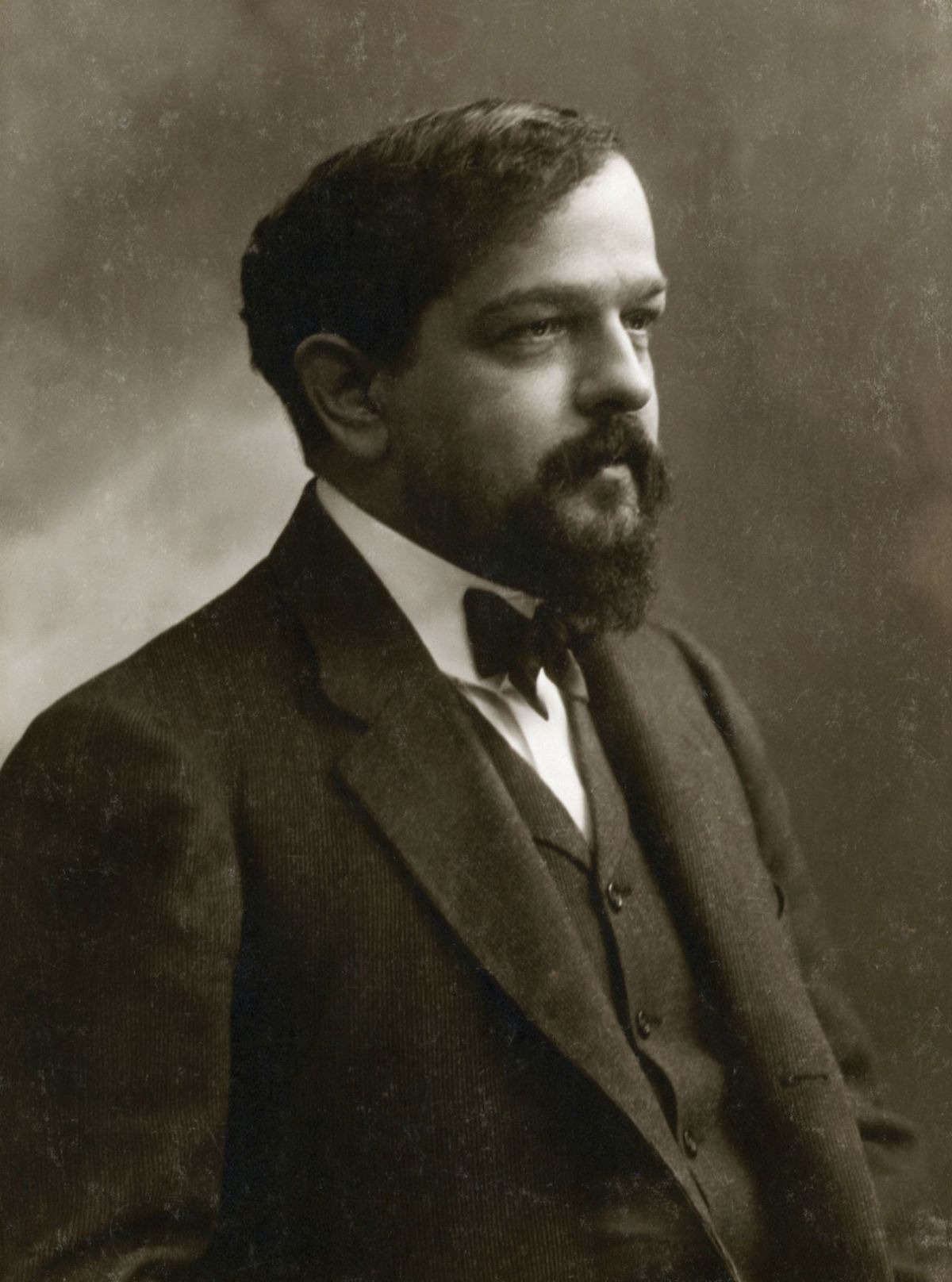


Early life and education
Debussy was born in Saint-Germain-en-Laye and entered the Paris Conservatoire as a child. He received a broad musical training and won the prestigious Prix de Rome in the 1880s, an award that brought both study opportunities and frustrations as he sought his own path. His early career included piano teaching, composition commissions and work as a critic and arranger while he developed a distinct musical voice.
Career and major works
Debussy's major orchestral works include Prélude à l'après-midi d'un faune, an orchestral poem that marked a turning point in orchestral color, and La Mer, a vivid study of the sea. His only completed opera, Pelléas et Mélisande, premiered in 1902 and is noted for its understated vocal lines and continuous orchestral atmosphere. For piano he composed highly influential cycles and short pieces such as the Préludes, selections from the Suite bergamasque (including Clair de Lune), Images and Children's Corner.
Musical style and techniques
Debussy expanded the harmonic vocabulary of Western music by using modal scales, the whole-tone and pentatonic scales, parallel chord movement and non-functional harmonic relationships to create shifting sonorities and colors. His treatment of rhythm and form tends to favor suggestion and fluidity over strict development; short, evocative episodes and carefully graded dynamics help to produce atmosphere rather than traditional teleology. He drew inspiration from literature and visual arts and is widely said to have been influenced by non-Western sounds he heard in public exhibitions and by contemporary painters who sought to capture fleeting effects such as sunlight on water.
Reception, influence and legacy
Debussy's innovations had a lasting impact on composers of the 20th century and beyond. His ideas about orchestral color and piano writing influenced later modernists, film and theatre composers, and pedagogues. Though often discussed in relation to the preceding Romantic tradition, his music opened fresh expressive possibilities and helped to redefine how composers thought about texture, harmony and form. Performers and listeners continue to study his scores and recordings, and his works remain central to standard concert and teaching repertories.
Context and further study
Debussy lived and worked mainly in and around Paris, where he took part in the cultural life of fin-de-siècle France and maintained connections with poets, painters and fellow musicians. For concise biographical introductions and curated catalogues of his works, readers can consult biographical overviews and reference lists (biographical overviews) and resources organized by medium for orchestra, piano, voice (songs) and chamber music. General histories that treat aesthetic movements and terminology also help to situate Debussy in relation to broader currents in art and music.
Selected works
- Prélude à l'après-midi d'un faune (orchestra)
- Pelléas et Mélisande (opera)
- La Mer (orchestra)
- Préludes, Book I & II (piano)
- Suite bergamasque (piano) — includes Clair de Lune
- Children's Corner (piano)
Notes
Debussy's reputation rests on a relatively compact but highly original body of work. Scholars continue to debate labels and influences, and many recordings and critical studies are available for those seeking deeper technical or historical analysis. Materials and curated collections cited here provide starting points for further exploration of his life and music.
Questions and answers
Q: Who was Achille-Claude Debussy?
A: Achille-Claude Debussy was a French composer of the early 20th century.
Q: What kind of music did Achille-Claude Debussy compose?
A: Achille-Claude Debussy composed mostly for orchestra or piano, but he also wrote some songs, chamber music, and one opera.
Q: How did Achille-Claude Debussy's music differ from that of other composers of his time?
A: Achille-Claude Debussy's music was very different from the Romantic style that other composers were using at the time.
Q: What is Achille-Claude Debussy often referred to as?
A: Achille-Claude Debussy is often referred to as an Impressionistic composer.
Q: What influenced Achille-Claude Debussy's music?
A: Achille-Claude Debussy was influenced by the group of painters called "Impressionists".
Q: What was the Impressionistic style of art?
A: The Impressionistic style of art was not so much interested in making their paintings look exactly like the real world, but preferred to paint things such as the effect of the sunlight shining on water.
Q: What special atmosphere did Achille-Claude Debussy's music create?
A: Achille-Claude Debussy's music creates a special atmosphere, much like the Impressionists' paintings, by focusing on the feeling and effect of things rather than on strict realism.
Related articles
Author
AlegsaOnline.com Claude Debussy Leandro Alegsa
URL: https://en.alegsaonline.com/art/116659