
Carl Reinecke: 19th-Century Composer, Conductor and Pedagogue
Comprehensive overview of Carl Reinecke (1824–1910): biography, career in Leipzig, compositional output, pedagogical influence, recordings and lasting legacy in 19th‑century music.
Overview
Carl Reinecke (born in Altona on 23 June 1824 and died in Leipzig on 10 March 1910) was a musician of the nineteenth century who combined activity as a composer, conductor and pianist. Although often described as Danish‑born because Altona lay under Danish rule at the time of his birth, his career is most closely associated with German musical life, especially in Leipzig.
Image gallery
2 Images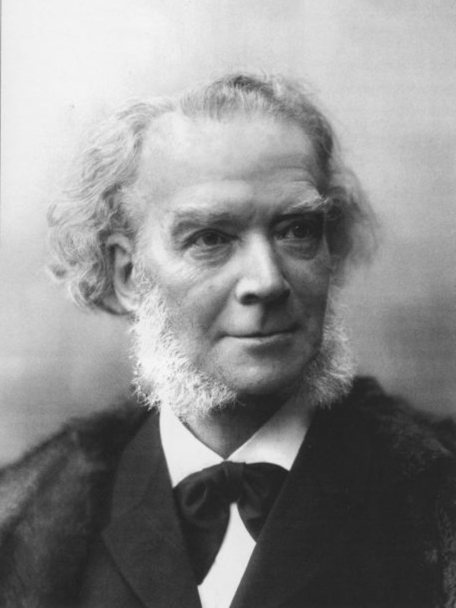

Early life and musical formation
Reinecke received his first lessons from his father and emerged early as a promising keyboard player and composer. As a teenager he was already composing and appearing in public. In his late teens he toured widely as a piano virtuoso, travelling as far as Riga and meeting important contemporaries in German musical centres. In 1846 he accepted a position as Court Pianist to King Christian VIII in Copenhagen, a post he retained until 1848. During these years he produced a number of concerted works, including several piano concertos and concertos for violin, cello, harp and flute.
Academic posts and conducting career
In 1851 Reinecke joined the faculty of the Cologne Conservatory, where he taught and consolidated his reputation as a teacher. He later held conducting positions in German cities including Barmen and Breslau. His most influential appointment came in 1860 when he became conductor of the subscription concerts associated with the Gewandhaus Orchestra in Leipzig and professor at the local conservatory. He subsequently served as director of the Leipzig Conservatorium, shaping its curriculum and attracting students from across Europe. For thirty‑five years he led the Gewandhaus concerts, raising orchestral standards and conducting significant premieres and large choral and orchestral works.
Compositional output and style
Reinecke wrote in a wide range of genres: orchestral music, concertos, chamber works, piano pieces, songs and incidental or stage music. Among his works the flute sonata often known as "Undine" has remained popular with performers. His music is generally described as conservative and lyrical, rooted in classical forms and Romantic melodic expression rather than in the more experimental currents of his time. Critics and historians note his craftsmanship in counterpoint and form, and the polished, refined quality of his smaller‑scale pieces, many of which suited the salon and concert repertory of the mid‑ to late‑nineteenth century.
Role as teacher and influence
Reinecke's reputation as a pedagogue is an important dimension of his legacy. During his long tenure in Leipzig he taught many students who later became influential composers and performers. His pupils included figures from different national traditions, among them Edvard Grieg, Christian Sinding, the Czech composer Leoš Janáček, the Spanish pianist‑composer Isaac Albéniz, the Norwegian conductor and composer Johan Svendsen, as well as later notable musicians such as Felix Weingartner and Max Bruch. Through his teaching he transmitted a conservative, classically informed craft that students adapted in diverse national styles.
Premieres, recordings and later life
As conductor of the Gewandhaus concerts Reinecke led important performances and premieres; a notable instance was his association with an early full performance of Brahms's German Requiem in 1869, an event that had significance for Leipzig concert life. He remained professionally active into old age, continuing to compose and to take part in musical life after he officially retired from his posts in 1902. Around the age of eighty he made piano‑roll recordings of his playing, which are of interest to scholars of historical performance because they provide a rare auditory link to the practices of an earlier generation of pianists.
Reception and legacy
Reinecke's music enjoyed popularity during his lifetime, especially in German‑speaking countries where his conservative idiom and melodic gifts found an appreciative audience. In the decades after his death tastes shifted and much of his output fell out of the standard repertory, though several works—above all the flute sonata "Undine"—have continued to be performed and recorded. His long influence as a teacher and institutional leader is often judged as at least equal in importance to his compositions: generations of performers and composers who studied under him helped shape musical life across Europe into the twentieth century.
Selected works and students (summary)
- Chamber and solo works, including the flute sonata "Undine"
- Several piano concertos and concerted pieces (piano concertos, violin concerto, cello concerto, harp and harp repertoire)
- Orchestral suites and overtures performed in Leipzig and elsewhere
- Notable pupils: Grieg, Sinding, Janáček, Albéniz, Svendsen, Weingartner, Bruch
- Major institutional roles: conductor of the Gewandhaus, director and professor at the Leipzig Conservatorium
Reinecke's life spanned much of the nineteenth century and the early years of the twentieth. His work as a composer, conductor and teacher left a distinct imprint on European musical institutions and on the training of many musicians who carried nineteenth‑century compositional and performance practices into later generations.
Questions and answers
Q: Where was Carl Reinecke born?
A: Carl Reinecke was born in Altona, Hamburg.
Q: How old was he when he started composing music?
A: Carl Reinecke began composing music at the age of twelve.
Q: What did he do for King Christian VIII in Copenhagen?
A: In 1846, Carl Reinecke became Court Pianist for King Christian VIII in Copenhagen.
Q: Who did he meet while travelling to Leipzig?
A: While travelling to Leipzig, Carl Reinecke met Robert Schumann, Felix Mendelssohn and Franz Liszt.
Q: What position did he take up in 1860?
A: In 1860, Carl Reinecke became director of the famous Gewandhaus Orchestra concerts in Leipzig and professor of composition and piano at the Conservatorium.
Q: What is his most well-known piece of music? A: Perhaps his best-known piece is the flute sonata "Undine".
Q: When did he retire from conducting and teaching? A:Carl Reinecke retired from conducting and teaching in 1902 but continued to compose until the end of his life.
Related articles
Author
AlegsaOnline.com Carl Reinecke: 19th-Century Composer, Conductor and Pedagogue Leandro Alegsa
URL: https://en.alegsaonline.com/art/116002