
2016 Democratic National Convention
July 25–28, 2016 gathering in Philadelphia where Democrats nominated their presidential and vice‑presidential candidates, adopted a party platform, and sought party unity ahead of the general election.
Overview
The 2016 Democratic National Convention took place July 25–28, 2016, at the Wells Fargo Center in Philadelphia. The meeting of delegates and party leaders followed the primary season and began one week after the 2016 Republican National Convention. Its principal purpose was to formally choose nominees for national office, adopt a platform, and present a unified message to voters ahead of the fall election.
Image gallery
1 Image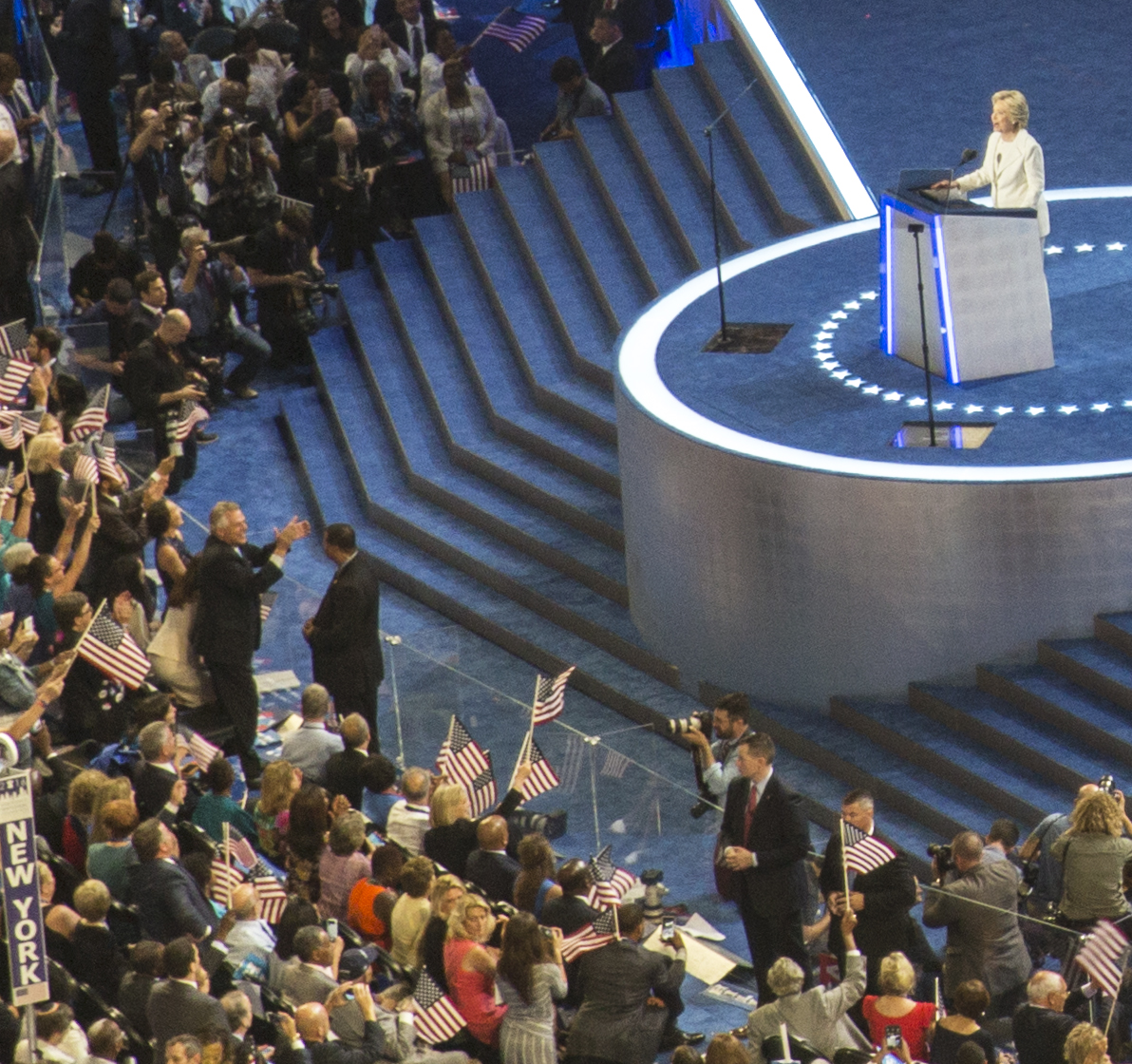
Delegates and nomination process
Democratic conventions are built around the party’s delegation system. In 2016 there were 4,764 delegates in total; a simple majority of 2,383 delegates, including party leaders and elected officials known as superdelegates, was required to secure the nomination. The convention featured the customary roll call and formal vote that ratified the outcome determined in the primary season.
Candidates and selection
The convention confirmed nominees for both the President of the United States and the Vice President of the United States. The leading figures entering the convention were Hillary Clinton, the former Secretary of State from New York, and Senator Bernie Sanders of Vermont. Clinton had become the presumptive candidate after securing enough delegates during the Democratic Party presidential primaries, and the convention formalized her nomination while selecting a running mate for the general election.
Party process and platform
Aside from the formal nomination, the convention served as the forum where the Democratic Party set out its platform—the policy priorities and principles the party would promote in the campaign. The event combined ceremonial elements, speeches by elected officials and party figures, and procedural votes that reflect the rules of the United States political party system. Delegates and committees debated language and approved platform planks addressing domestic and international issues.
Context, controversy and unity efforts
The convention occurred in a charged political environment. In the lead‑up there were disputes within the party and public controversies that attracted media attention, and convention organizers emphasized themes of unity, national security, and economic opportunity during speeches and panels. Delegates and leaders used the platform of the convention to urge cohesion and prepare for the general election campaign.
Notable outcomes and significance
- The convention culminated in the formal acceptance of the party’s presidential and vice‑presidential nominees and an official platform.
- It marked a historic moment for the party, as the presidential nominee was the first woman to be nominated by a major U.S. party for the presidency.
- Conventions like this play a key organizational role in rallying grassroots supporters, generating media attention, and setting the narrative for the campaign that follows.
For readers interested in procedural details, delegate counts, or the full text of the adopted platform, materials and roll‑call results released after the convention provide an official record of the actions taken by delegates and committees during the four days.
Related articles
Author
AlegsaOnline.com 2016 Democratic National Convention Leandro Alegsa
URL: https://en.alegsaonline.com/art/112568
Sources
- washingtonpost.com : "DNC chooses convention date"
- thegreenpapers.com : "Democratic Convention 2016"