
2016 Donald Trump Chicago rally protest
Cancellation of a March 11, 2016 Donald Trump campaign rally at UIC after large protests raised safety concerns; sparked debate over protest tactics, free speech and political responsibility.
Overview
On March 11, 2016 a planned campaign appearance by then-presidential candidate Donald Trump at the University of Illinois at Chicago was called off by his campaign after large demonstrations inside and outside the venue. Organizers cited "growing safety concerns" as the reason for cancelling the event at the UIC Pavilion, where both supporters and opponents of the candidate had gathered. The decision came amid a charged atmosphere of shouting and intermittent scuffles as demonstrators and attendees confronted each other.
Image gallery
2 Images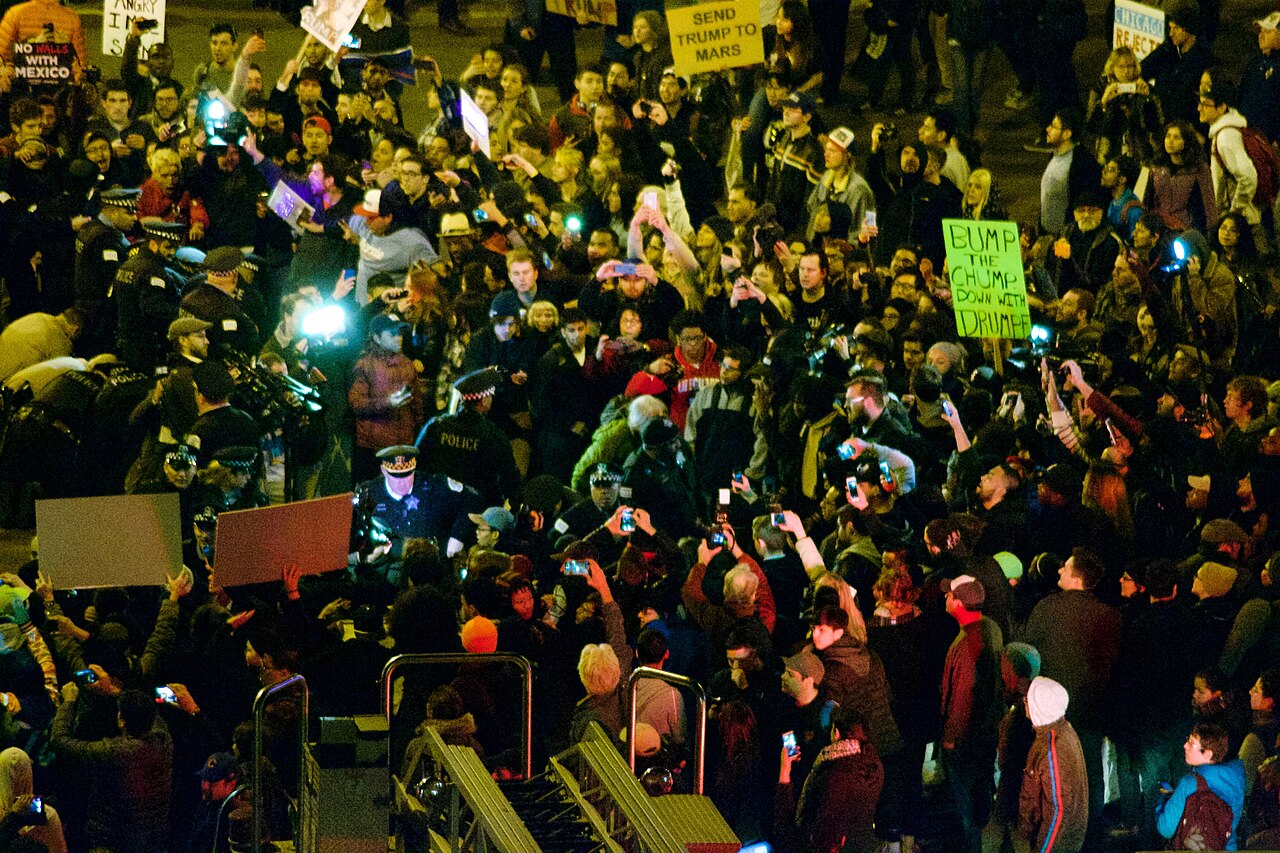

What happened at the rally
Protest activity that day included thousands of people who had come to express opposition to Trump’s candidacy; many were mobilized through civic groups, student networks and social media. Several hundred protesters filled seating areas within the arena while larger crowds assembled outside the campus. After the campaign announced the rally would not proceed, tensions escalated briefly at entry points and near the stage, with a number of small physical encounters reported as law enforcement sought to restore order.
Participants and responses
The venue — the University of Illinois at Chicago — sits in the city of Illinois's largest metropolitan area, where political demonstrations are common during major campaigns. The protest coalition that day included students, activists, and community groups opposed to Trump’s rhetoric and policy proposals. Following the cancellation, the Trump campaign publicly attributed responsibility for the unrest to rival campaign supporters, naming Senator Bernie Sanders. That accusation drew a prompt rebuttal: Sanders’ campaign denied organizing the demonstrations and criticized Trump’s comments about the episode.
Immediate aftermath and related events
The Chicago incident became part of a larger conversation when a separate event the next day in Dayton, Ohio experienced a stage rush by an individual, which further amplified claims and counterclaims about who was encouraging disruptive behavior. Police and campaign officials across events emphasized safety concerns, while civil liberties advocates and some commentators framed the Chicago cancellation as a clash between protest rights and the public’s interest in access to political speech.
Significance and debate
Beyond the single cancelled event, the episode highlighted several recurring issues in modern American campaigns: how to balance protesters’ right to dissent with the safety of attendees, the role of social media and community organizers in mobilizing mass demonstrations, and the tendency for partisan leaders to blame rivals for volatile public reactions. The incident also fed narratives about political polarization in 2016 and reinforced attention on security planning for large campaign events.
Notable considerations
- Public safety: Campaigns and venues increasingly factor crowd-control and contingency plans into event logistics.
- Free expression: Legal and normative questions persist about the appropriate scope and tactics of protest at political gatherings.
- Political rhetoric: Accusations and denials in the aftermath illustrated how quickly events are reframed by political actors.
As a widely reported episode from the 2016 primary season, the cancelled Chicago rally remains a frequently cited example of how protest activity can alter campaign events and become a focal point for larger debates about democratic engagement during heated electoral contests.
Related articles
Author
AlegsaOnline.com 2016 Donald Trump Chicago rally protest Leandro Alegsa
URL: https://en.alegsaonline.com/art/112570
Sources
- donaldjtrump.com : "STATEMENT REGARDING TRUMP CAMPAIGN CHICAGO RALLY POSTPONEMENT"
- washingtonpost.com : "Post Politics Skirmishes erupt after Trump cancels Chicago rally over security concerns"
- theguardian.com : "Sanders calls Trump 'pathological liar' as Chicago rally backlash grows"