
2016 Ecuador earthquake (April 16, 2016)
A major 7.8-magnitude earthquake struck coastal Ecuador on April 16, 2016, causing widespread destruction, at least 272 deaths, thousands injured, and a national state of emergency.
Overview
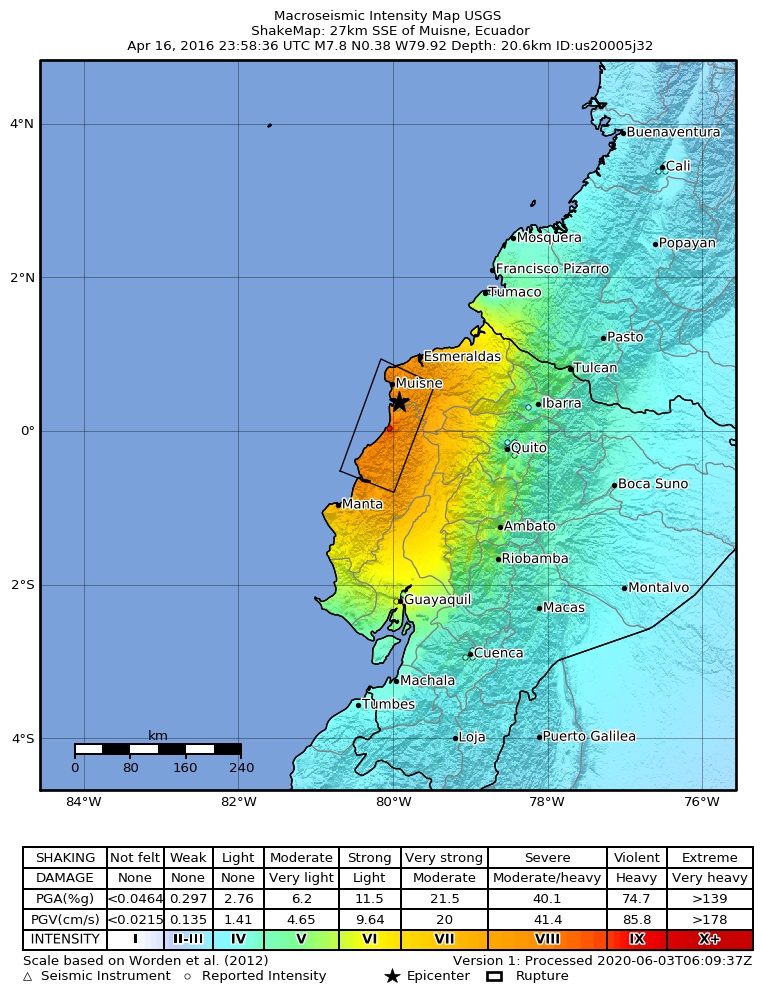
On April 16, 2016, a powerful earthquake struck coastal Ecuador. The quake registered as a magnitude 7.8 and occurred at 18:58 local time. Its epicenter was located offshore near the town of Muisne, and shaking was felt across a wide area, including the capital Quito, about 110 miles from the epicentral zone.
Image gallery
10 Images



Damage and casualties
The event produced extensive damage to residential, commercial and public buildings. Large portions of the country’s infrastructure were damaged or rendered inoperative, and reports noted collapsed structures extending hundreds of miles from the epicenter. Official counts recorded at least 272 fatalities and more than 2,500 injured, with many thousands displaced by destroyed or unsafe housing.
Government response
National authorities and international partners mobilized for search, rescue and relief operations. The administration of the president, led by Rafael Correa, declared a state of emergency to expedite aid, coordinate military and civilian teams, and direct resources toward medical care, shelter and critical repairs.
Geological context
Ecuador lies along an active plate boundary where the Nazca Plate converges beneath the South American Plate. This tectonic setting produces frequent earthquakes, including large subduction and crustal events. The 2016 quake illustrated common coastal hazards such as strong ground shaking, secondary landslides and widespread disruption to lifelines.
Aftermath and recovery
Recovery involved immediate humanitarian assistance and longer-term reconstruction of homes, schools and roads. The disaster prompted reviews of building codes, urban planning and emergency preparedness measures to reduce vulnerability to future quakes. International aid and domestic programs supported rebuilding efforts over subsequent years.
Key facts
Related articles
Author
AlegsaOnline.com 2016 Ecuador earthquake (April 16, 2016) Leandro Alegsa
URL: https://en.alegsaonline.com/art/112571
Sources
- thehindu.com : "Live: After Ecuador quake, 135 aftershocks reported"
- reliefweb.int : "Six months report Ecuador: Earthquake"
- edition.cnn.com : "Ecuador Earthquake; Death Toll Jumps to 246"