
2016 Kumamoto earthquakes: sequence, impacts, and recovery
A multi-day earthquake sequence in April 2016 near Kumamoto, Kyushu, Japan, featuring a large foreshock and a 7.0 mainshock that caused widespread damage, casualties, and long-term rebuilding efforts.
Overview
The 2016 Kumamoto earthquakes were a sequence of strong earthquakes that struck the area around Kumamoto Prefecture on the island of Kyushu in southern Japan. The sequence began with a strong foreshock on the evening of 14 April 2016 and culminated in a major mainshock in the early hours of 16 April. The initial event on 14 April occurred at 21:26 Japan Standard Time and registered as magnitude 6.2. The largest shock, often described as the mainshock, struck at 01:25 JST on 16 April with a magnitude of 7.0. Numerous aftershocks followed over days and weeks, keeping affected communities under extended stress.
Image gallery
10 Images




Sequence and tectonic setting
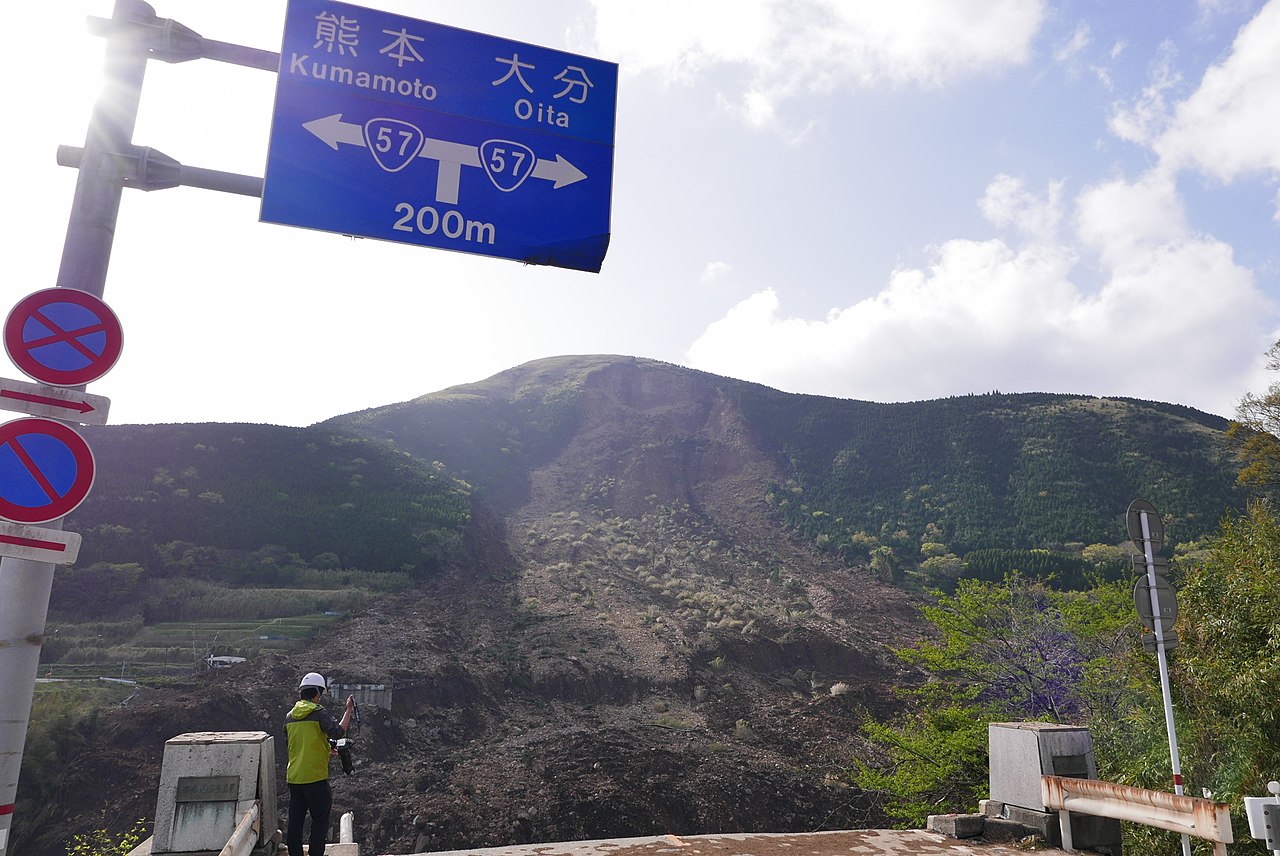
The earthquakes resulted from strike‑slip and thrust faulting in crustal faults beneath central Kyushu, a region where the complex interaction of the Philippine Sea Plate and the Eurasian Plate produces frequent seismic activity. Field and seismic investigations identified rupture on known fault zones, with surface offsets and landslides reported in mountainous areas near Mount Aso. The multi‑event nature — a strong foreshock followed by a larger mainshock — made the sequence notable to seismologists studying stress transfer and earthquake triggering.
Damage, casualties, and physical effects
The shaking caused extensive destruction in urban and rural parts of the prefecture. Official tallies recorded 48 deaths and roughly 3,000 injured. Tens of thousands of buildings were damaged to varying degrees, and well‑known historic structures were seriously affected. For example, parts of Kumamoto Castle sustained collapse and heavy damage. Secondary hazards included fires in some neighborhoods (fires were reported), liquefaction in low‑lying areas, landslides on steep slopes, and disruption to lifelines.
- Essential services such as water, electricity and gas were interrupted for many residents.
- Roads and rail lines were blocked or damaged, complicating relief operations.
- Approximately 44,000 people evacuated to emergency shelters and temporary accommodation.
Emergency response and recovery
Local, prefectural and national agencies mobilized search‑and‑rescue teams, medical assistance, and self‑defense forces to support affected areas. Emergency shelters provided immediate refuge, while temporary housing programs and reconstruction planning began within months. Cultural heritage recovery, including stabilization and restoration of historic structures such as castle walls and traditional buildings, became a long‑term focus. Building inspections and retrofitting work were prioritized to reduce future risks.
Scientific and societal significance
The 2016 sequence highlighted several important themes in earthquake science and disaster management: the role of foreshocks in forecasting risk, the visibility of fault rupture at the surface, and the vulnerability of historic masonry and older reinforced concrete structures. The events prompted studies of local fault geometry, ground deformation, and aftershock patterns, and they influenced municipal preparedness campaigns and reconstruction policy in Kyushu. Lessons from the response contributed to updates in early warning use, shelter management, and public communications during prolonged seismic crises.
Notable facts and legacy
Beyond immediate losses, the earthquakes left a lasting imprint on the region's built environment and community resilience. Reconstruction efforts continued for years, with emphasis on restoring vital infrastructure and cultural landmarks while improving seismic resistance. For scholars and planners, the Kumamoto sequence remains an instructive case of how a relatively brief period of intense seismicity can trigger long‑term recovery challenges and opportunities for strengthening preparedness.
Related articles
Author
AlegsaOnline.com 2016 Kumamoto earthquakes: sequence, impacts, and recovery Leandro Alegsa
URL: https://en.alegsaonline.com/art/112573
Sources
- earthquake.usgs.gov : "M7.0 - 1km WSW of Kumamoto-shi, Japan: Shake Map"
- jma.go.jp : 平成28年4月14日21時26分頃の熊本県熊本地方の地震について
- data.jma.go.jp : =緊急地震速報の内容
- earthquake.usgs.gov : "M6.2 - 7km SW of Ueki, Japan"
- nytimes.com : "US Forces Deliver Aid to Japanese Quake-Hit Areas; 44 Dead"
- japantimes.co.jp : "Last Kumamoto quake victim ID'd, leaving death toll at 50"
- www3.nhk.or.jp : "www3.nhk.or.jp/nhkworld/en/news/20160422_02/"
- asahi.com : "70% of Kumamoto victims died in collapsed homes:The Asahi Shimbun"