
Adsorption: Surface binding of atoms and molecules
Adsorption is the process by which atoms, molecules or particles adhere to a surface. This article explains mechanisms, types, history, examples, and practical uses across chemistry, materials and engineering.
Adsorption is the accumulation of atoms, molecules or particles at the interface of a material rather than being taken up into its bulk. In simple terms, individual atoms or molecules become attached to a solid or liquid surface, leaving a region near the surface with different composition or concentration than the surrounding phase. The species that stick to the surface (the adsorbate) may come from a gas, a liquid or a dissolved solid. Everyday examples include water condensing on grains of sand at the edge of a beach or molecules of soap adhering to particles in a wash.
Image gallery
5 Images


Mechanisms and characteristics
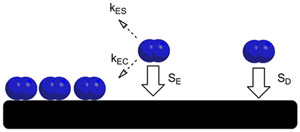
The binding that keeps adsorbates on a surface can vary widely. A range of physical and chemical interactions contribute, from weak van der Waals attractions to stronger surface chemical bonds. General references describe this umbrella term as the surface force-mediated retention of species. When the interaction is dominated by weak, reversible attractions it is often called physical adsorption (physisorption); when new chemical bonds form between the adsorbate and the surface it is known as chemisorption.
Physical adsorption typically involves lower energy changes and is often reversible; increases in temperature or decreases in pressure tend to drive desorption. Adding thermal energy (heat) can break the surface interactions and allow adsorbed molecules to leave the surface and evaporate or re-enter the fluid phase. Chemisorption is usually more specific and may alter the chemical identity of the adsorbed species or the surface itself.
History and scientific context
The concept of adsorption emerged as scientists studied gas–solid and liquid–solid interfaces and observed that surface concentrations differed from bulk concentrations. Over time, experimental observations led to quantitative descriptions — adsorption isotherms — that relate the amount adsorbed to conditions such as pressure or concentration. These macroscopic laws complement microscopic theories about how molecules arrange at interfaces and how surface structure and porosity affect uptake.
Applications and examples
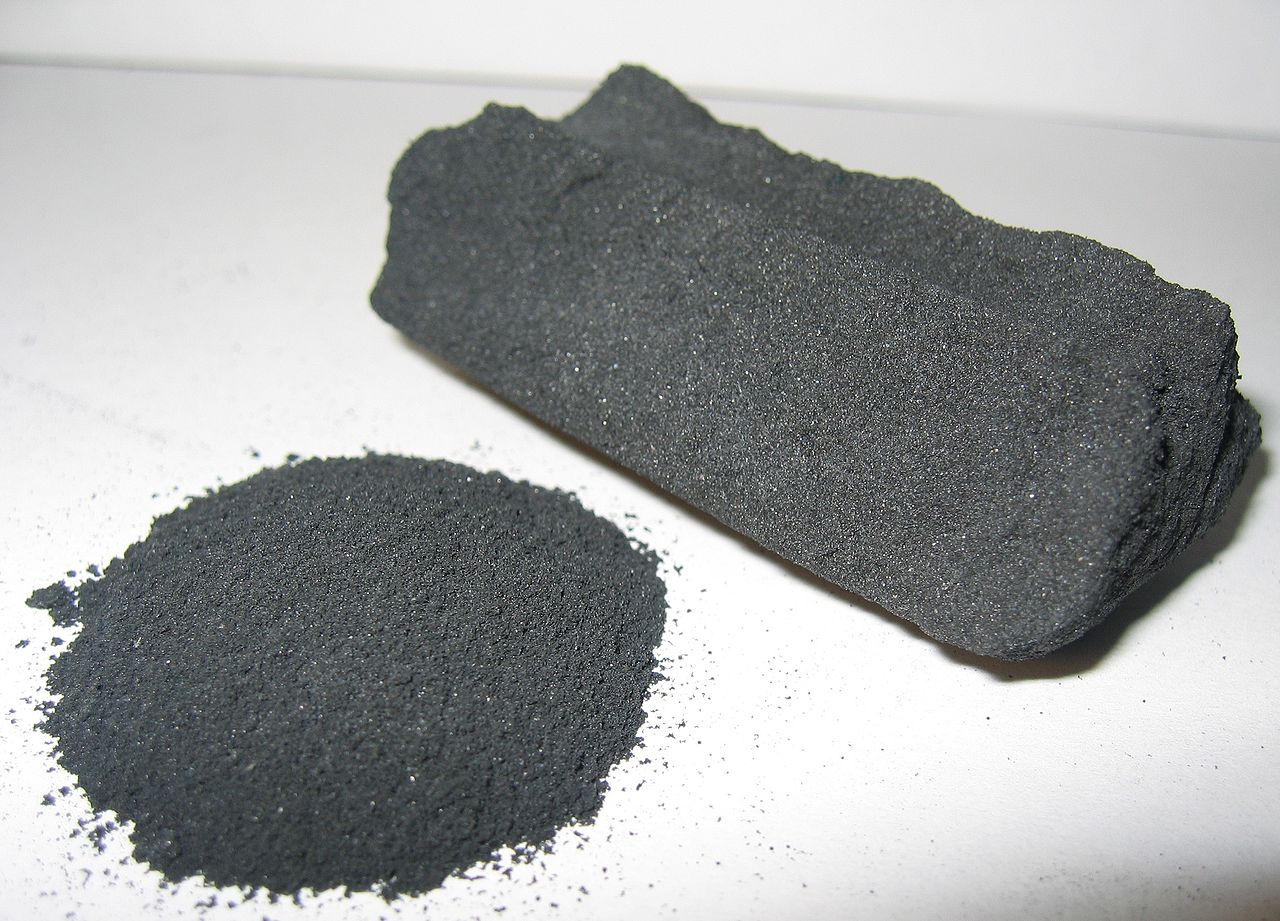
- Environmental: Adsorption is central to water purification and air filtration, where activated carbon or other adsorbents capture dissolved contaminants and volatile compounds.
- Industrial chemical processes: Catalysts often rely on adsorption to bring reactants together on a surface and lower activation barriers.
- Everyday materials: Desiccants reduce humidity by adsorbing water vapor; coatings and paints use adsorption to control adhesion and wetting.
- Analytical techniques: Surface-sensitive methods exploit adsorption to concentrate trace species for detection.
Distinctions and notable facts
Adsorption is distinct from absorption, in which a substance penetrates and distributes throughout the volume of a material rather than staying confined to a surface. The capacity and selectivity of an adsorbent depend on surface area, pore structure and chemical functionality. Porous materials such as zeolites, activated carbons and metal–organic frameworks are engineered specifically to maximize adsorption for particular applications. Because adsorption can be reversible, it also underpins practical regeneration strategies where an adsorbent is cleaned for reuse by changing temperature, pressure or solvent conditions.
Understanding adsorption is important across chemistry, materials science, environmental engineering and biotechnology. It links macroscopic process design with molecular-level interactions at interfaces and remains an active area of research and technological development.
For further reading and specific technical details, see introductory texts and reviews on surface science and adsorption isotherms; additional resources may be found through specialized literature and educational websites. Example references and primers are available online via general educational portals and databases (atoms, molecules, surface topics) and practical guides for applications (gas-related adsorption, liquid phase adsorption, dissolved solids, case studies such as sand and beach examples). For mechanistic reading see materials on surface force interactions, physical vs chemical bonds, thermal effects (heat) and desorption or evaporation.
Related articles
Author
AlegsaOnline.com Adsorption: Surface binding of atoms and molecules Leandro Alegsa
URL: https://en.alegsaonline.com/art/1088
Sources
- brownfieldstsc.org : "Glossary"