
Aerosol spray: design, operation, uses and safety
An overview of aerosol sprays: how they work, main parts and propellants, common uses, brief history, and safety and environmental considerations.
Overview
An aerosol spray is a delivery system that disperses a liquid, solid or mixture as tiny droplets or particles suspended in a gas. The most familiar form is the handheld spray can used for paints, personal care products and household aerosols. The device relies on internal pressure to convert a bulk product into a fine mist, spray or foam that can be directed at a surface or into the air. For general product information and examples, see container types.
Image gallery
4 Images
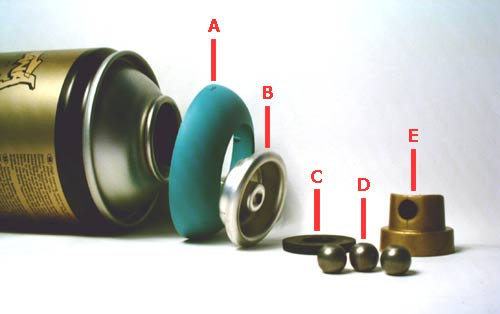


Design and main components
A typical aerosol package combines a product and a propellant inside a sealed vessel. Key parts include:
- Canister or bottle: the pressure-resistant container that holds the formulation; manufacturers choose materials and shapes based on compatibility and strength. Related product designs are described at spray can resources.
- Valve and actuator: the mechanism opened by the user; it controls flow rate and spray pattern and is crucial to reliable operation. Parts and repair guidelines are discussed in valve and actuator guides.
- Dip tube or internal fitting: carries liquid from the bottom of the can to the valve when it is actuated.
- Propellant: the pressurized gas or volatile liquid that provides the driving force; common choices and classes are explained in propellant summaries.
How it operates
When the actuator is pressed, the valve opens and the internal pressure forces product up the dip tube. As the liquid exits through a small nozzle it breaks into droplets, forming an aerosol or mist. Some aerosol systems use two-phase mixtures (product plus propellant) while others use a separate expelled gas. Technical differences and performance factors are reviewed at operation details.
History and development
Modern aerosol technology grew from early 20th-century research into pressurized sprays and expansion of propellant chemistry during and after World War II. Over decades the industry has evolved toward safer, less ozone-depleting and lower-global-warming propellants, improved valves and more efficient nozzles that control droplet size and reduce waste. Historical notes and milestones are available at historical overview.
Uses, examples and safety
Aerosols appear across many categories: spray paints, deodorants, insecticides, household cleaners, medical inhalers and industrial coatings. Typical considerations include application technique, droplet size for coverage, and environmental or health impacts. Users should follow label directions and avoid puncturing or exposing cans to heat. For regulatory, disposal and recycling guidance consult safety and disposal resources.
Notable distinctions: some products marketed as "aerosol" use mechanical pumps instead of internal propellants; others are designed to deliver foams or metered doses for medical or technical use. The term describes the delivery method rather than a single formulation or function.
Related articles
Author
AlegsaOnline.com Aerosol spray: design, operation, uses and safety Leandro Alegsa
URL: https://en.alegsaonline.com/art/1176