
Watchmen (graphic novel)
Watchmen is a 1986–1987 Hugo Award–winning graphic novel by Alan Moore and Dave Gibbons, noted for its deconstruction of superheroes, layered narrative, nine-panel grid, and lasting influence on comics and popular culture.
Watchmen is a Hugo Award–winning work widely regarded as a landmark in the modern comics medium. Created as a twelve-issue limited series published in 1986–1987, it is often described as a seminal graphic novel. The story was conceived and written by Alan Moore and illustrated by Dave Gibbons. The original run and subsequent collected editions were published by DC Comics, and the work has since entered broader literary and cultural conversations.
Image gallery
9 Images





Overview and structure
Watchmen reimagines costumed heroes in an alternate near-future shaped by Cold War tensions and political anxiety. Rather than celebrating straightforward heroism, the narrative examines moral ambiguity, the psychology of power, and the unintended consequences of vigilantism. The complex plot interweaves multiple character arcs with a central conspiracy, using nonchronological episodes, documents, and excerpts to build its world.
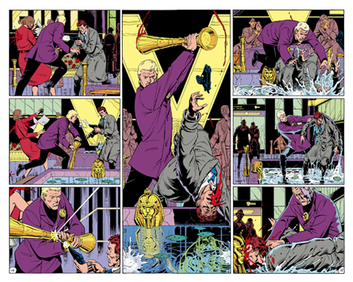
Artistically, Watchmen is noted for its rigid page design—especially the frequent nine-panel grid—and for dense visual symbolism. Each page often contains visual motifs and recurring details that reinforce themes and character development. The storytelling balances wordplay, visual metaphor and carefully placed revelations, rewarding attentive rereading.
Characters and themes
- Rorschach – a masked vigilante whose uncompromising moral code and investigative drive propel much of the plot.
- Dr. Manhattan – a near-omnipotent figure whose altered perception of time and humanity raises questions about responsibility and detachment.
- Laurie Juspeczyk / Silk Spectre – a legacy character who faces questions of identity and inherited roles.
- Dan Dreiberg / Nite Owl and Adrian Veidt / Ozymandias – two contrasting approaches to technology, strategy and ethical calculation.
The work addresses themes such as the ethics of ends versus means, surveillance and state power, the fallibility of mythic figures, and the social costs of secrecy. It also experiments with metafictional devices: fictional documents, in-universe articles and illustrative appendices expand context for readers and characters alike.
Reception, influence and adaptations
From its first publication Watchmen received critical attention for treating superhero tropes in a mature, literary manner, and it has been the subject of academic study and popular debate. In 2005 Time magazine included Watchmen among the 100 best English-language novels since 1923, signaling its reach beyond comics readership. The book has won major genre awards and influenced subsequent creators who explored darker, more psychologically complex takes on costumed characters.
Watchmen has also been adapted and reinterpreted across media, which expanded public discussion of its ideas. Its legacy is visible in later comics, films and television series that confront similar questions about authority, moral compromise and the cultural role of heroes. For new readers, attention to both script and art, as well as the book’s layered structure, helps illuminate why it remains a frequent subject of analysis and debate.
Related articles
Author
AlegsaOnline.com Watchmen (graphic novel) Leandro Alegsa
URL: https://en.alegsaonline.com/art/106776
Sources
- time.com : "All-TIME Graphic Novels"