
Publishing: processes, formats, history, and contemporary practice
Overview of publishing—making works public—covering types, processes, history, roles, digital change, and examples of how content reaches audiences.
Publishing is the process of preparing and distributing information or creative works for public access. At its core it bridges creators and readers, viewers or listeners through editing, production, marketing and distribution. A publication can be physical—like a book or newspaper—or digital, and the entity that organizes the process is called a publisher. Publishers may pay creators, accept work on commission, or in some models receive payment from authors; some creators self-publish and manage the steps themselves. For an introduction to basic concepts see public view.
Image gallery
3 Images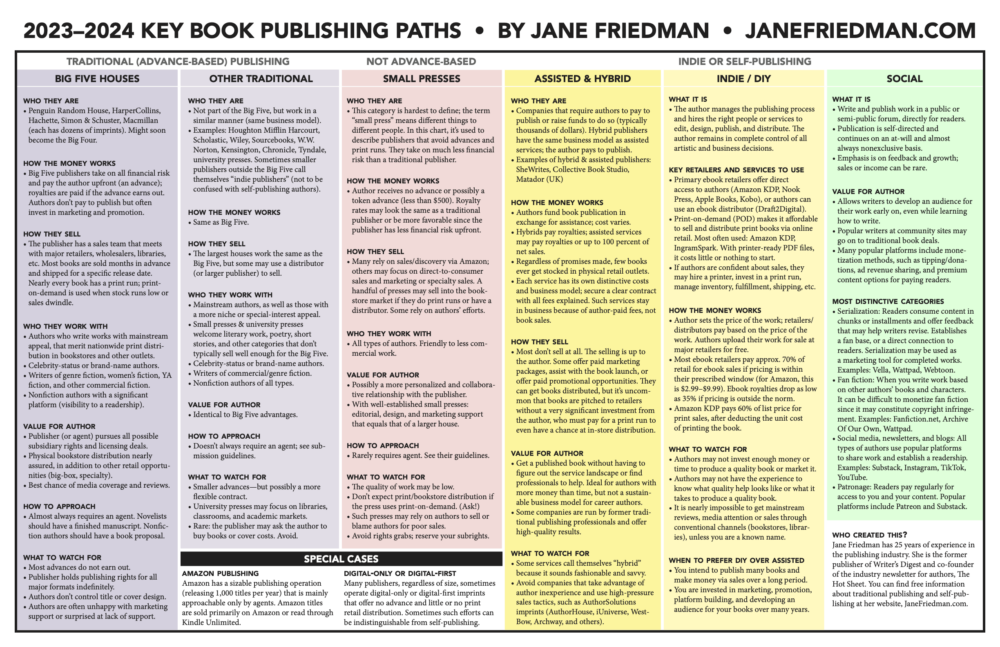

Key components and roles
Typical steps in publishing include acquisition or selection of content, editing, design and typesetting, production or file preparation, distribution, and promotion. Roles involved are editors, designers, proofreaders, production managers, marketing and sales teams, and rights/licensing specialists. Different outlets focus on distinct formats: traditional book publishers handle long-form works, periodical publishers produce magazines and newspapers, and scholarly publishers manage peer-reviewed journals. Related categories include literary and educational publishing; learn more about author arrangements at author relations.
Formats and distribution
Historically publishing referred mainly to printed materials such as books and newspapers, but since the late 20th century electronic and online publishing have become established alternatives. Digital formats include e‑books, online journals, blogs and multimedia publications. Distribution channels range from brick-and-mortar bookstores and newsstands to online retailers, institutional repositories and direct-to-audience websites. Examples of typical published products are textbooks, novels, newspapers and reports; see examples at books and newspapers. Internet publishing, with its distinct workflows and metrics, is discussed at internet publishing.
History and development
Publishing evolved from manuscript copying to mechanical printing after movable type, which enabled wider distribution of texts. Over centuries the industry developed professional roles and business models that sustained large-scale book production and journalism. The late 20th and early 21st centuries introduced digital tools for authorship, editing and global distribution, altering traditional gatekeeping and enabling diverse publishing paths.
Uses, importance and distinctions
Publishing serves to preserve knowledge, inform the public, support education, and provide entertainment. Distinct subfields include scholarly publishing—focused on research dissemination and peer review—and trade publishing—which aims at general readers. Hybrid and open-access models have also emerged; for practical guidance on choosing a route to publication consult resources at literature and information.
Whether through an established house, a specialist imprint, or self-publication, the goal remains to make a work available, discoverable and usable by its intended audience. Publishers balance editorial standards, rights management and commercial realities while technologies continue to reshape how audiences find and consume published works. For further reading and industry resources use public view and publisher directories such as author relations or topic-specific portals at newspapers and internet publishing.
Related articles
Author
AlegsaOnline.com Publishing: processes, formats, history, and contemporary practice Leandro Alegsa
URL: https://en.alegsaonline.com/art/79922