
Henry Miller: Life, Major Works, and Literary Significance
American novelist Henry Miller (1891–1980) wrote candid, experimental novels and memoirs—Tropic of Cancer, Black Spring, Tropic of Capricorn, The Rosy Crucifixion—challenging censorship and influencing later writers.
Overview
Henry Miller (26 December 1891 – 7 June 1980) was an American writer whose work blurred the lines between fiction and memoir. He became best known for frank, often erotic narratives that drew heavily on his own life, personality, and experiences; critics and readers frequently note the autobiographical quality of many of his books. Miller's prose often moves in a free, associative mode that echoes the stream-of-consciousness techniques of other modernists while remaining distinctively conversational and confrontational.
Image gallery
4 Images


Style and themes
Miller combined candid sexual description, philosophical reflection, and social criticism in a loose, digressive voice. His writing emphasizes personal freedom, artistic honesty, and rebellion against conventional morality. The explicit sexual content and frequent use of coarse language made his major works controversial; several were suppressed or banned in his native United States for decades, a history that shaped debates about literary censorship and free expression in the mid-20th century. For more on those legal and cultural disputes see discussions of obscenity controversies.
Major works
- Tropic of Cancer — widely regarded as his breakthrough, written in Paris and first published there.
- Black Spring — a linked collection of autobiographical sketches and reflections.
- Tropic of Capricorn — companion in tone and theme to Tropic of Cancer, drawing on his earlier life in New York.
- The Rosy Crucifixion — a multi-volume sequence that follows a prolonged autobiographical arc (often cited by its component titles: Sexus, Plexus, Nexus).
Life, activities, and legacy
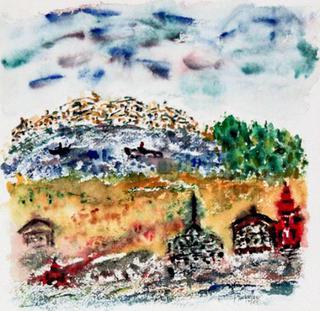
Miller spent important years in Paris in the 1930s, where he produced some of his most famous work and formed friendships with other expatriate artists and writers. He returned to the United States and continued to publish novels, essays, and travel writing; one well-known travel account critiques American culture and travel itself. In addition to fiction and memoir he wrote criticism and essays and practiced painting, producing watercolors and small works on paper. His essays and cultural commentary are often collected under discussions of his literary criticism and personal journalism, while his travel accounts are commonly referenced in surveys of his non-fiction, for example under travel memoirs.
Miller's influence reached writers who valued candid, personal narrative and expressive freedom, including figures associated with the Beat generation and later confessional styles. The long legal battles over his books contributed to liberalizing publishing standards in the 1960s and encouraged broader debate about where to draw the line between artistic expression and public decency. Today he is read both for the historical role he played in those debates and for the singular voice he brought to 20th-century letters.
Questions and answers
Q: Who was Henry Miller?
A: Henry Miller was an American writer known for his novels.
Q: What was the style of Henry Miller's novels?
A: Many of his novels were partly autobiographical and used a stream of consciousness style.
Q: Which works of Henry Miller are the most famous?
A: His most famous works are Tropic of Cancer, Black Spring, Tropic of Capricorn, and The Rosy Crucifixion.
Q: Where were Henry Miller's novels based on?
A: They are based on his experiences in New York and Paris.
Q: Why were Henry Miller's novels banned in the United States until the 1960s?
A: They were banned because they contained explicit descriptions of sex and obscene language.
Q: Did Henry Miller only write novels?
A: No, he also wrote travel memoirs and literary criticism.
Q: What was another art form Henry Miller experimented in?
A: Miller also painted watercolors.
Related articles
Author
AlegsaOnline.com Henry Miller: Life, Major Works, and Literary Significance Leandro Alegsa
URL: https://en.alegsaonline.com/art/120549
Sources
- britannica.com : "Henry Miller"
- books.google.co.uk : Henry Miller: Expatriate
- the-tls.co.uk : "Miller’s fail"
- washingtonpost.com : "Author Henry Miller Dies"
- henrymiller.org : "Henry in Big Sur"