
Valency (valence) in chemistry: definition, history, and distinctions
Valency (valence) is the number of chemical bonds an atom typically forms. This article explains definitions, examples, historical development, related concepts (oxidation state, valence electrons), and solid-state usage.
Valency (also spelled valence) is a classical chemical term describing the number of bonds an atom of an element typically forms in stable molecules. In everyday chemistry usage it is a simple counting concept used to predict how atoms combine to form compounds. For background on other senses of the word see the general entry on valence. For the scientific discipline that studies bonding and elements, see chemistry.
Image gallery
10 Images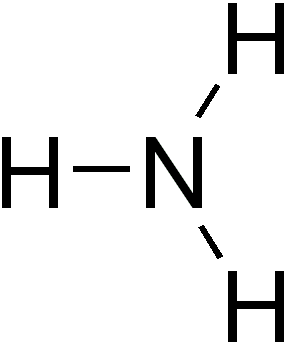




Basic definition and examples
Traditionally, valency is the integer number of single bonds an atom can form with other atoms. Common textbook examples include hydrogen with a valency of one (forming one bond), oxygen with valency two (as in H2O), and carbon with valency four (as in CH4). These simple patterns reflect the typical number of electrons that participate in bonding for main-group elements. For an atom concept see atom, and for the chemical entities involved see element and chemical bonds.
Why the number can vary
Valency is not always fixed for a given element. Some elements show variable valency depending on their chemical environment. For example, phosphorus commonly forms three bonds in many compounds (valency three) but can also form five bonds in species such as PCl5 (valency five). Transition metals frequently exhibit several stable valencies because their d electrons can participate in bonding. These variations are related to the distribution of electrons among atomic orbitals and to the ability of atoms to share, gain, or lose electrons when forming compounds.
Related concepts and distinctions
- Valence electrons: the electrons in the outermost shell that typically take part in bonding. See molecular orbital concepts for how orbitals combine.
- Oxidation number (oxidation state): a bookkeeping integer assigned to atoms in compounds that describes electron transfer in a formal sense. IUPAC recommends using oxidation numbers for many quantitative treatments; see oxidation number and solid-state contexts for when formal counts are preferred.
- Coordination number vs valency: coordination number counts neighbouring atoms or ligands bound to a central atom in a complex and may differ from a simple valency count.
- Formal charge and resonance
Historical development
Early chemists noted fixed combining capacities for many elements and used simple valency rules to predict formulas. The electron-pair model developed in the early 20th century (notably by Gilbert N. Lewis) replaced purely numerical rules with ideas about electron sharing and pairs forming covalent bonds. Later quantum treatments and molecular orbital theory gave a more complete picture of how valence electrons occupy bonding and antibonding orbitals. When dealing with extended solids the phrase absolute zero and band theory introduce the related term valence band, the highest energy band normally occupied by electrons at low temperature.
Uses and importance
Valency remains a useful concept for quickly predicting plausible chemical formulas and for introductory teaching. It helps explain stoichiometry, simple organic and inorganic structures (for example, methane CH4, water H2O, and ammonia NH3), and the construction of Lewis structures. For more advanced analysis chemists prefer the precise language of valence electrons, oxidation states, and molecular orbital descriptions. For fundamental bonding references see carbon, oxygen, and hydrogen examples in standard texts.
Notable facts and limitations
Valency is a practical, sometimes approximate tool rather than a fundamental atomic property. It works best for main-group elements in common oxidation states but can be misleading for transition metals, radicals, and species with delocalized electrons. Modern chemistry routinely combines the simple valency notion with quantum-mechanical models to achieve accurate descriptions of bonding and reactivity.
Further reading and authoritative definitions are available through chemistry reference works and standards bodies; introductory overviews and technical treatments can be found via links labeled throughout this article such as bonds, elements and specialized entries on solid-state terms like the valence band.
For concise reference summaries and advanced discussions, consult textbooks and review articles on chemical bonding and inorganic chemistry; institutional and standard-setting sources provide current recommended terminology.
Related articles
Author
AlegsaOnline.com Valency (valence) in chemistry: definition, history, and distinctions Leandro Alegsa
URL: https://en.alegsaonline.com/art/103981