
Valentinite (Sb2O3): mineral form of antimony trioxide
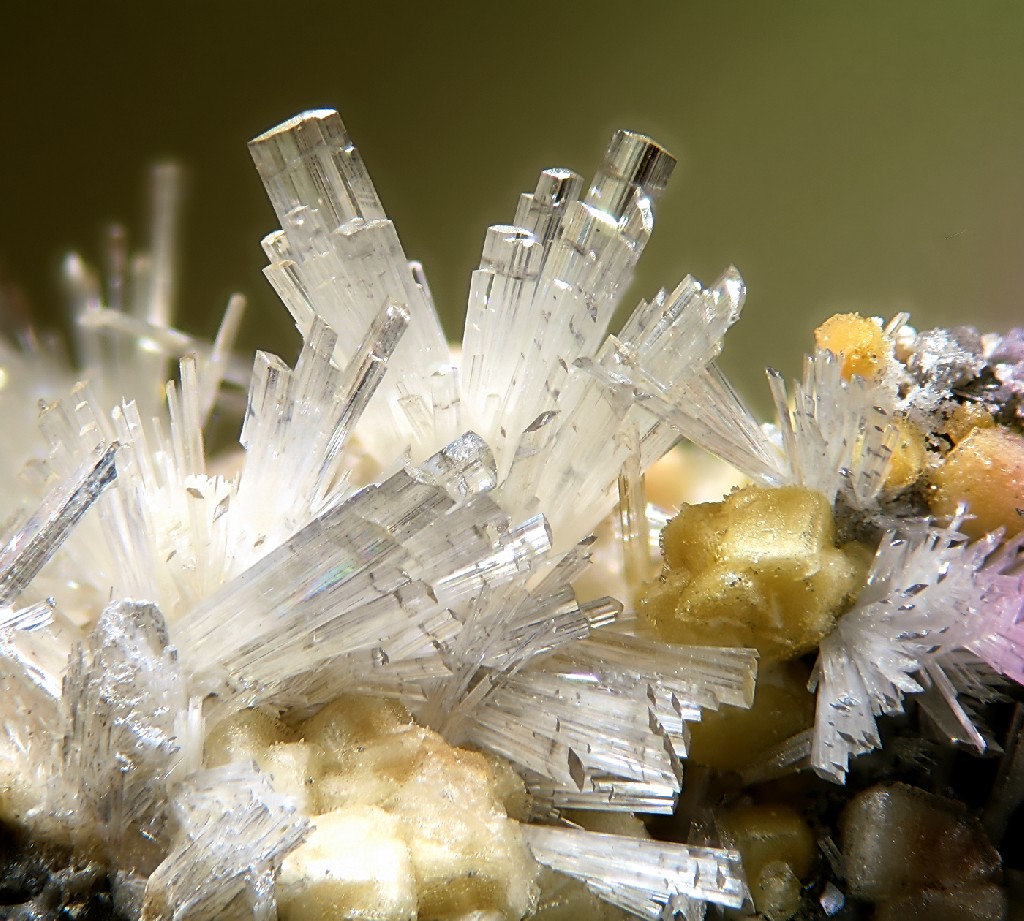
Valentinite is a naturally occurring Sb2O3 mineral formed by oxidation of stibnite. It is a soft, dense, colorless-to-white mineral of interest to collectors and a minor antimony ore.
Overview
Valentinite is the mineralogical name for a natural form of antimony trioxide with the chemical formula Sb2O3. It typically appears colorless to white and ranges from transparent to translucent. As a mineral it is primarily notable for representing antimony in an oxidized state and for its occurrence in the weathered zones of antimony-bearing deposits. For basic reference information see the mineral database entry.
Image gallery
2 Images
Physical and chemical properties
Key properties include a Mohs hardness of about 2.5–3 and a high specific gravity near 5.76, reflecting its antimony content. Valentinite commonly shows an adamantine to pearly luster and a white streak. Its chemical identity as Sb2O3 makes it the same composition as industrial antimony trioxide; for chemical data consult chemical resources.
Formation and occurrence
Valentinite most often forms by the oxidation of the sulfide mineral stibnite (Sb2S3) in the upper, weathered parts of antimony deposits. It appears as small prismatic or tabular crystals, in granular masses, or as earthy aggregates. It is associated with other oxidation products of antimony and sulfur and is found wherever antimony ores have been altered by near-surface fluids. See typical locality notes at locality listings.
Uses and significance
While valentinite itself is of primary interest to mineral collectors and geologists, Sb2O3 is industrially important as antimony trioxide. The mineral can be a minor ore of antimony, which is used to produce flame retardants, certain alloys, and additives for glass and ceramics. Extraction is usually carried out on larger or richer antimony deposits rather than from isolated valentinite crystals.
Identification and distinctions
Valentinite is one of the polymorphs of Sb2O3; another common form is senarmontite, which differs in crystal symmetry and habit. Distinguishing valentinite in the field relies on habit, luster, softness, and association with altered stibnite, while laboratory techniques (X-ray diffraction, microscopy) confirm its crystal structure. Further reading and diagnostic methods are summarized in specialist texts and online guides like reference articles.
- Chemical formula: Sb2O3
- Hardness: 2.5–3
- Specific gravity: ≈5.76
- Typical colors: colorless, white, grayish
Related articles
Author
AlegsaOnline.com Valentinite (Sb2O3): mineral form of antimony trioxide Leandro Alegsa
URL: https://en.alegsaonline.com/art/103999