
Tuned mass damper: purpose, design, history, and applications
An accessible overview of tuned mass dampers: how they work, main components, historical examples, typical uses in buildings and vehicles, and important variants and limitations.
Overview
A tuned mass damper (TMD) is a device attached to a structure to reduce unwanted oscillations by absorbing and dissipating vibrational energy. TMDs are used to lessen the response of buildings, bridges, towers and vehicles to forces such as seismic waves, wind gusts or machinery-induced motion. By adding a secondary mass tuned to the natural frequency of the primary structure, the device counteracts resonance and lowers peak accelerations, improving comfort and structural safety.
Image gallery
10 Images





Components and how it works
TMDs typically consist of three basic elements: a mass, a spring or flexural support, and a damping element. The mass moves out of phase with the main structure and transfers energy through damping into heat. Variants include liquid sloshing absorbers, pendulum-type masses, and large block dampers mounted with bearings. In some seismic applications, heavy damping elements such as lead cores or rubber bearings are combined with tuned masses for both isolation and energy dissipation; see lead damping and rubber bearing designs. TMDs installed in smaller systems, like automobiles, follow the same principle but on a smaller scale (vehicle dampers).

History and notable examples
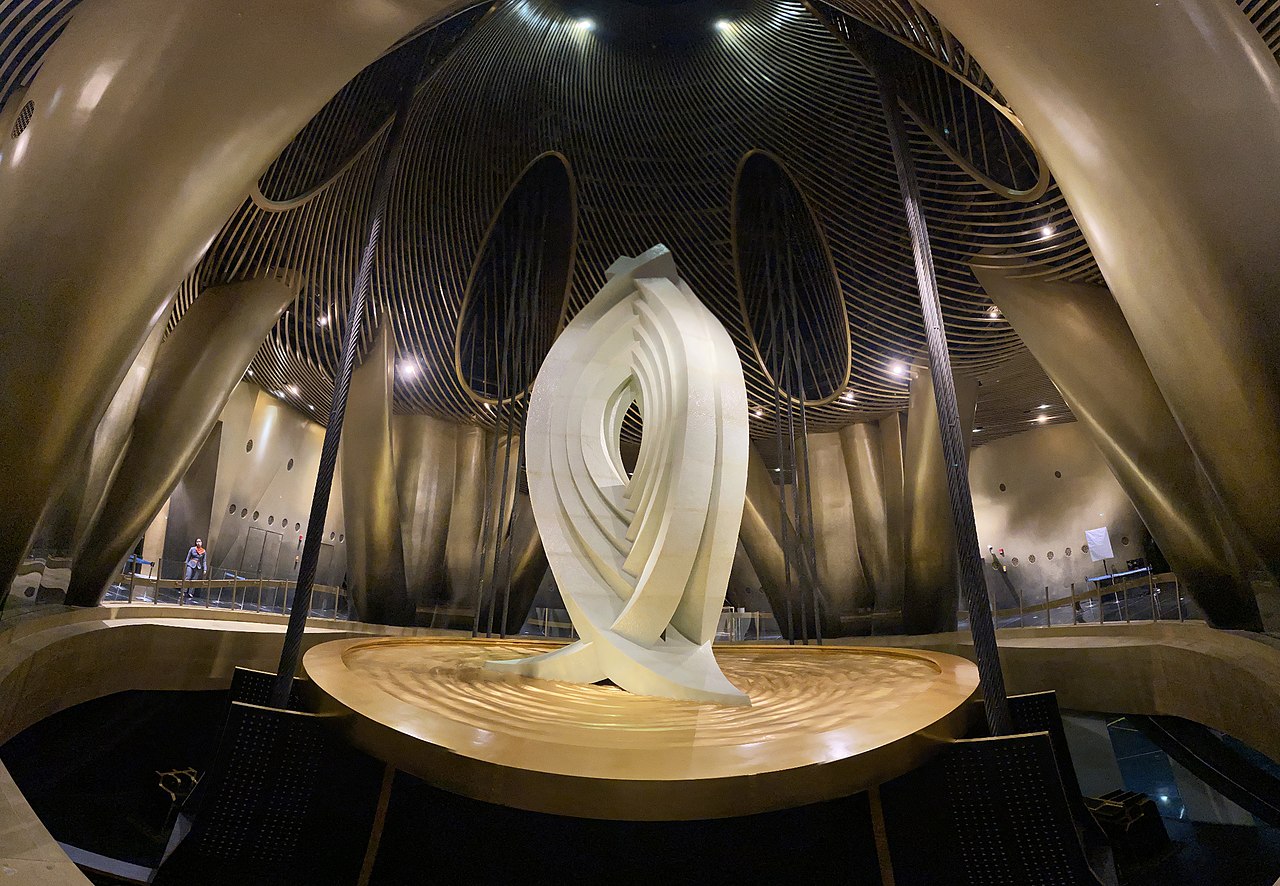
Although the physics behind mass-spring-damper systems is classical, the large-scale application to skyscrapers and long-span bridges became widespread in the late 20th century. One famous example is the tuned mass damper near the top of Taipei 101, where a massive pendulum reduces wind-induced sway; see Taipei 101. TMDs have also been integrated into high-rise designs and retrofits to manage resonant amplification and improve seismic performance (building systems, structural response).

Applications, benefits and examples
- Buildings and towers: reduce occupant motion, protect non-structural elements, and limit fatigue in structural members (seismic performance).
- Bridges: control vibration from traffic and wind, extending service life.
- Machinery and vehicles: improve ride quality and protect sensitive equipment (automotive uses).
Variants, limitations and notable facts
Variants include multiple tuned masses, active and semi-active systems that adapt tuning in real time, and geometric strategies like tapered or pyramid-shaped profiles that avoid strong resonances; some designs use pyramid forms to reduce resonant amplifications (pyramid-shaped, resonant amplification). While TMDs can greatly reduce peak motions, they must be carefully tuned to the dominant frequencies and may require maintenance. They are one element of an overall vibration-control strategy that can include isolation bearings, dampers, and performance-based design (skyscraper examples, bearing treatments, seismic considerations).

Related articles
Author
AlegsaOnline.com Tuned mass damper: purpose, design, history, and applications Leandro Alegsa
URL: https://en.alegsaonline.com/art/102018
Sources
- commons.wikimedia.org : Structural control