
Pyramid: forms, history, and cultural significance
A pyramid is a tapered geometric structure found worldwide. This article explains types, parts, historical development, uses, and notable examples from ancient Egypt to Mesoamerica and modern architecture.
A pyramid is a monumental structure with a polygonal base and triangular faces that converge to a point or a flat platform. Built in many eras and regions, pyramids range from simple stepped mounds to carefully finished stone monuments. They combine geometric form and durable materials to serve architectural, ceremonial, and funerary purposes across cultures. For further context see additional resources.
Image gallery
10 Images
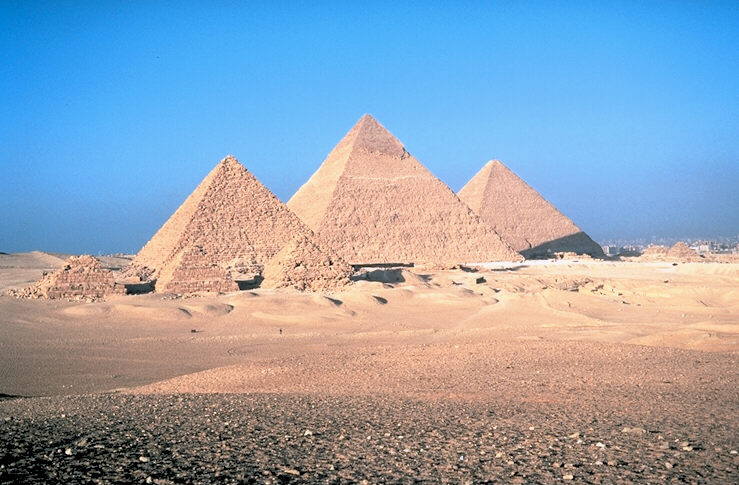


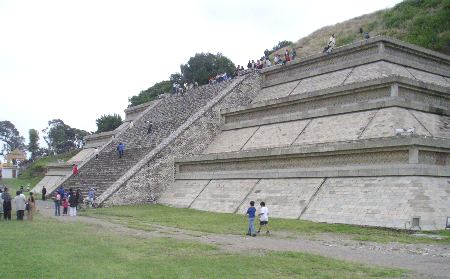


Form and components
Typical elements of a pyramid include a base, sloping faces, an apex (or summit platform in stepped varieties), and internal chambers or passages in some examples. Materials vary by place and period: cut stone in Egypt, earth and clay in some American pyramids, and brick for Mesopotamian ziggurats. Orientation and slope were often chosen with symbolic or practical concerns, such as cardinal alignment or stability; modern studies discuss engineering details and angle choices. See structural notes at technical sources.
Origins and historical development
The English term derives from the Greek pyramis, originally a kind of cake; ancient peoples had their own names and concepts for these monuments. In Egypt, early stepped forms developed into smooth-sided pyramids during the Old Kingdom. The step pyramid of Djoser at Saqqara, built in the third dynasty (early third millennium BCE), is among the earliest large stone examples. The Great Pyramid of Giza, constructed for Pharaoh Khufu, later became famed as one of the Seven Wonders of the ancient world. Pyramidal forms also appear independently in Mesoamerica, Nubia, and elsewhere; see comparative surveys at comparative history and regional studies.
Functions and cultural roles
Pyramids most commonly served as tombs, monumental markers, or temple platforms. In ancient Egypt they were primarily funerary monuments intended to house the deceased ruler and associated ritual spaces; in Mesoamerica they often supported temples and ritual stages. Beyond burial and worship, pyramids could encode cosmological, political, or astronomical meanings, and they frequently functioned as focal points of ritual and urban design. For anthropological perspectives consult cultural analyses.
Construction and study
Archaeologists and engineers study pyramid construction using evidence from quarry sites, tool marks, and ancient records where available. Hypotheses about methods include ramp systems, levering, and organized labor forces; each site requires its own interpretation based on material and context. Ongoing research combines field archaeology, experimental reconstruction, and engineering analysis; further reading at research summaries.
- Major types: Egyptian smooth-sided, Egyptian stepped, Mesoamerican temple pyramids, Mesopotamian ziggurats.
- Notable facts: Some pyramids are among the largest human-made structures by volume; several have precise alignments or mathematical proportions that inspired later architecture.
Today pyramids remain potent symbols in art and architecture, and they continue to attract study for their engineering, symbolic power, and historical importance. Whether ancient tomb or modern monument, the pyramid shape endures as one of humanity's most recognizable forms.
Questions and answers
Q: What is a pyramid?
A: A pyramid is a structure, usually of stone, built in the shape of a pyramid.
Q: Where have pyramids been built throughout history?
A: Pyramids have been built in many different parts of the world, from ancient to modern times.
Q: What is the origin of the word "pyramid"?
A: The word "pyramid" comes from the Greek word pyramis which meant "wheat cake."
Q: What was the ancient Egyptian word for pyramids?
A: The ancient Egyptian word for pyramids was something like "Mer."
Q: What is the Great Pyramid of Giza?
A: The Great Pyramid of Giza was one of the Seven Wonders of the ancient world.
Q: When were the first pyramids built?
A: The first pyramids were built in 2630 B.C.
Q: Who was the oldest known pyramid made for?
A: The oldest known pyramid was made for king Djoser of the third Dynasty.
Related articles
Author
AlegsaOnline.com Pyramid: forms, history, and cultural significance Leandro Alegsa
URL: https://en.alegsaonline.com/art/80232
Sources
- ducksters.com : "Ancient Egyptian History for Kids: Pyramids"
- thedigitalgroup.com : thedigitalgroup.com/
- conspiration.ca : "La pyramide de la baies des HaHa:"
- kurier.me : В Витебске открыли пирамиду «Марко-сити»
- vitebsk.biz : В Витебске прошло открытие торгово-развлекательного комплекса «Марко-сити»
- zeitpyramide.de : Conception
- santuariodioropa.it : "THE OTHER OROPA: A Guide to the Monumental Cemetery of the Sanctuary"
- vitruvius.com.br : vitruvius.com.br/revistas/read/arquitextos/13.151/4465