
Tsaagan — a Late Cretaceous dromaeosaurid from Mongolia
Tsaagan is a small dromaeosaurid theropod from the Late Cretaceous of Mongolia. Known from well-preserved remains, it is closely related to Velociraptor and Linheraptor and illuminates dromaeosaur evolution.
Overview
Tsaagan (often cited as Tsaagan mangas, Mongolian for "white monster") is a small carnivorous dinosaur placed in the family Dromaeosauridae. It lived in central Asia during the Late Cretaceous, and its fossils come from deposits that preserve an arid, dune-dominated landscape. Tsaagan is important for understanding the diversity and anatomy of short-snouted dromaeosaurids that lived alongside better-known forms.
Image gallery
9 Images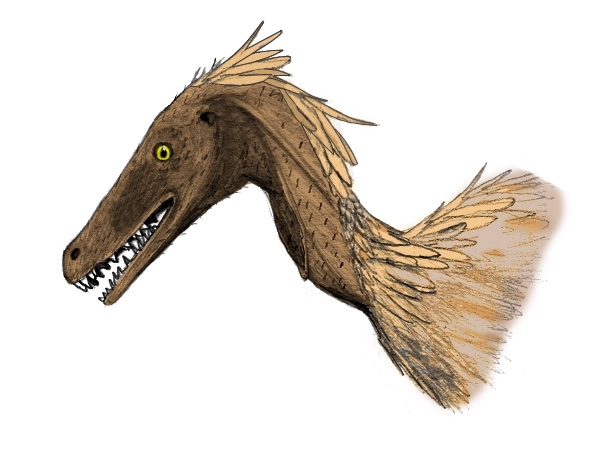


Anatomy and paleobiology
Like other dromaeosaurids, Tsaagan shows adaptations for an active predatory lifestyle: a lightweight, hollow-boned skeleton, recurved teeth, and the characteristic sickle-shaped claw on the second toe. Although a complete soft-tissue record is lacking for Tsaagan specifically, close relatives indicate these animals bore filamentous feathers and were agile, fast-moving hunters. Skull details distinguish it from other dromaeosaurids and help infer feeding mechanics and sensory capabilities.
Discovery and naming
The holotype was recovered from the Djadokhta Formation, a fossil-rich unit in what is now Mongolia. Early work compared the specimen with other small theropods, and it was initially thought to belong to the same species as some better-known dromaeosaurids. Detailed imaging, including CT scanning in the late 1990s, showed diagnostic skull and jaw features that justified erecting a separate name and helped clarify its anatomy.
Classification and scientific debate
After study, researchers placed Tsaagan within Dromaeosauridae but found it was closely allied to forms such as Velociraptor. Subsequent phylogenetic analyses recovered a close relationship with Linheraptor, prompting discussion about the boundaries of genera and whether some specimens might represent the same genus. Such taxonomic debate is common in paleontology, where new specimens and methods (for example, tomographic imaging) can change interpretations.
Paleoenvironment and significance
Tsaagan lived in a region dominated by dunes and intermittent streams; the same formations preserve a diverse vertebrate fauna including mammals, lizards, and other theropods. Its discovery contributes to a more complete picture of late Mesozoic ecosystems in Asia and illustrates the evolutionary experiments among small predatory dinosaurs just before the end of the Cretaceous. Continued study of Tsaagan and closely related taxa refines our understanding of dromaeosaurid diversity, anatomy, and paleobiogeography.
Further reading
- For anatomy and CT-based studies see targeted research papers and institutional summaries (Tsaagan resources).
- Comparative analyses of dromaeosaurids place this taxon near Velociraptor and Linheraptor in many phylogenies.
Related articles
Author
AlegsaOnline.com Tsaagan — a Late Cretaceous dromaeosaurid from Mongolia Leandro Alegsa
URL: https://en.alegsaonline.com/art/101855