
Tukeit Hill frog (Allophryne ruthveni): taxonomy, range, and natural history
Overview of the Tukeit Hill frog (Allophryne ruthveni), its placement in Allophryninae, distribution across northern South America, discovery at Tukeit Hill, and notable biological and conservation notes.
The Tukeit Hill frog (Allophryne ruthveni) is a Neotropical amphibian recognised for its distinct taxonomic position and limited but scattered distribution. It is placed in the genus Allophryne and treated as the sole representative of the subfamily Allophryninae, a clade that recent systematic work has positioned within the family Centrolenidae. Though not one of the most widely known frogs, it attracts attention because of its unusual combination of characters and biogeographic history.
Image gallery
5 Images


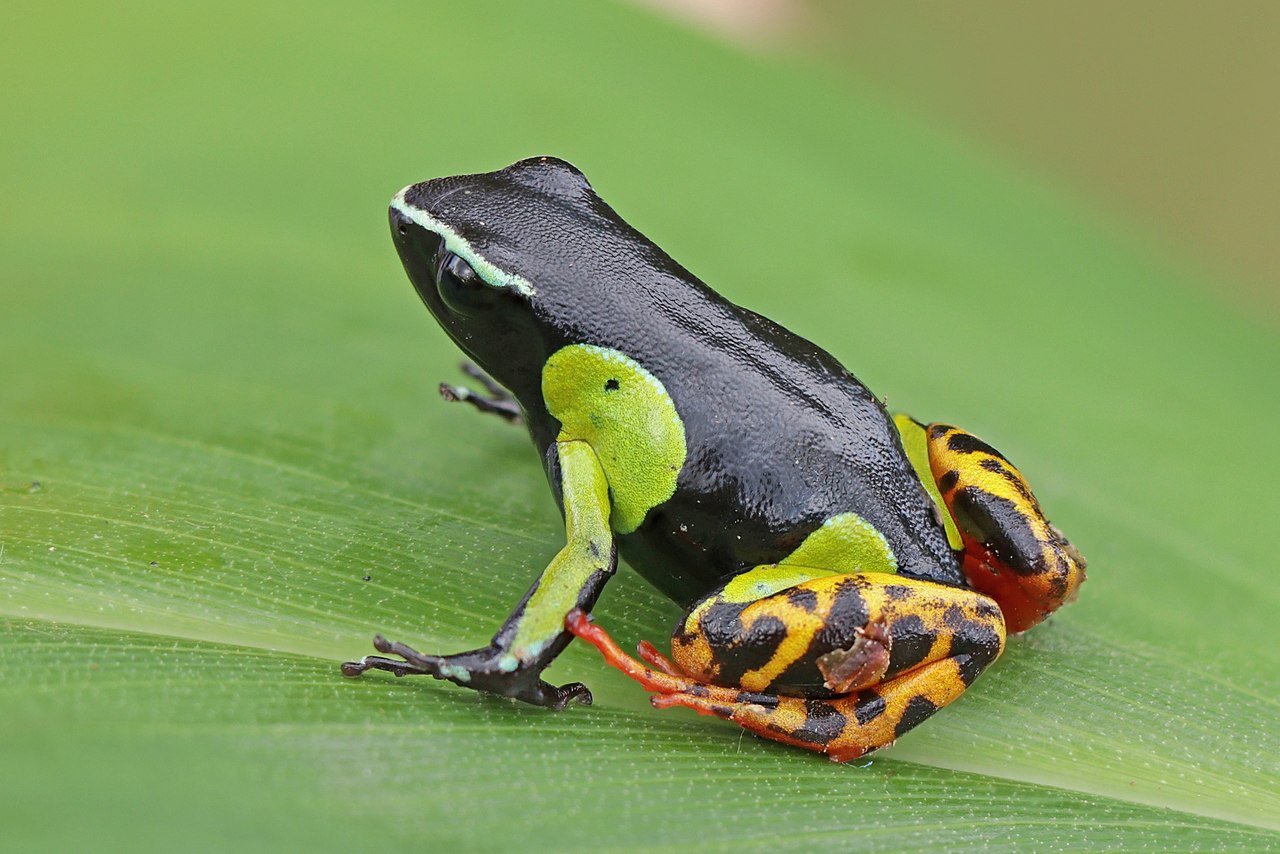

Distribution
Specimens and field reports indicate the species occurs in parts of the northern and central South American mainland, principally across the Guiana Shield and nearby areas. Confirmed localities include Guyana, Venezuela, Brazil, Bolivia and Suriname. The holotype was collected on Tukeit Hill, below Kaieteur Falls in Guyana, which is the origin of the common English designation Tukeit Hill frog.
Appearance and ecology
Descriptions emphasise that Allophryne ruthveni combines traits that made its affinities difficult to resolve historically. It is generally reported as a small forest frog associated with low vegetation, leaf litter and humid microhabitats near streams and forest margins. Like many tropical frogs it is presumed largely insectivorous; specifics of its reproductive behaviour and tadpole ecology are not comprehensively documented and remain subjects for ongoing field study.
Taxonomy and discovery
The species was named from material collected at Tukeit Hill, and the locality has remained central to its identity. Over time different authors have proposed varying placements for the genus, sometimes treating it as distinctive at family rank and at other times nesting it within broader neotropical families. Modern revisions typically retain its unique subfamily status (Allophryninae) while situating that group within Centrolenidae as a result of morphological and molecular evidence.
Importance and conservation
Beyond taxonomic interest, Tukeit Hill frogs are useful in studies of amphibian evolution and South American biogeography because they illustrate how isolated lineages persist in older tropical landscapes. Like many amphibians of humid forests, they are potentially vulnerable to habitat alteration, pollution and emerging diseases; conservation attention depends on local surveys and habitat protection measures rather than on any single universal assessment.
Notable facts
- The genus is cited in the literature as Allophryne and contains a small number of described species.
- It is currently the only member of the subfamily Allophryninae, emphasising its distinctive position among related frogs.
- The type locality at Tukeit Hill, near Kaieteur Falls in Guyana, is the source of its common English name Tukeit Hill frog.
- Reported range includes nations such as Venezuela, Brazil, Bolivia and Suriname, though distribution records vary in density and certainty.
Questions and answers
Q: What is the Tukeit Hill Frog?
A: The Tukeit Hill Frog is one of the two described species in the genus Allophryne, and it is the only member of the subfamily Allophryninae.
Q: What is the name of the other species in the genus Allophryne and which family and subfamily do they belong to?
A: The other species in the genus Allophryne is Allophryne resplendens. Both species belong to the family Centrolenidae and the subfamily Allophryninae.
Q: Where can the Tukeit Hill Frog be found?
A: The Tukeit Hill Frog can be found in Guyana, Venezuela, Surinam, Brazil and Bolivia.
Q: What is the significance of Tukeit Hill in relation to the Tukeit Hill Frog?
A: The holotype of the Tukeit Hill Frog was discovered at Tukeit Hill, below Kaieteur Falls, Guyana. This is the reason for its common English name.
Q: How many species are in the subfamily Allophryninae?
A: The subfamily Allophryninae only has one species, which is the Tukeit Hill Frog.
Q: What family does the genus Allophryne belong to?
A: The genus Allophryne belongs to the family Centrolenidae.
Q: In which countries can the Tukeit Hill Frog be found?
A: The Tukeit Hill Frog can be found in Guyana, Venezuela, Surinam, Brazil and Bolivia.
Related articles
Author
AlegsaOnline.com Tukeit Hill frog (Allophryne ruthveni): taxonomy, range, and natural history Leandro Alegsa
URL: https://en.alegsaonline.com/art/101968
Sources
- hdl.handle.net : "A second species of the family Allophrynidae (Amphibia, Anura)"
- digitallibrary.amnh.org : PDF fulltext
- plaza.ufl.edu : PDF fulltext
- tolweb.org : Allophryne ruthveni
- natureserve.org : Allophryne ruthveni
- iucnredlist.org : Allophryne ruthveni