
Tunicate (Urochordata): sea squirts, life cycle, diversity and significance
Tunicates (Urochordata) are marine chordates with a protective tunic. They include sessile ascidians and planktonic salps and larvaceans, notable for filter feeding, metamorphosis and importance in ecology and research.
Tunicates, also called sea squirts and classified in the subphylum Urochordata, are a diverse group of marine animals within the Chordates. They are best known for an outer protective covering, the tunic, and for a life cycle that often includes a free-swimming larval stage with chordate features. Tunicates occur in a range of forms from solitary, sessile encrusting forms to free-swimming colonies and pelagic species.
Image gallery
10 Images
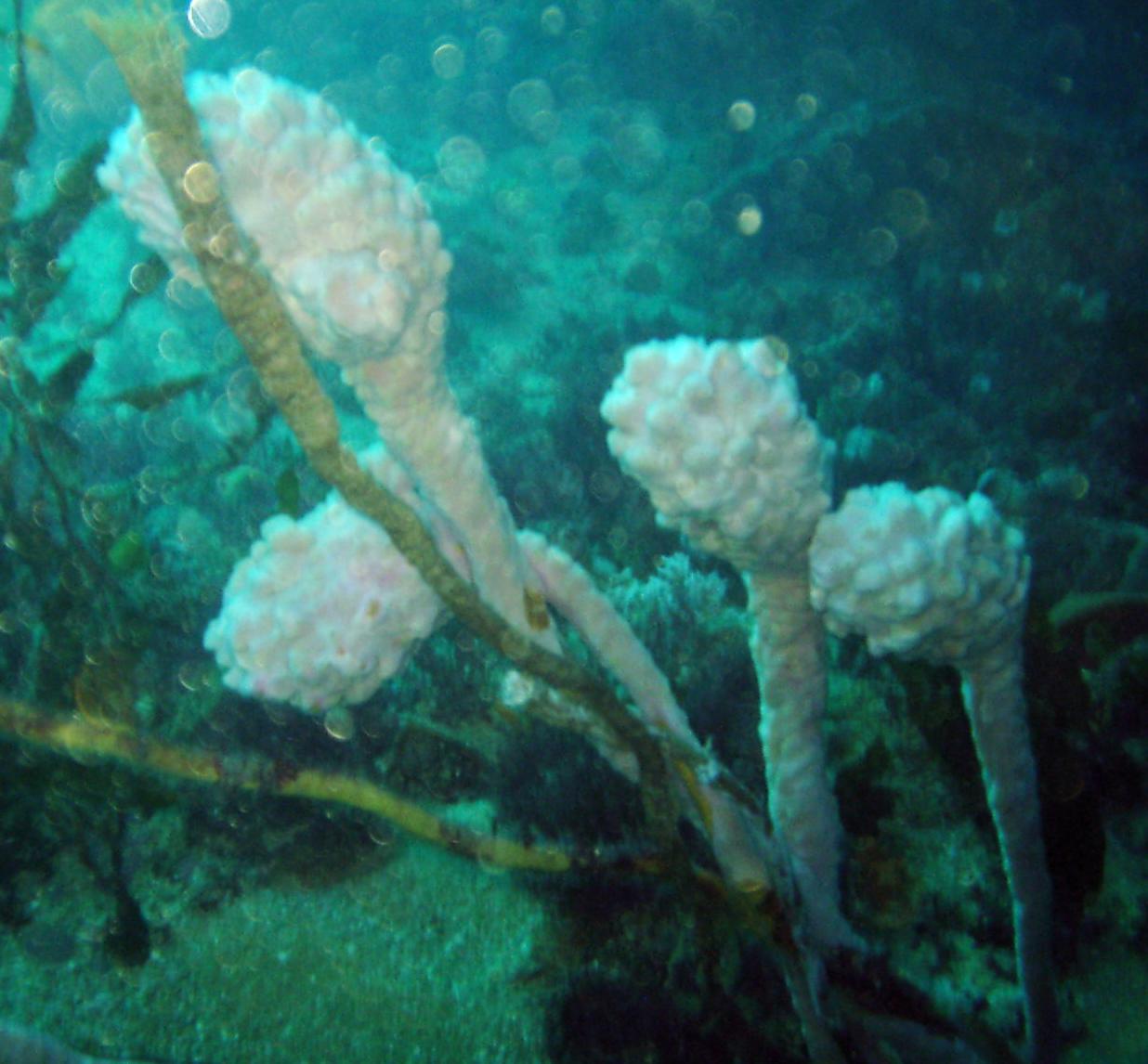


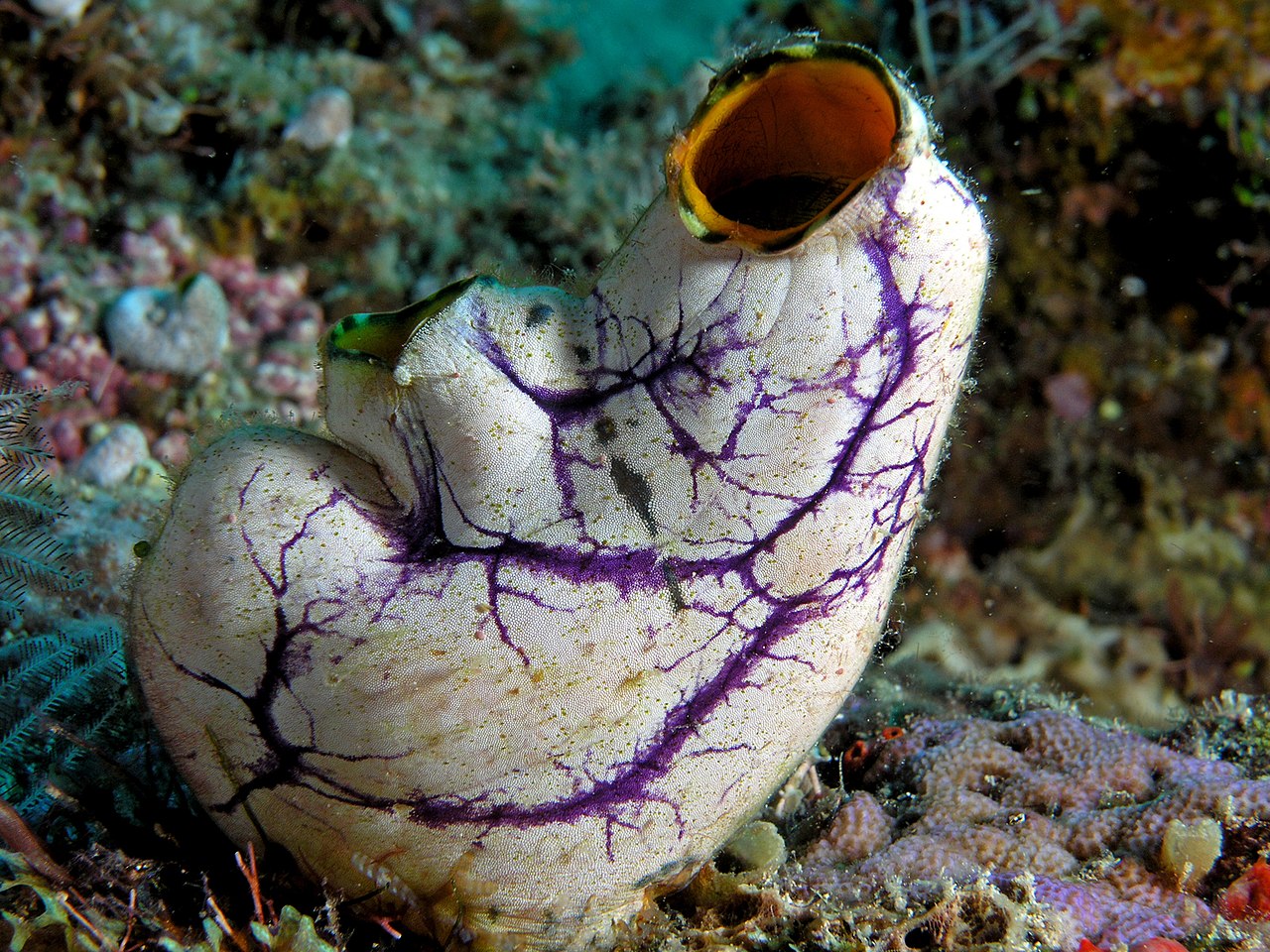


Morphology and feeding
Most tunicates are suspension filter feeders. Water enters through an incurrent siphon, passes through a ciliated pharyngeal or branchial basket where food particles are trapped in mucus produced by the endostyle, and exits through an excurrent siphon. The tunic is an extracellular layer that can be gelatinous or leathery and contains a cellulose-like compound that helps support and protect the animal. Adult anatomy and lifestyle vary: many ascidians attach to rocks and other substrates, while thaliaceans and appendicularians remain planktonic.
Life cycle and reproduction
Tunicates frequently undergo a dramatic metamorphosis. A short-lived tadpole-like larva possesses a notochord and dorsal nerve cord, features linking tunicates to other chordates; these are typically lost or reduced at metamorphosis to the adult form. Reproduction varies by group: many ascidians are hermaphroditic and reproduce sexually by releasing gametes or by brooding, while colonial species also reproduce asexually by budding to form interconnected zooids.
Diversity and classification
The subphylum includes the traditional classes Ascidiacea (sea squirts), Thaliacea (salps and pyrosomes) and Appendicularia (larvaceans). Tunicates feed largely on plankton and suspended particles and are found from shallow coastal areas to the open ocean. Estimates suggest roughly three thousand described species, many of which inhabit the littoral zone and benthic communities.
Ecological role and human relevance
As filter feeders, tunicates influence water clarity, nutrient cycling and plankton communities. Some species are important members of fouling communities on boats and aquaculture gear and can become invasive when transported by shipping. Tunicates are also valuable in research: certain species serve as model organisms in developmental and genomic studies because their simple body plans and larval chordate traits illuminate vertebrate origins.
Many tunicates form colonies or semi-colonies with shared tunics and vascular connections; others are solitary. Their biology touches marine ecology, invasion biology and evolutionary developmental biology. For further information see resources on colonial tunicates, general chordate relationships, tunicate feeding strategies, the structure of the tunic, common substrates for attachment, dietary links to plankton and summaries of species diversity and coastal habitats. For classification details consult specialized taxonomic treatments at Urochordata references.
Questions and answers
Q: What are tunicates?
A: Tunicates are a subphylum of the Chordates, which are sea filter-feeders that live mainly on plankton.
Q: Why are tunicates called tunicates?
A: They are called tunicates because the adult form is covered by a leathery tunic that supports and protects the animal.
Q: What is the habitat of tunicates?
A: The adults live mostly on the sea floor, in the littoral zone.
Q: How many species of tunicates are there?
A: Tunicates contain about 3,000 species.
Q: What is the adult form of tunicates like?
A: The adult form of tunicates is sessile, meaning they are stuck to rocks.
Q: Are all tunicates solitary organisms?
A: No, many tunicates are colonial or semi-colonial in their adult stage.
Q: What is the main food source for tunicates?
A: Tunicates are sea filter-feeders and their main food source is plankton.
Related articles
Author
AlegsaOnline.com Tunicate (Urochordata): sea squirts, life cycle, diversity and significance Leandro Alegsa
URL: https://en.alegsaonline.com/art/102026
Sources
- species.wikimedia.org : Urochordata
- doi.org : 10.1038/nature04336
- pubmed.ncbi.nlm.nih.gov : 16495997
- doi.org : 10.1002/dvg.20450
- pubmed.ncbi.nlm.nih.gov : 19003928
- biomedcentral.com : "Tunicate mitogenomics and phylogenetics: peculiarities of the Herdmania momus mitochondrial genome and support for the new chordate phylogeny"
- doi.org : 10.1186/1471-2164-10-534
- ncbi.nlm.nih.gov : 2785839
- pubmed.ncbi.nlm.nih.gov : 19922605
- sciencedaily.com : Sea Squirt, heal thyself: scientists make major breakthrough in regenerative medicine