
Tupuxuara — crested pterosaur from the Santana Formation
Tupuxuara is a crested pterosaur from the Early Cretaceous Santana Formation of Brazil. Known for its large skull crest and variable size, its exact classification and diet remain subjects of scientific discussion.
Overview — Tupuxuara is an extinct flying reptile known from fossils in northeastern Brazil. It lived during the Early Cretaceous, roughly 112 million years ago, and is usually recognized by an elongated skull with an impressive bony crest. The animal is part of the broader group of flying reptiles called pterosaurs and its remains have been recovered from the exceptionally preserved sedimentary deposits of the Santana Formation.
Image gallery
10 Images


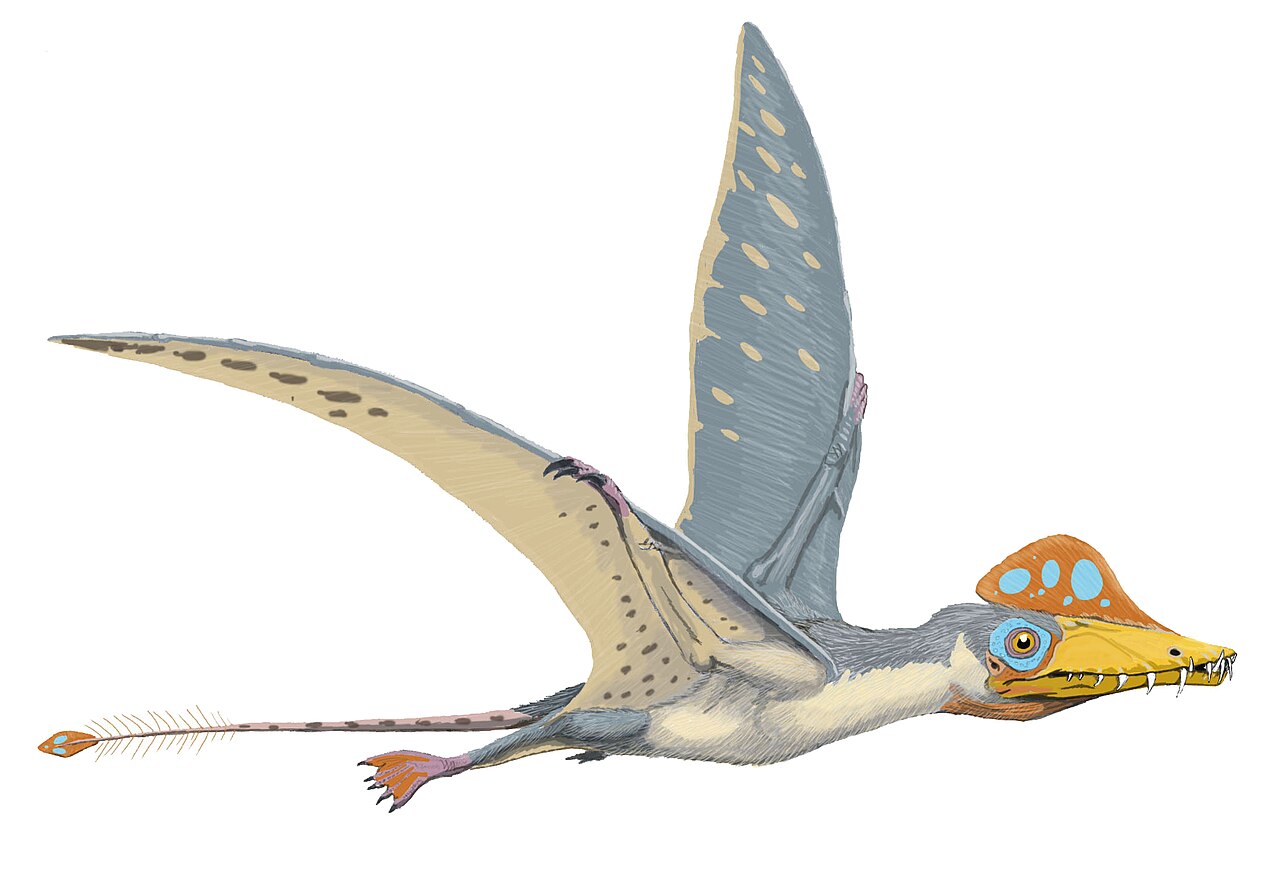

Physical characteristics
Tupuxuara had a toothless, pointed beak and a large cranial crest that varied in shape and size between specimens. Skull lengths ranged from relatively small to very large — the largest known skull measures about 130 cm, which has been used to infer wingspan estimates of roughly 5.5 metres for some individuals. Body proportions suggest a lightly built animal adapted for powered flight rather than terrestrial running.
Classification and scientific debate
Researchers have debated Tupuxuara's precise position within pterosaur evolution. It has often been grouped with tapejarid or thalassodromine pterosaurs, a subset of toothless, crested forms. Some older works have compared broad anatomical similarities with azhdarchoid pterosaurs (the clade that includes giant forms such as Quetzalcoatlus), but its exact affinities remain under study and are refined as new fossils and analyses appear.
Fossil record and discovery
Fossils of Tupuxuara come from the Santana Formation, a Konservat-Lagerst‰tte known for finely preserved skeletons and occasional soft-tissue impressions. These deposits record a coastal and inland-sea environment from the Early Cretaceous, about 112 million years ago during the Early Cretaceous period. Several species have been described from the formation, showing a range of sizes and crest morphologies.
Ecology and behaviour
Diet and lifestyle remain topics of inference rather than direct proof. Proposed feeding behaviors include catching fish or other small prey from the water, scavenging, or exploiting plant resources; some toothless crested pterosaurs are interpreted as frugivores or generalists. The crest may have served multiple roles — species recognition, sexual display, aerodynamic function, or thermoregulation — but display and social signalling are widely considered likely explanations.
Notable facts and importance
- Its large, distinctive crest makes Tupuxuara one of the more visually striking pterosaurs from South America.
- Fossils from the Santana Formation contribute to understanding pterosaur diversity and the ecosystems of an Early Cretaceous inland sea.
- Ongoing studies continue to refine its relationships with other crested, toothless pterosaurs and to test hypotheses about diet and flight.
Because classification and ecological interpretations continue to be refined, Tupuxuara provides an active case study in how new fossils and methods change our view of prehistoric life. For general background on pterosaurs and related taxa visit resources linked above.
Related articles
Author
AlegsaOnline.com Tupuxuara — crested pterosaur from the Santana Formation Leandro Alegsa
URL: https://en.alegsaonline.com/art/102049