
Tsetse fly (Glossina) — African blood‑feeding fly and disease vector
Tsetse flies (genus Glossina) are blood‑feeding flies in sub‑Saharan Africa that transmit trypanosome parasites, affecting humans and livestock. They have distinctive biology, ecology, and targeted control methods.
Tsetse flies are large biting flies of the genus Glossina that occur across much of sub‑Saharan Africa. Both males and females take meals from vertebrate hosts, feeding directly on blood. Because they transmit trypanosome parasites, tsetse are important insect vectors linked to human sleeping sickness and diseases in livestock; these impacts shape land use and agriculture in affected regions. Sleeping sickness (human African trypanosomiasis) and related animal trypanosomiases remain the best known consequences of tsetse bites, while research continues into other associated pathogens and ecological effects (animal disease impacts).
Image gallery
10 Images


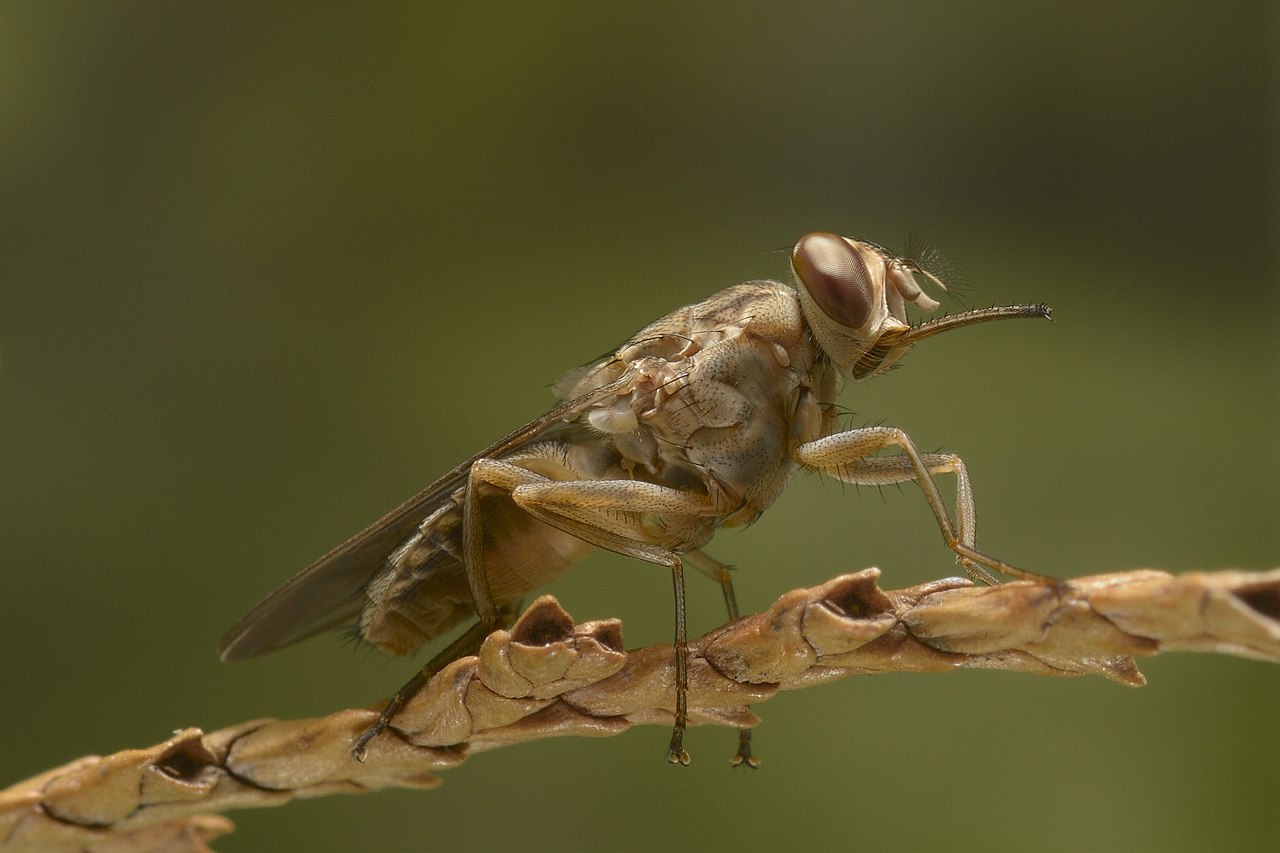


Physical features and life cycle
Tsetse have a characteristic appearance: a stout body, long proboscis held forward, and wings that meet neatly at rest. Their feeding behaviour relies on vision and olfactory cues; both sexes require repeated blood meals. Reproductively they are unusual among flies: females nurture a single larva internally and deposit it ready to pupate, a viviparous strategy that reduces offspring number but increases survival of each young.
Taxonomy and habitat groups
The genus is commonly divided into habitat‑adapted groups. Species associated with open grasslands and wildlife are linked to savannah ecosystems, riverine or gallery‑forest species occupy waterways and floodplain vegetation, and forest species live in denser tropical woodlands. These ecological divisions explain why some tsetse are concentrated on riverbanks and wetlands while others persist in wooded or forest zones. Local species composition determines risk to people and livestock in any area.
Impact, control and management
The medical and economic importance of tsetse has driven sustained control efforts. Methods combine habitat management, traps and targets that attract and kill flies, insecticide‑treated livestock, and population suppression techniques such as the sterile insect technique (SIT). Integrated programmes aim to reduce transmission of trypanosomes and restore grazing potential; success requires sustained surveillance because populations can rebound if control lapses.
Notable facts: tsetse‑borne disease shaped historical settlement and agriculture in parts of Africa, and their unusual reproductive biology has made them a subject of intensive study in vector biology. Contemporary priorities include improved diagnostics, targeted control to protect both public health and livelihoods, and monitoring ecological changes that alter tsetse distribution.
Questions and answers
Q: Where are tsetse flies found?
A: Tsetse flies are found in the tropical regions of Africa.
Q: What do tsetse flies feed on?
A: Tsetse flies feed on the blood of vertebrates.
Q: What are tsetse flies known for?
A: Tsetse flies are known for being the insect vectors of some serious diseases, including sleeping sickness.
Q: How many species of tsetse flies are found in the genus Glossina?
A: There are about 34 species of tsetse flies in the genus Glossina.
Q: In how many groups are the tsetse fly species divided?
A: The tsetse fly species are divided into three groups.
Q: Where do tsetse flies of one of the species groups live?
A: Tsetse flies of one of the species groups live in the tropical forests.
Q: What is the name of the tsetse fly genus?
A: The name of the tsetse fly genus is Glossina.
Related articles
Author
AlegsaOnline.com Tsetse fly (Glossina) — African blood‑feeding fly and disease vector Leandro Alegsa
URL: https://en.alegsaonline.com/art/101872