
Tsintaosaurus: the crested hadrosaur from eastern Asia
Tsintaosaurus is a duck-billed (hadrosaurid) dinosaur from Late Cretaceous eastern Asia, notable for its unusual nasal crest and evidence of herbivory, locomotion, and social behavior.
Overview
Tsintaosaurus is a genus of duck-billed dinosaur known from Late Cretaceous deposits in eastern Asia. Its name refers to the port city of Qingdao (formerly spelled Tsingtao). The type species, often cited as T. spinorhinus, belongs to the broader group of hadrosaurid dinosaurs and is recorded from fossil-bearing rock in China. Like other members of its family, it combined adaptations for grazing on plants with a versatile mode of locomotion.
Image gallery
10 Images



Distinctive anatomy
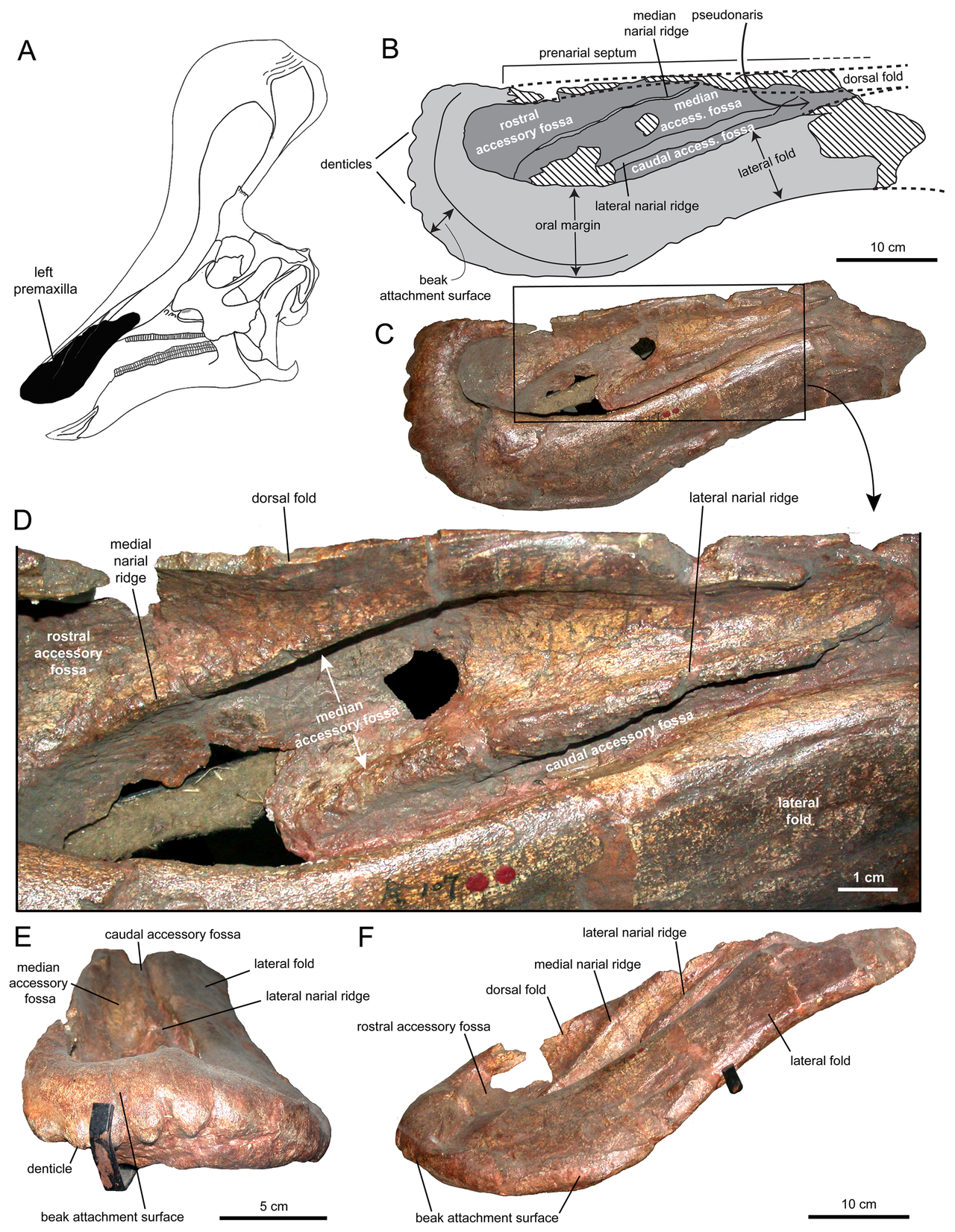
T. is best known for a prominent crest formed mainly from the nasal bones. Early reconstructions depicted this crest as an upright spike; later study has shown the structure could be hollow and differently oriented, and interpretations of its exact shape and function have varied. Beyond the crest, Tsintaosaurus had the flat, broad snout and dental batteries typical of hadrosaurs—tightly packed teeth suited to grinding vegetation.
Classification and relationships
As a genus within the hadrosaur family, Tsintaosaurus is allied with both crested and uncrested duck-billed dinosaurs. Its combination of nasal crest morphology and skull details has made it a subject of study when reconstructing hadrosaur diversity in Asia and when comparing Old World species with North American relatives.
Discovery and research history
Fossil material attributed to Tsintaosaurus was recovered from sediments exposed in eastern China and described by paleontologists in the 20th century. Over time, new finds and reexaminations have refined understanding of the crest and skeletal anatomy, leading to revised reconstructions and debate about the crest's appearance in life. Ongoing study of the original and referred specimens continues to clarify its anatomy and relationships.
Paleobiology and behavior
Tsintaosaurus, like other hadrosaurs, was an herbivore that fed on a wide variety of plants. Its dental batteries allowed efficient processing of tough vegetation. Limb proportions indicate it was a facultative biped—capable of walking on all fours yet able to adopt a bipedal posture for running or reaching. Trace fossils and comparisons with related species suggest hadrosaurids often lived and moved in groups.
Importance and notable facts
- Tsintaosaurus highlights the morphological diversity of Asian hadrosaurs and the variety of crest forms among duck-billed dinosaurs.
- Its nasal crest has been a focal point in discussions about display, species recognition, and potential vocal resonating structures in hadrosaurs.
- Specimens remain relevant for studies of hadrosaur evolution and the biogeography of Late Cretaceous ecosystems in dinosaur-bearing regions.
Researchers continue to compare Tsintaosaurus with related taxa, using new methods and finds to test hypotheses about crest function, social behavior, and evolutionary relationships within the diverse group of hadrosaurs.
Related articles
Author
AlegsaOnline.com Tsintaosaurus: the crested hadrosaur from eastern Asia Leandro Alegsa
URL: https://en.alegsaonline.com/art/101877
Sources
- dinosauria.com : "Dinosauria Translation and Pronunciation Guide T"