
Tramway track: design, types, history and uses
Overview of tramway track systems: components, rail profiles, surface treatments (street, embedded, grassed), installation, history and operational considerations.
Tramway track is the fixed rail infrastructure used by trams and light rail vehicles. Like conventional railways, it consists of two parallel steel rails that define the gauge and guide wheelsets, but tramway track is adapted for urban conditions where vehicles often share street space with other traffic. The design balances durability, ride quality and compatibility with road surfaces to allow both street-running and segregated operation.
Image gallery
10 Images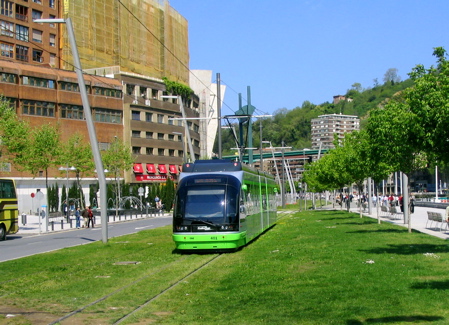




Components and rail profiles
Key elements of tramway track include:
- Rails: Usually steel and available in different profiles. Grooved or girder rails have a channel to accommodate the flange of tram wheels, permitting the rail head to sit flush with the surrounding paving for street-running. Standard flat-bottom rails are used where tracks are on dedicated rights-of-way.
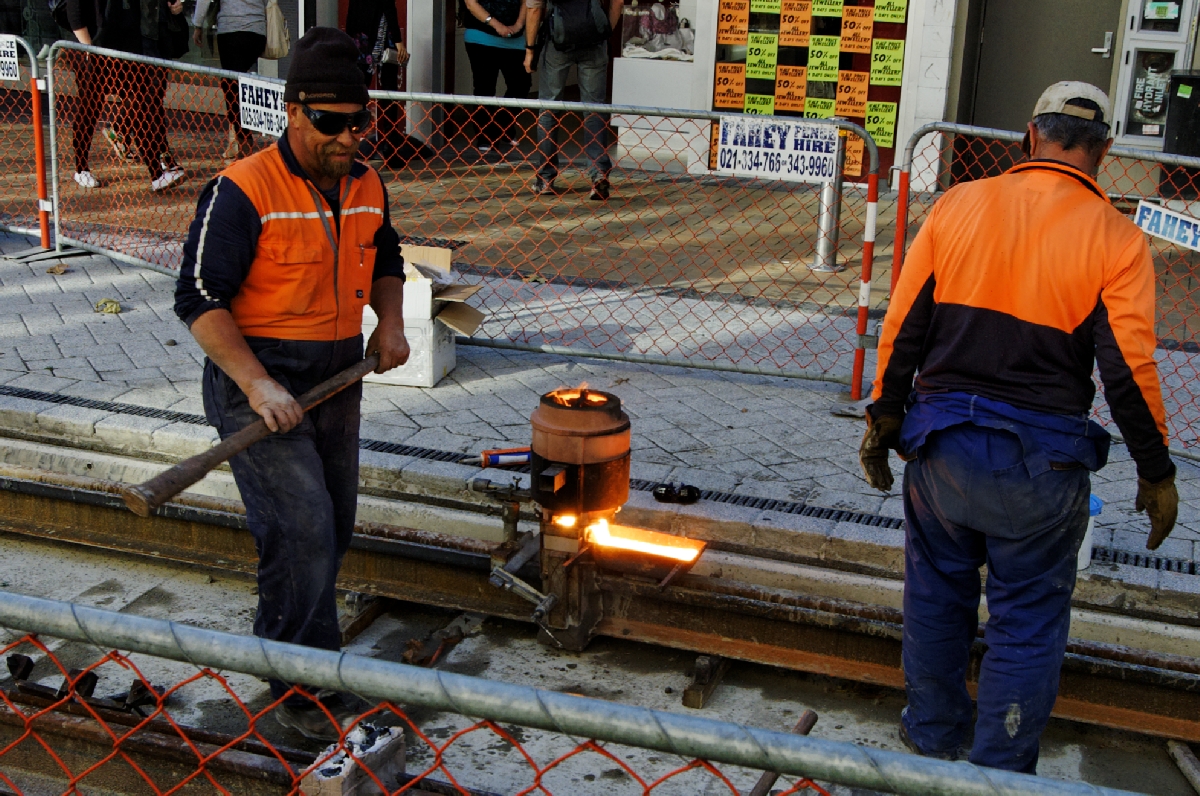
- Sleepers and fastenings: Timber, precast concrete or steel sleepers keep the rails correctly spaced and transfer loads to the trackbed. Fastenings must resist lateral and longitudinal movement while damping vibration.
- Subgrade and ballast or bonded bases: On segregated alignments traditional ballast may be used; in streets, rails are often embedded in concrete or asphalt to form a continuous pavement.
Surfaces and special installations
Tram track can be installed in several surface treatments depending on urban design and environmental goals. Common options include:
- Embedded grooved rail in pavement for true street-running, enabling vehicles and pedestrians to share the carriageway.
- Ballasted track on sleepers for tramways that resemble mainline railroads and allow easier drainage and maintenance.
- Grassed track (track in a lawn), where rails are laid in a vegetated surface to reduce noise and improve urban aesthetics; this approach is often called a "green track" and is valued for its ecological and stormwater benefits.
History and development
Tramway technology evolved from horse-drawn and early steam trams to electrically powered systems during the late 19th and early 20th centuries. The grooved rail was developed to permit tramways to run within streets without obstructing other traffic. Variants of embedded and grassed track have been refined over the 20th and 21st centuries as cities sought quieter, greener transit corridors and lower visual impact.
Uses, advantages and operational considerations
Tram tracks support a range of urban transit services from heritage streetcars to modern low-floor trams. Advantages include high passenger capacity, integration with streetscapes, and reduced emissions when vehicles are electric. Design must address wheel-rail interaction, drainage, noise and vibration, tram priority signaling and maintenance access. Safety and accessibility for pedestrians and cyclists are also central concerns when tracks cross or share public spaces.
Further reading and resources
For technical guidance and case studies, consult authoritative sources on tramway planning, rail profiles and urban track construction: tramway systems overview, rail profiles and standards, steel rail metallurgy, surface treatments for embedded track, concrete and sleeper design, environmental benefits of green track, ecological design guidance, grassed track construction, historical examples, and maintenance and safety practices.
Related articles
Author
AlegsaOnline.com Tramway track: design, types, history and uses Leandro Alegsa
URL: https://en.alegsaonline.com/art/101087