
Trans‑Canada Highway
A coast‑to‑coast Canadian highway network linking provincial capitals and major cities; the main route spans about 7,821 km and includes varied road standards and notable engineering links.

Overview
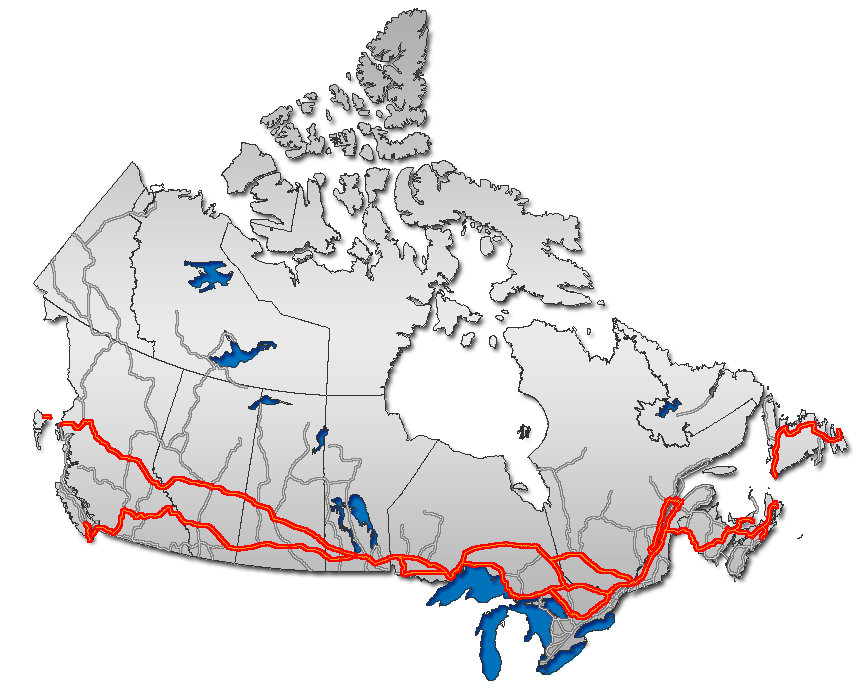
The Trans‑Canada Highway is the principal road network that spans the southern portion of Canada, providing a continuous motor vehicle route between the Pacific and Atlantic coasts. The designated main route runs roughly coast to coast and is commonly cited as about 7,821 kilometres (4,860 miles) in length. In practice the Trans‑Canada is a system made up of the primary national trunk and numerous auxiliary branches and bypasses that together serve long‑distance travel, regional access and freight movement.
Image gallery
10 Images




Route and characteristics
The highway crosses every Canadian province and links many of the country’s largest population centres, passing through or connecting to cities such as Victoria, Winnipeg, Toronto, Montreal and St. John’s. Standards vary along the route: sections range from two‑lane rural highways to multi‑lane divided expressways and urban freeways. The route is identified by a distinctive maple‑leaf shield and its official French name, Route Transcanadienne, appears on bilingual signs in many regions.
History and development
The Trans‑Canada was developed over decades during the 20th century as a federal‑provincial effort to improve national road links. Construction and upgrades continued in phases, reflecting changing traffic demands and engineering advances. Responsibility for maintenance and improvements lies primarily with provincial governments, often with federal funding support for major projects.
Uses and significance
As a cross‑country artery, the Trans‑Canada supports long‑distance passenger travel, interprovincial commerce and tourism. It is important for supply chains that move goods by road, for seasonal travel to regional destinations, and as a contingency route for emergency services. The highway also includes notable structures and ferry connections where geography requires, linking islands and peninsulas into the national network.
Notable facts and distinctions
- The main designated route length is about 7,821 km (4,860 mi); the full network including spurs and alternate alignments is longer.
- Signage typically features a maple‑leaf shield; the highway has bilingual elements in many areas.
- Although nationally identified, the Trans‑Canada is maintained and managed by provincial agencies, reflecting Canada’s federal system.
Together, these features make the Trans‑Canada Highway a defining element of Canadian transportation infrastructure, shaping economic links and travel patterns across the country.
Related articles
Author
AlegsaOnline.com Trans‑Canada Highway Leandro Alegsa
URL: https://en.alegsaonline.com/art/101100
Sources
- transcanadahighway.com : transcanadahighway.com