
Totalitarianism: Overview, Characteristics, History, and Notable Examples
A concise encyclopedia entry describing totalitarianism: defining features, historical development, notable examples, distinctions from authoritarianism, and its social and political effects.
Overview
Totalitarianism is a form of political organization in which the state seeks to regulate nearly every aspect of public and private life. Rather than limiting power to routine governance, a totalitarian regime aspires to reshape society according to an official ideology, concentrating authority in a central leadership and suppressing independent institutions. Elections, if held, are tightly controlled or meaningless; dissent is criminalized; and the state uses propaganda and coercion to sustain its rule.
Image gallery
10 Images





Core characteristics
Scholars commonly identify several recurring features of totalitarian systems. These characteristics often appear together but can vary in degree from one case to another:
- Single ruling party or leader: political pluralism is eliminated and opposition parties are banned or absorbed.
- Official ideology: a totalizing doctrine—political, social, or racial—guides policy and justifies exceptional measures.
- Monopoly of mass communication: the state controls the press, radio, and other means of information to shape public opinion.
- Centralized economic and social control: the government directs major economic activity and influences education, culture, and private behavior.
- Use of terror and surveillance: secret police, show trials, arbitrary arrests, and pervasive monitoring are used to intimidate and neutralize opponents.
- Mobilization and ritual: mass rallies, parades, and symbolic ceremonies display the regime’s dominance and cultivate loyalty.
History and prominent examples
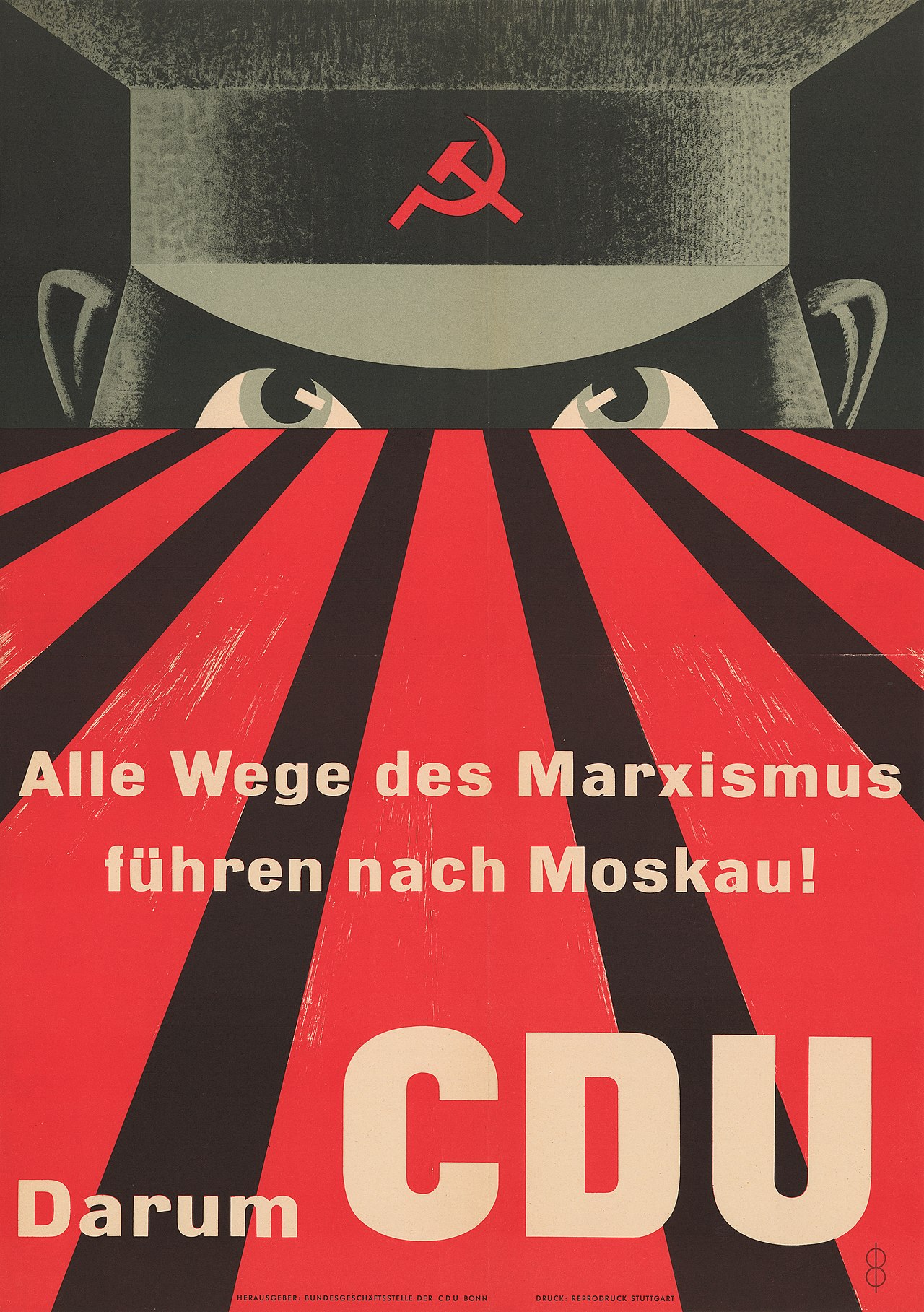
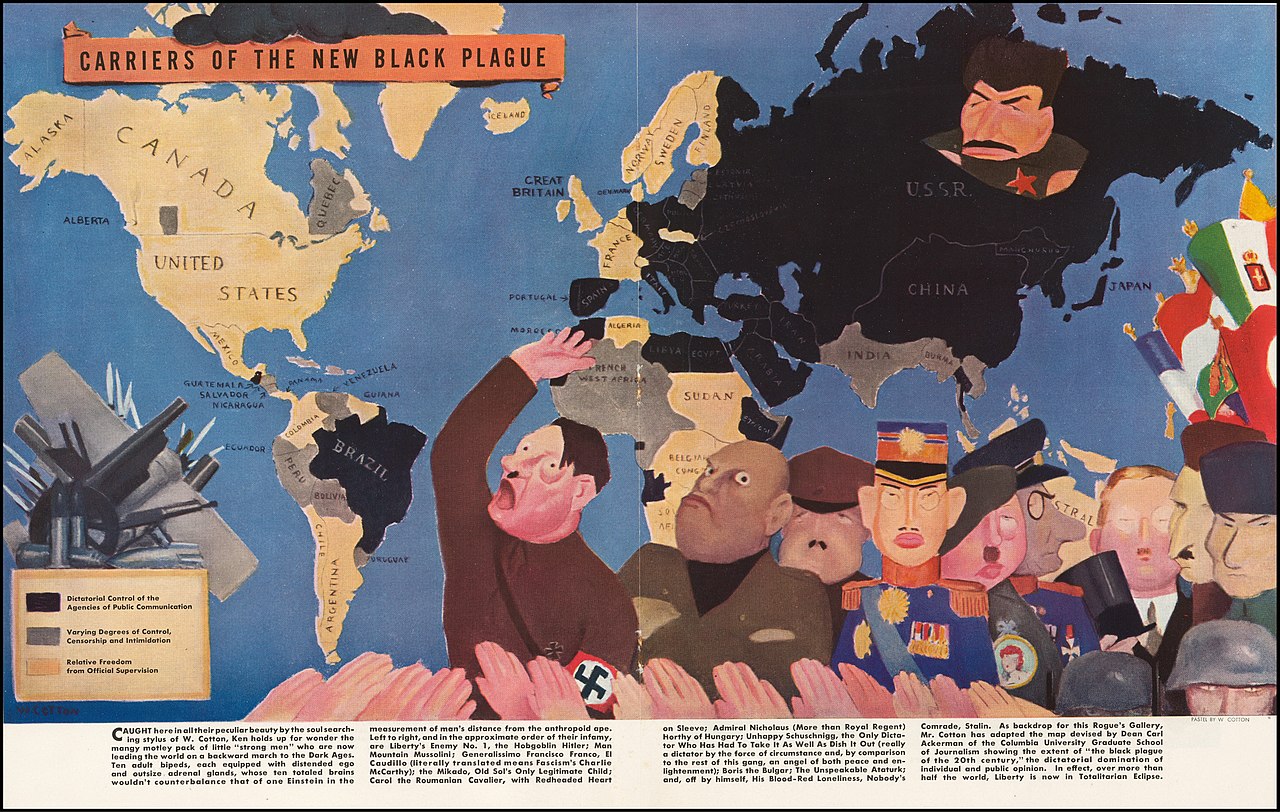
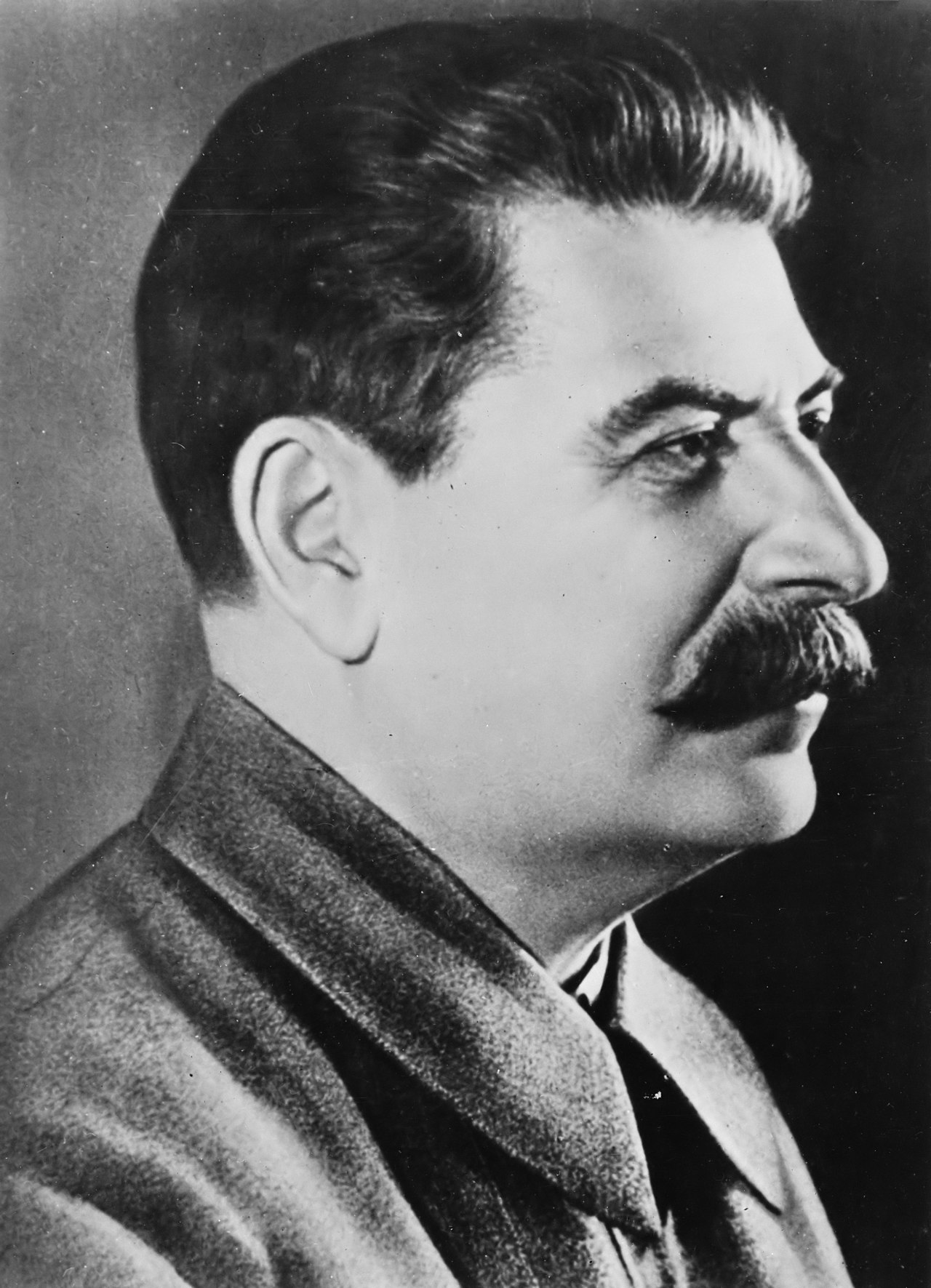
The modern concept of totalitarianism emerged in the 20th century as observers sought to explain extremely centralized and repressive regimes. Widely cited examples include Nazi Germany (Nazi Germany), the Soviet Union (Soviet Union), Fascist Italy (Fascist Italy), and the Democratic People’s Republic of Korea (North Korea). Other states are described by some analysts as exhibiting many totalitarian traits without matching every feature: for example, regimes under Benito Mussolini (Mussolini), Francisco Franco (Franco), António de Oliveira Salazar (Salazar), Mao Zedong (Mao), and the wartime Empire of Japan (Empire of Japan). More recent debates sometimes include countries such as Eritrea (Eritrea) and others with long-standing one-party rule (dictatorships).
Examples and further references
- Nazi Germany — frequently cited as a paradigmatic case.
- Soviet Union — noted for ideological centralization and state terror.
- Fascist Italy — early 20th-century model of party-led control.
- North Korea — contemporary example often highlighted for isolation and cult of personality.
- Eritrea — cited by some observers for long-term restrictions on civic life.
- Dictatorships — a broader category that overlaps with but is not identical to totalitarianism.
- Benito Mussolini, Francisco Franco, and António de Oliveira Salazar — leaders associated with 20th-century authoritarian and fascist movements.
- Mao Zedong — associated with revolutionary mobilization and ideological campaigns.
- Zimbabwe — an example often discussed in studies of prolonged single-party or personal rule.
- Empire of Japan — Japan’s wartime government combined militarism with strict social control.
- Japan — modern state distinct from its wartime predecessor.
- World War II — the global conflict in which several totalizing regimes played dominant roles.
- Satire and literature — cultural responses that critique absolute state power.
- Nineteen Eighty-Four — George Orwell’s dystopian novel often referenced in discussions of surveillance and thought control.
- George Orwell — author whose work shaped popular understandings of totalitarian extremes.
Distinctions and contemporary relevance
Totalitarianism differs from authoritarianism in scope more than in method. While both concentrate power and limit political pluralism, authoritarian regimes typically tolerate limited social and economic pluralism and do not seek to remold citizens’ inner beliefs. Totalitarian movements aim at comprehensive social transformation and sustained mass mobilization. In contemporary politics, scholars and commentators warn that features such as pervasive propaganda, erosion of institutional checks, and expanded emergency powers can produce risks similar to historical totalitarian trends.
Understanding totalitarianism matters for human rights, comparative politics, and civic education. Recognizing the signs—centralized control of information, systematic suppression of independent organizations, and the use of legal or extralegal violence—helps scholars and citizens assess threats to democratic norms and to design safeguards against the concentration of unchecked power.
Related articles
Author
AlegsaOnline.com Totalitarianism: Overview, Characteristics, History, and Notable Examples Leandro Alegsa
URL: https://en.alegsaonline.com/art/100826