
Francisco Franco
Spanish military officer and head of state who led the Nationalists in the Spanish Civil War and ruled Spain as head of an authoritarian regime from 1939 until 1975.
Overview
Francisco Franco (born 4 December 1892 in Ferrol, Galicia; died 20 November 1975 in Madrid) was a Spanish military officer who became the head of the Nationalist forces during the Spanish Civil War and governed Spain as an authoritarian leader from the end of that conflict until his death. Known by supporters as the Caudillo, his rule is commonly described as Francoism: a blend of conservative nationalism, authoritarianism, and elements borrowed from the Falange movement. The Falangist anthem "Cara al Sol" was associated with the movement that helped support his regime.
Image gallery
10 Images


Rise to power and the Civil War
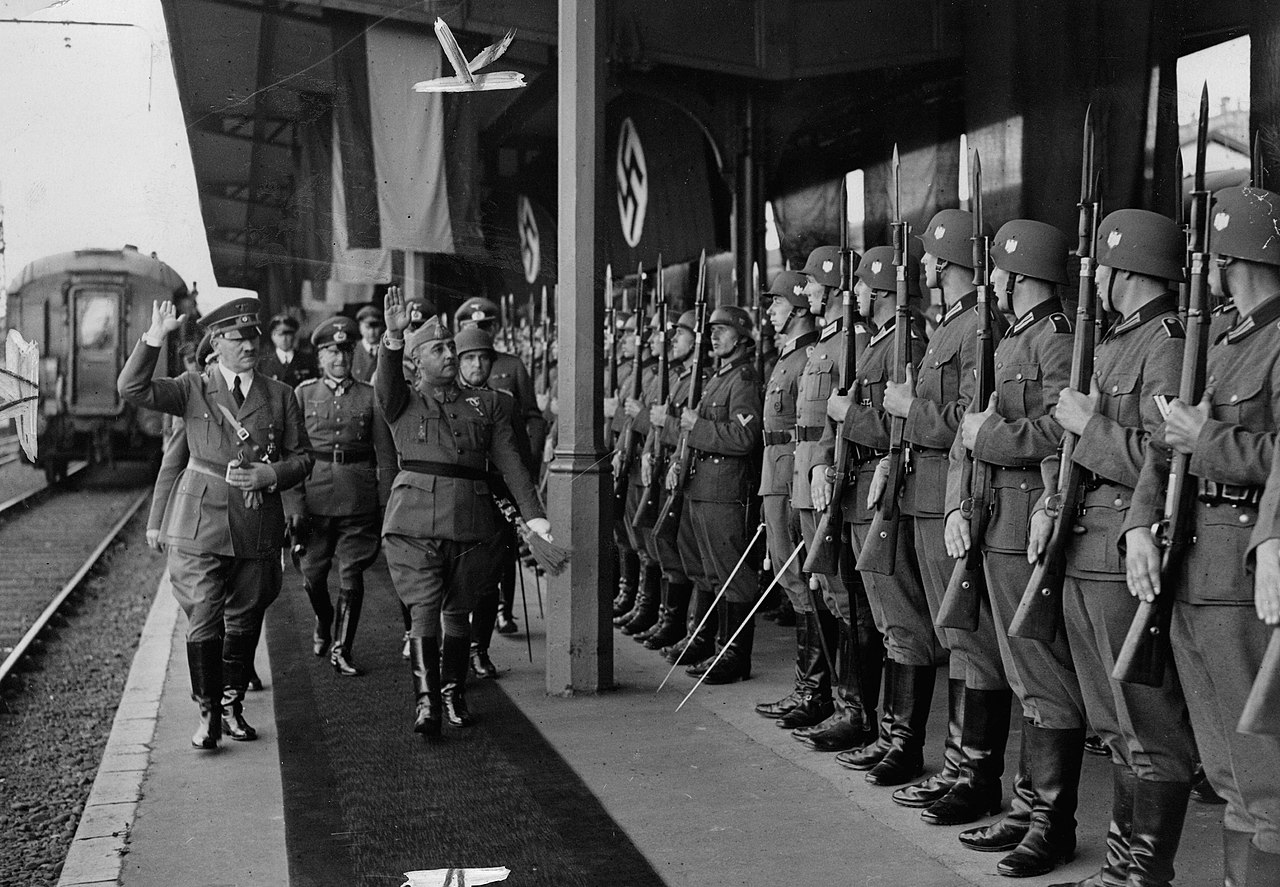
In July 1936, a military uprising against the democratically elected Second Spanish Republic triggered a civil war. Franco emerged as one of the principal commanders of the rebel coalition and, over several campaigns, consolidated leadership among the Nationalists. The uprising has been characterized as a coup d'état by historians, and the ensuing conflict is widely known as the Spanish Civil War. His Nationalist side received military aid and volunteers from Fascist Italy and Nazi Germany while drawing support from conservative groups, parts of the Catholic Church, landowners and other anti-Republican forces.
Rule and institutions
After victory in 1939, Franco headed a centralized, authoritarian state that suppressed regional autonomy, political pluralism, and dissent. The regime placed the Catholic Church in a privileged social and moral position and used censorship, imprisonment, forced exile and other repressive measures against opponents. Economically, the early years were marked by autarkic policies and hardship; from the 1950s and 1960s Spain saw gradual economic liberalization and significant growth, often called the "Spanish Miracle," accompanied by increased foreign investment and tourism.
International relations and World War II
Franco kept Spain officially non-belligerent during World War II, though he permitted volunteers to serve with German forces on the Eastern Front in the Blue Division and maintained diplomatic and material contacts with the Axis early in the war. After the war, Spain was isolated politically for a time but later became strategically important to the West during the Cold War; agreements with the United States and other adjustments improved diplomatic and economic ties.
Legacy and transition
Franco died on 20 November 1975 of complications following prolonged illness and was reported to have been removed from life support amid family requests; contemporary accounts cite heart failure among causes. His daughter, Carmen Franco, and other relatives remained public figures in Spain. By prearrangement, a monarchy was restored and Juan Carlos became king; within a few years Spain moved toward a parliamentary democracy and a new constitution.
Characteristics and notable facts
- Title and ideology: Often called Caudillo; regime identified by historians as authoritarian and nationalist, frequently referred to as Francoism.
- Repression: The regime used censorship and political repression to eliminate organized opposition and control public life.
- Economic policy: Shifted from early autarky to later developmental policies that contributed to rapid economic growth.
- Cultural impact: Centralization reduced regional languages and institutions in public life for decades.
- Symbolism: Falangist symbols and songs such as "Cara al Sol" were visible elements of official propaganda.
For further reading on the Spanish Civil War, the structure of Francoist Spain, and the transition after 1975, see specialized historical works and primary sources available through academic libraries and archives. General overviews and biographies provide accessible introductions to his life and the complex legacy of his government.
Questions and answers
Q: Who was Francisco Franco?
A: Francisco Franco was a Spanish military leader who ruled as fascist dictator of Spain from 1939 until his death.
Q: What was the name of the song associated with him?
A: The song associated with Francisco Franco was called Cara al Sol.
Q: What type of government did he support?
A: Francisco Franco supported a fascist government and opposed the Spanish Second Republic, which had a socialist government.
Q: How did he respond to World War II?
A: During World War II, Franco remained neutral but allowed a group of volunteer soldiers to join the German Army to fight the Russians between 1941 and 1943. They were called the División Azul (Blue Division).
Q: When did he die?
A: Francisco Franco died in Madrid on November 20, 1975, just after midnight due to heart failure.
Q: Who succeeded him after his death?
A: After Franco's death, Juan Carlos became king.
Q: What is Franquismo? A:Franquismo is the way of thinking associated with Francisco Franco.
Related articles
Author
AlegsaOnline.com Francisco Franco Leandro Alegsa
URL: https://en.alegsaonline.com/art/119059
Sources
- findagrave.com : findagrave.com/memorial/1552.html
- jacanaent.com : jacanaent.com/Biographies/Pages/FrancoF.htm