
Timurid Empire (14th–15th century Central Asian dynasty)
A Persianate Turco-Mongol state founded by Timur (Tamerlane) in the late 14th century, centered on Samarkand. Noted for military conquests, administrative Persian culture and a cultural-architectural renaissance.
Overview
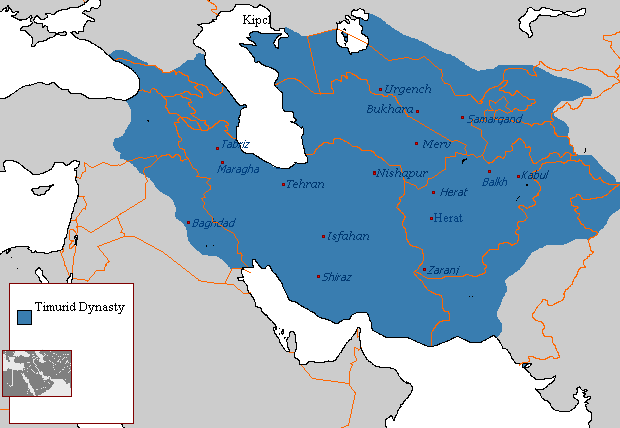
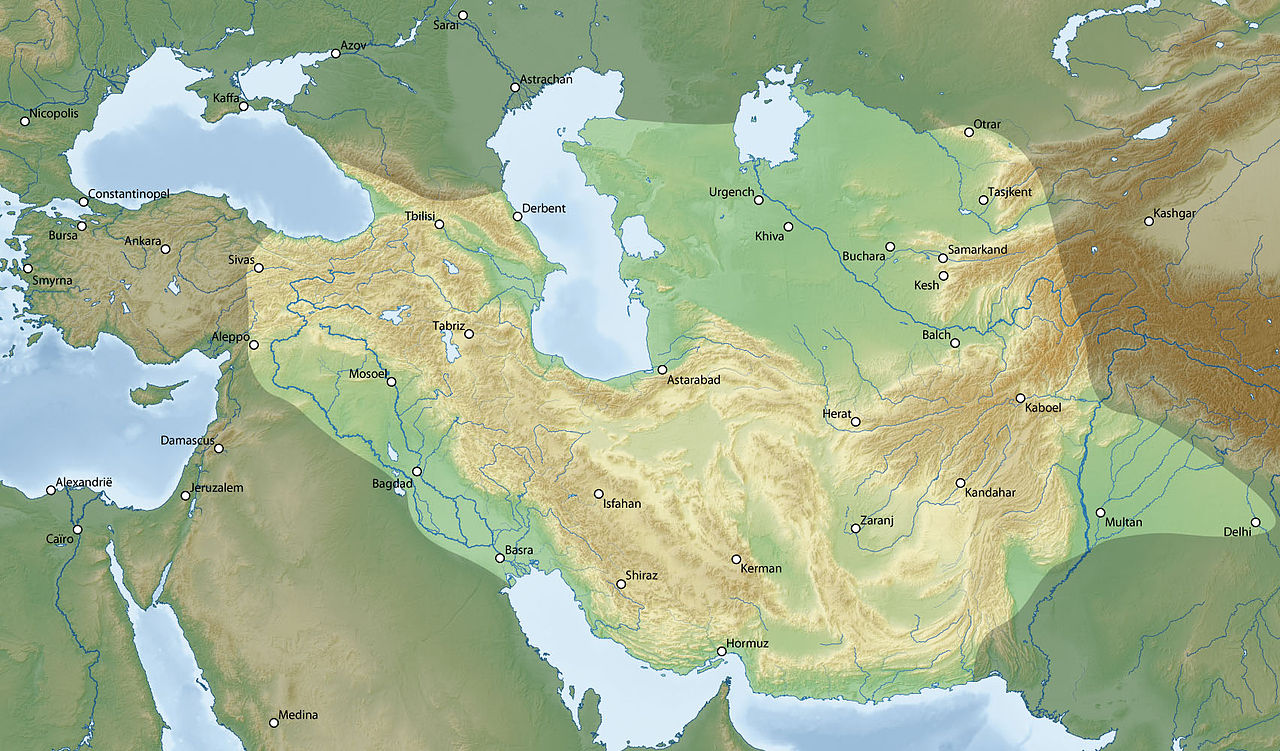
The Timurid Empire was a Persianate Turco-Mongol polity created by the warlord Timur, commonly known as Tamerlane. Emerging in the 14th century, it controlled vast territories including parts of modern Uzbekistan, Iran and Afghanistan, as well as broader Central Asian lands. At its height the state exercised influence or direct rule over regions that now lie in Pakistan, historic Mesopotamia, parts of Anatolia and the Caucasus.
Image gallery
10 Images


Origins and expansion
Founded by the military leader of the Turco-Mongol steppe aristocracy, the dynasty is known as the Timurid dynasty. Timur assembled a large empire through a series of campaigns across Central, Western and South Asia. His conquests disrupted competing states of the period, most famously clashing with the Ottoman Sultan at the Battle of Ankara (1402). The political structure that emerged combined nomadic martial leadership with settled imperial administration centered on important urban centres.
Administration, language and religion
Although Timur and his military elite had Turco-Mongol origins, the empire adopted Persian bureaucratic practices and court culture. Persian served as the principal administrative and literary language, while Sunni Islam was the dominant religion of the ruling class and institutions. Regional governors and princes often exercised considerable autonomy, which contributed to later fragmentation.
Art, learning and architecture
The Timurids are particularly remembered for their patronage of the arts and sciences. Under later rulers such as Ulugh Beg, centers like Samarkand and Herat became hubs for astronomy, mathematics, manuscript production and miniature painting. Monumental architecture — characteristic glazed tilework, grand mausoleums and mosques — fused Persian, Central Asian and Mongol motifs, producing a distinct Timurid aesthetic.
Notable places and achievements
- Key cities: Samarkand, Herat, and Balkh, each important for trade and learning.
- Scientific advances: astronomical observations and scholarly patronage in royal observatories.
- Cultural legacy: a vibrant school of miniature painting and manuscript illumination that influenced later Persianate courts.
Decline and legacy
After Timur's death in 1405 the empire gradually fragmented under competing successors and external pressures. Nevertheless, Timurid cultural and political legacies endured: their artistic and architectural styles shaped subsequent Persianate courts, and a cadet branch of the family ultimately renewed power in South Asia when Babur founded the Mughal Empire in the 16th century. The Timurid period is therefore important both for its military impact on late medieval Eurasia and for a renaissance of Persianate culture across a wide region.
For further reading on specific campaigns, architectural monuments and the dynasty's administrative arrangements see specialized studies and surveys linked through regional and thematic resources: Persianate traditions, Central Asian geography, Iranian contexts, Afghan history, Central Asian networks, South Asian connections, Mesopotamian interactions, Anatolian confrontations, Caucasus relations, Turco-Mongol origins, dynastic genealogy and chronological overviews of the 14th century.
Related articles
Author
AlegsaOnline.com Timurid Empire (14th–15th century Central Asian dynasty) Leandro Alegsa
URL: https://en.alegsaonline.com/art/99992
Sources
- jwsr.ucr.edu : "East-West Orientation of Historical Empires"
- worldcat.org : 1076–156x