
Treaty of Aranjuez (1801)
Agreement signed 21 March 1801 in which Spain formally confirmed the transfer of Louisiana back to France in compensation arrangements involving territories in Italy.
Overview
The Treaty of Aranjuez, concluded on 21 March 1801, was a diplomatic instrument by which France and Spain recorded and made public the arrangements agreed earlier in the secret Third Treaty of San Ildefonso. The core effect was the retrocession of the North American territory often called Spanish Louisiana from Spain to France in return for compensation in Europe tied to parts of Tuscany.
Image gallery
4 Images


Terms and territorial details
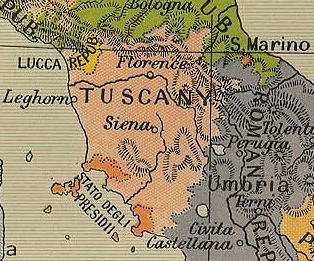
Although the treaties did not create a single new border on a modern map, their principal provisions involved territorial exchange and dynastic compensation. Spain agreed to transfer to France its rights over Louisiana, a vast colonial domain that stretched well beyond the modern U.S. state of Louisiana. In exchange, France and Spain arranged for the creation and assignment of Italian territories that would recompense members of the Bourbon family displaced by earlier upheavals in Italy.
Negotiation and historical context
The agreement must be seen in the context of Napoleonic Europe. France, then under the leadership of Napoleon Bonaparte, sought to re-establish a French presence in North America. Spain, ruled by the Bourbon monarchy and influenced by its chief minister, weighed the cost of supporting an ally with continental ambitions and the need to secure territorial compensation for dynastic interests in Italy. The secret nature of the earlier San Ildefonso instrument reflected the sensitivity of transferring a large colonial possession amid ongoing conflicts.
Consequences and significance
- The treaty formally returned Louisiana to French sovereignty and therefore set the stage for subsequent diplomatic moves, most notably the sale of the territory to the United States in 1803 (the Louisiana Purchase).
- It reshaped colonial diplomacy by moving one major North American territory between European powers without local consultation.
- It illustrated how European dynastic and territorial bargaining in Italy and elsewhere could have direct consequences for overseas empires.
Notable facts and legacy
The Treaty of Aranjuez is often cited alongside the San Ildefonso instrument as an example of early-19th-century secret diplomacy and territorial exchange. Its practical legacy is most visible in American history because the renewal of French control, however brief, made possible the Louisiana Purchase and the dramatic expansion of the United States. For Spain and France it was part of a larger pattern of shifting alliances and compensations in the Napoleonic era.
Further reading
Readers interested in the diplomatic maneuvering behind the treaty and its broader consequences may consult specialised histories of Napoleonic diplomacy, the Bourbon Spanish court, and the territorial evolution of colonial North America. For primary-document context, the earlier Third Treaty of San Ildefonso and contemporary diplomatic correspondence are key sources.
Related articles
Author
AlegsaOnline.com Treaty of Aranjuez (1801) Leandro Alegsa
URL: https://en.alegsaonline.com/art/101287