
Transcaucasian SFSR (1922–1936): history and legacy
A short history of the Transcaucasian Socialist Federative Soviet Republic (1922–1936), a Soviet union republic that encompassed modern Georgia, Armenia and Azerbaijan with its capital at Tbilisi.
Overview
The Transcaucasian Socialist Federative Soviet Republic (TSFSR) was a federal republic within the early Soviet Union that united the Soviet republics of the South Caucasus. Formed in the wake of the Russian Civil War and Bolshevik consolidation, it brought together the territories that today are Georgia, Armenia and Azerbaijan, with its administrative center in Tbilisi. The TSFSR existed from 1922 until 1936 and was one of the union republics that formed the Soviet Union in its early years; it served both administrative and symbolic purposes in coordinating policy across the Transcaucasus.
Image gallery
10 Images


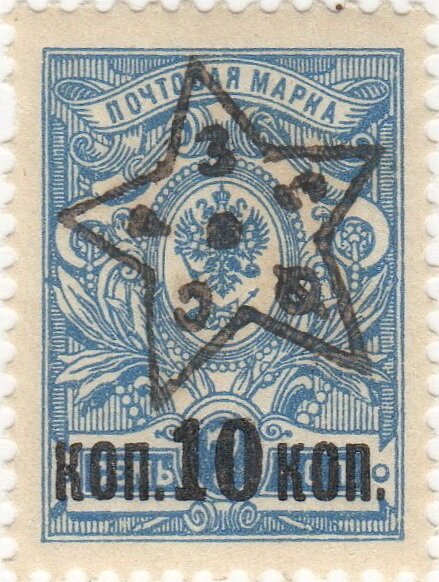


Creation and structure
The TSFSR emerged as Bolshevik authorities sought to centralize control in the volatile Caucasus region after World War I and the Russian Revolution. Rather than immediately recognizing separate union republics for each nation, the Soviet leadership created a federative entity to manage political, economic and military matters across diverse ethnic and territorial units. The TSFSR combined previously established Soviet republics under a single republican government and soviet institutions, while local administrations continued to manage many internal affairs.
Abkhazia and territorial arrangements
A notable complexity within the region was the status of Abkhazia. Following its Bolshevik takeover in 1921, Abkhazia had a brief period as a distinct Soviet republic that entered a special relationship with Georgia and later was reclassified within the Georgian Soviet framework. These changes reflected broader negotiations over autonomy, nationality policy, and administrative boundaries that characterized early Soviet governance in the Caucasus.
Dissolution and legacy
The TSFSR was formally dissolved in 1936 as part of a wider constitutional reorganization under the Stalin-era Soviet constitution, after which the constituent units became separate union republics within the USSR: the Armenian, Azerbaijani and Georgian Soviet Socialist Republics. Political figures from the region, including prominent Georgian officials such as Lavrenty Beria, rose to influence in the 1930s; historians debate the degree to which individual leaders shaped every administrative change versus broader central policy decisions.
Significance and distinguishing facts
- The TSFSR functioned from 1922 to 1936 as a federative republic encompassing the South Caucasus.
- Capital and main administrative center: Tbilisi.
- Its constituent territories later reappeared as the separate Soviet republics of Georgia, Armenia and Azerbaijan.
- The arrangement reflected early Soviet attempts to manage ethnic diversity, border disputes, and state-building in a strategically important region.
For further contextual reading on the region's Soviet-era institutions and later developments, see related entries on the Transcaucasus and the national republics that succeeded the TSFSR in the USSR formation period. A general article on the entity is available as a starting point: Transcaucasian SFSR.
Related articles
Author
AlegsaOnline.com Transcaucasian SFSR (1922–1936): history and legacy Leandro Alegsa
URL: https://en.alegsaonline.com/art/101127