
The Scream — Edvard Munch's Iconic Expressionist Image
The Scream is a set of anguished images by Edvard Munch, created in the late 19th and early 20th centuries in several media; it symbolizes modern anxiety and exists in multiple museum and private collections.
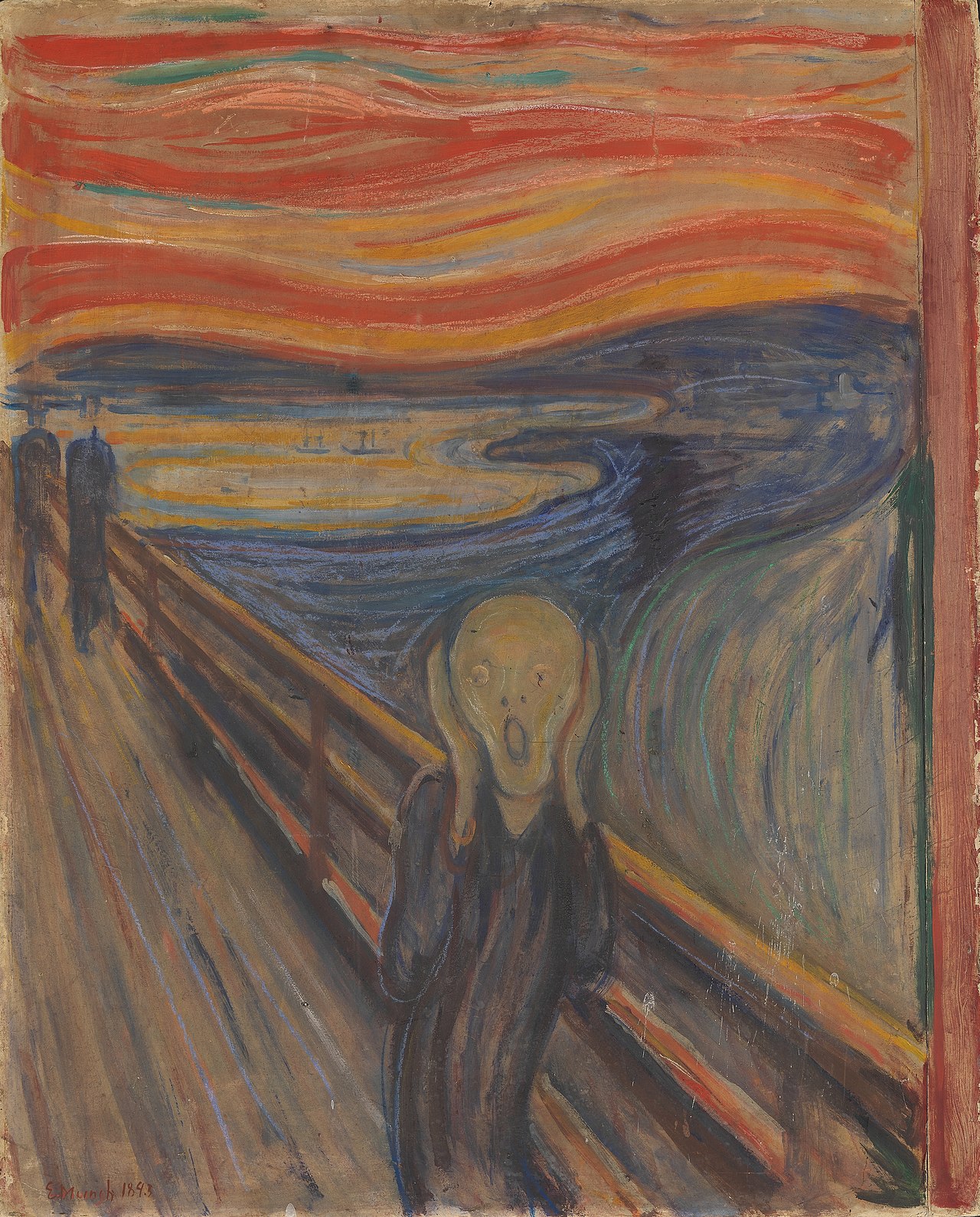
The Scream is the popular name for a group of related works by Edvard Munch. Begun in 1893, the composition—showing a figure clasping its face against a blood-red sky—became one of the most widely recognised images of modern art. Rather than a single canvas it exists in several versions produced in paint, pastel and print, and it is often cited as a defining image of expressionism and visual depictions of existential anxiety.
Image gallery
10 Images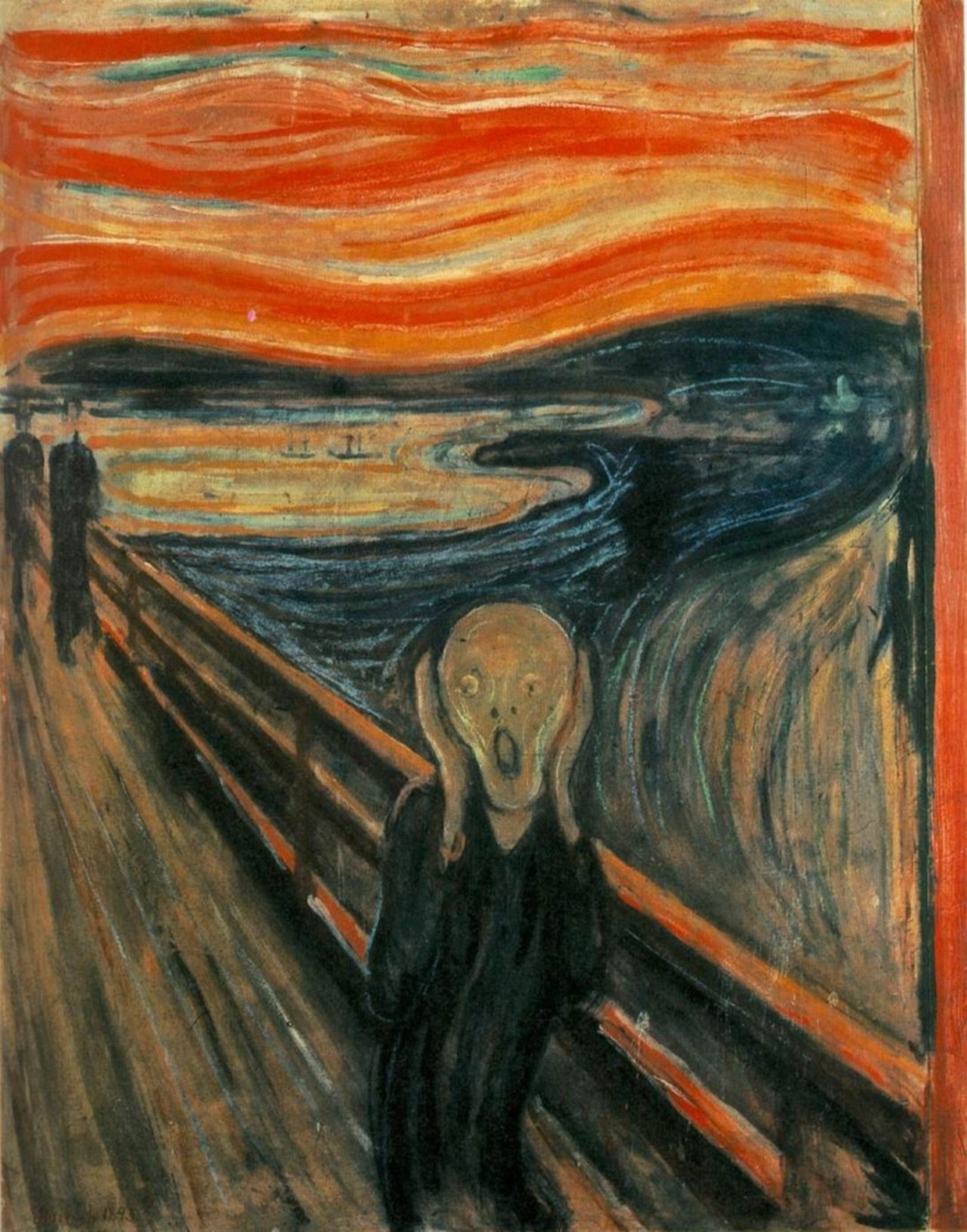



Appearance and themes
The image typically shows a bald, ghostlike figure on a bridge or walkway, a railing running diagonally across the foreground, and a landscape of water and hills behind. The sky is rendered in vivid, swirling tones. Viewers and critics have read the work as an embodiment of inner turmoil, shock or anguish, and Munch himself described a moment when nature seemed to respond to his feeling with a cry. The simplified, contorted figure and the heated, fluid handling of color help convey psychological intensity more than literal narrative.
Versions, media and technique
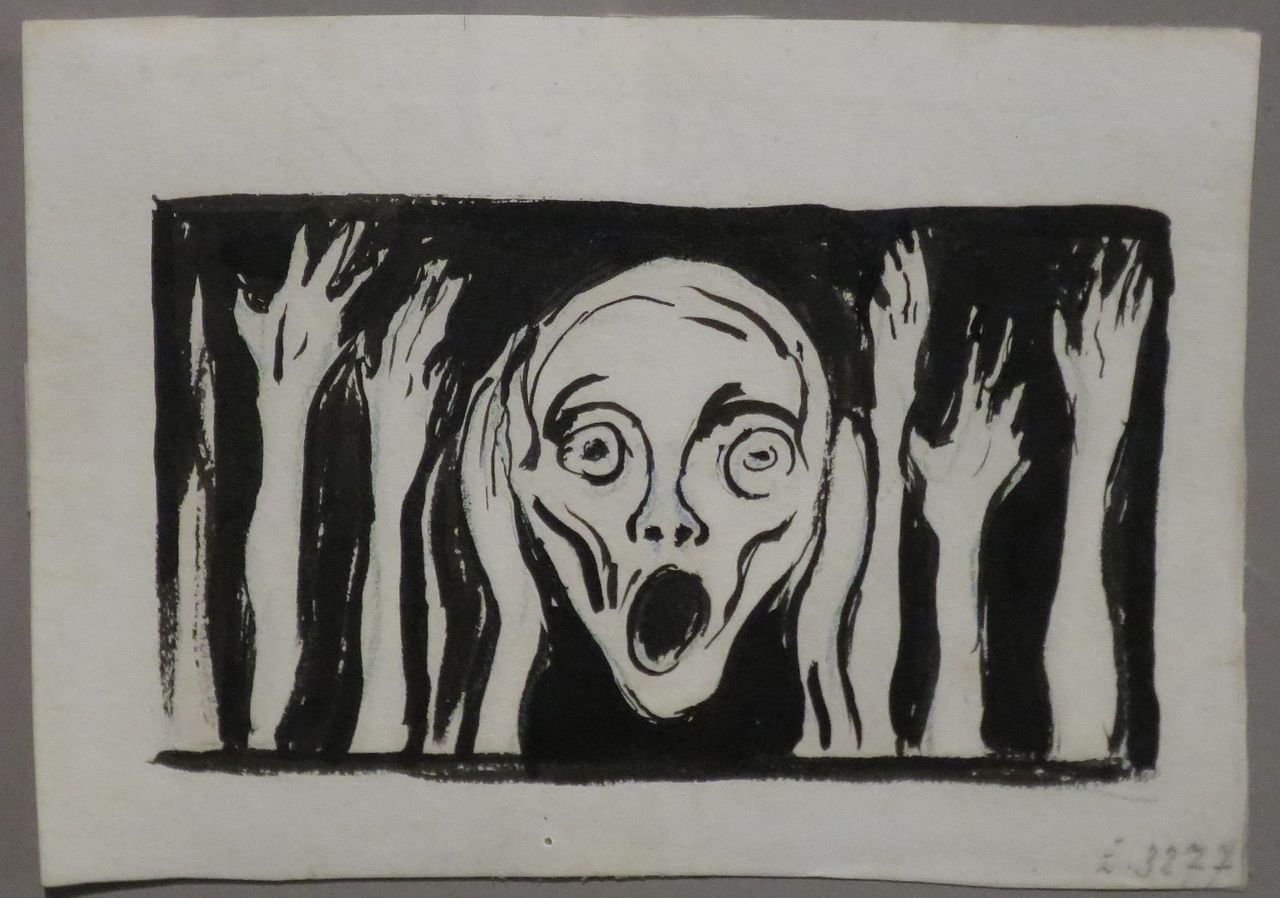
Munch created multiple iterations using a variety of materials and processes. Some are painted with oil paint or with tempera, while others rely on pastel and crayon on cardboard. He also produced graphic reproductions through lithography, which allowed wider distribution of the composition. Different versions show variations in color, background detail and the drawn figure, reflecting Munch's repeated reworking of the motif.
History and notable events
The first version dates from 1893; later renditions and prints were made in subsequent years as the image became integral to Munch's broader series exploring life, love and death. In the late 20th and early 21st centuries several of the works attracted intense public attention because of high-profile museum thefts and a record-setting sale at auction. Two museum-held versions were stolen in separate incidents but were subsequently recovered after international investigations.
Locations and legacy
Today the major museum holdings include versions in Oslo, where institutions preserve and display them alongside documentation of their history. Other examples reside in private collections and occasionally appear in exhibitions. The Scream's strong visual shorthand for modern anguish has made it a frequent subject of scholarly study, popular reference, and visual parody; it remains central to discussions of symbolism, expressionism and the ways art can represent inner states.
Quick facts
- Creator: Edvard Munch
- First version: 1893; additional versions produced in later years
- Media: pastel, tempera, oil paint, and lithography
- Cultural role: emblem of modern anxiety and expressionist art
For further reading and images, consult museum catalogues and specialist texts on Munch, expressionism, and late 19th–early 20th century art movements.
Related articles
Author
AlegsaOnline.com The Scream — Edvard Munch's Iconic Expressionist Image Leandro Alegsa
URL: https://en.alegsaonline.com/art/98789