
Traditional animation: hand-drawn techniques, process, and evolution
Overview of traditional (hand-drawn) animation: methods, tools, history, frame rates, differences from stop-motion and digital approaches, and why it remains influential.
Traditional animation, often called hand-drawn or cel animation, is the process of creating motion by photographing a sequence of individually drawn or painted images. Each drawing represents a single frame; when played in rapid succession they create the illusion of movement. Historically this work was done on celluloid sheets or paper, then photographed on an animation stand with a specialized camera.
Image gallery
5 Images


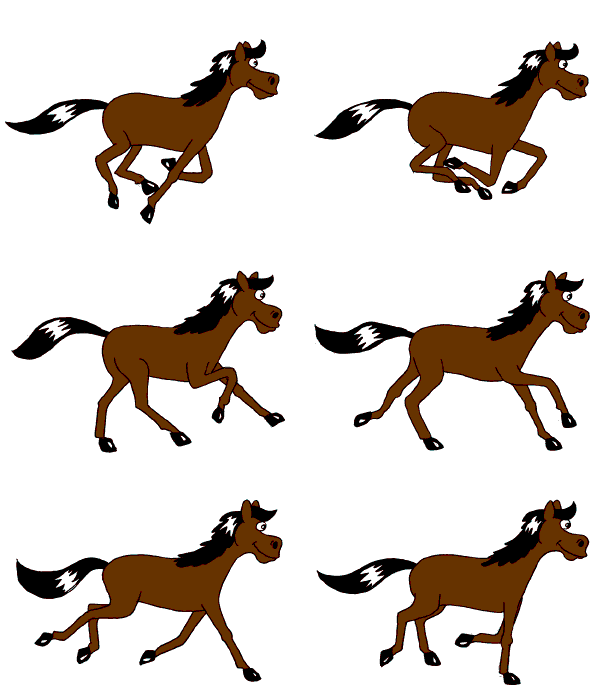

Core elements and workflow
The conventional pipeline begins with storyboards and character model sheets, followed by key drawings (key frames) that define major poses. Inbetweeners fill the frames between keys. Artists use exposure sheets (X-sheets) to time action and record camera moves. Drawings are transferred to clear cels or scanned, painted, and layered over static backgrounds. Tools and techniques that support accuracy include peg bars for alignment, onion‑skin viewing to compare nearby frames, and pencil tests to preview motion.
Equipment and related techniques
Traditional 2D animation is usually photographed on a rostrum or animation stand rather than a stop-motion rig; however, frame-by-frame capture is a shared principle. Stop-motion, which animates physical models or puppets frame by frame, is a distinct discipline with its own camera setups and lighting considerations — see resources on stop-motion. Many modern productions combine methods or use digital tools to replace or augment physical cels.
Frame rate and timing
Timing is central to the craft. Frame rate — the number of photographed frames shown per second — controls perceived smoothness and is usually expressed as FPS. Animators choose rates and hold or repeat drawings for stylistic or budgetary reasons; for more information on how FPS affects motion, consult frame rate references. Traditional TV animation frequently used limited animation to economize by reusing frames or animating only parts of a character.
History and evolution
Hand-drawn animation dominated early cinema and was refined into a studio system for theatrical shorts and feature films; landmark achievements include early full-length productions that demonstrated the medium’s storytelling potential. In the late 20th century digital ink-and-paint systems and computer-assisted compositing began to replace hand-painted cels, though many principles remained the same. Contemporary artists continue to apply traditional skills alongside digital workflows.
Uses, importance, and distinctions
Traditional animation remains important for education, stylistic expression, and restoring classic films. It differs from stop-motion and fully digital 3D animation in materials, workflow, and aesthetic. For a broader comparison with other approaches and modern practice, see additional background material: comparative overview.
Questions and answers
Q: What is traditional animation?
A: Traditional animation is an older style of animation that is more difficult than modern animation styles.
Q: How is traditional animation done?
A: Traditional animation typically involves using a stop-motion camera to animate photos taken by the producer.
Q: How many pictures are needed for each scene in traditional animation?
A: One picture is needed for each scene in traditional animation.
Q: Are there any tools to help save time with traditional animation?
A: Yes, there are some tools that can help save time with traditional animation.
Q: What other types of animation can be used now besides traditional animation?
A: Other types of animation that can be used now include limited animation and digital animation.
Q: What is FPS in animation?
A: FPS stands for frames per second, which is the number of times a movie is shot in one second.
Q: Is traditional animation still used today?
A: While traditional animation is not as commonly used today, it is still appreciated and utilized by some animators and filmmakers.
Related articles
Author
AlegsaOnline.com Traditional animation: hand-drawn techniques, process, and evolution Leandro Alegsa
URL: https://en.alegsaonline.com/art/101029