
Time in Argentina
Overview of Argentina's timekeeping: standard time (ART, UTC−3), history of daylight saving, regional variation, legal practice and practical effects on schedules and transport.
Overview
Argentina uses Argentina Time (ART), which is three hours behind Coordinated Universal Time (UTC−3). Although much of the country lies at longitudes that would naturally correspond to UTC−4, the nation observes UTC−3 as its standard civil time. This choice affects daily schedules, business hours and international coordination across South America. For context on the geographic meridian, see UTC−4.
Image gallery
1 Image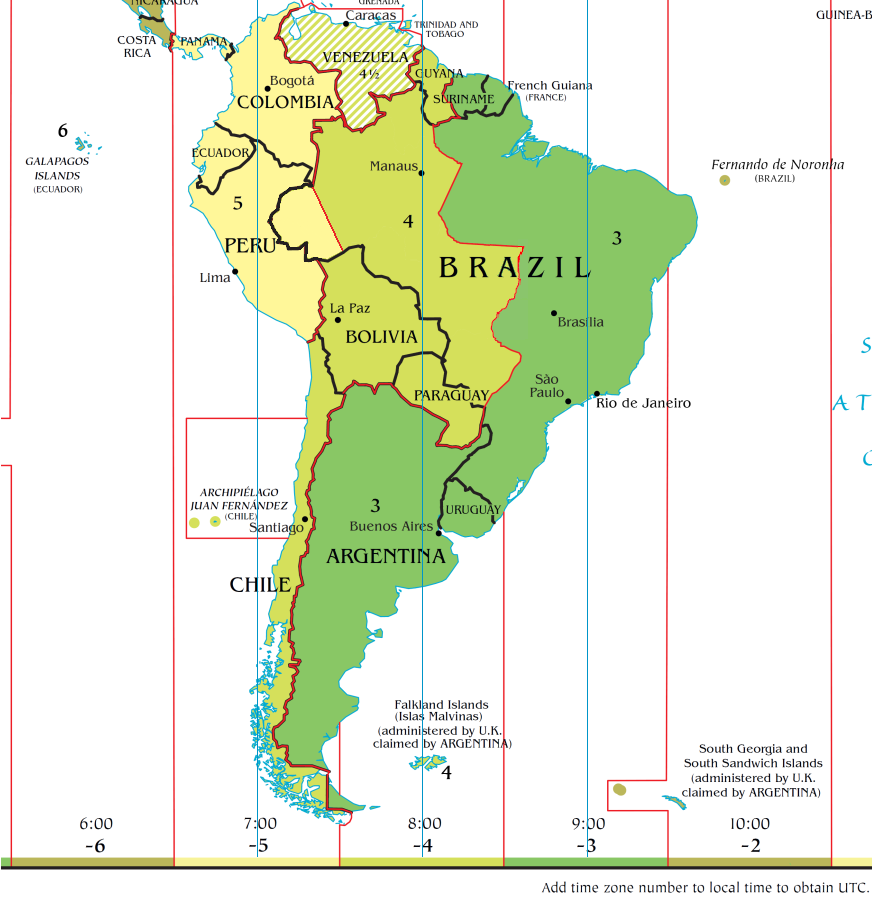
History and recent practice
The adoption of daylight saving time (DST) in Argentina has not been fixed into a permanent annual pattern. Decisions about observing DST have been made by the national government on a year-by-year basis, and in some years DST has been applied while in others it has not been used. The national approach and occasional announcements are covered in government communications; for the role of the central authority see Argentina. When DST is proposed or implemented, it is commonly referred to as Argentine Summer Time; official notices and commentary appear before the change is applied. For background on such adjustments see daylight saving. Notably, in 2009 Argentina did not observe daylight saving time.
Regional and legal variation
While the national government can set the standard time, provinces have some autonomy and have on occasion made different choices about observing DST or special local offsets. Provinces may follow the national decision or implement their own measures; specific provincial arrangements and announcements are handled locally. For information about subnational choices see provinces. Time-zone databases used by computers reflect Argentina's internal subdivisions with multiple America/Argentina/… entries to match historical and regional differences.
Practical effects and timekeeping
In everyday life Argentines use the 24-hour clock for schedules, transport timetables and official documents. Maintaining a stable year-round UTC−3 makes planning simpler for businesses and international partners in eastern South America. When DST is introduced, it primarily aims to shift daylight into evening hours for energy or social reasons, but its application has been irregular in recent decades.
Notable facts
- Standard offset: ART = UTC−3 throughout most of the country as the civil standard.
- Geography vs. civil time: Geographic solar time would place large areas nearer to UTC−4, but the civil choice favors UTC−3.
- Variable DST: Observance of daylight saving has been intermittent and decided annually by national authorities, with provinces sometimes making independent choices.
- Computer time zones: Software and servers use multiple designated America/Argentina/… identifiers to represent regional histories and changes.
For official and current details about whether Argentina is observing DST in any given year, consult recent government bulletins or authoritative timekeeping services.
Related articles
Author
AlegsaOnline.com Time in Argentina Leandro Alegsa
URL: https://en.alegsaonline.com/art/99925
Sources
- lanacion.com.ar : "El Gobierno no adelantará la hora oficial el próximo domingo"