
Bazooka (shoulder-fired rocket launcher)
Bazooka: a portable, shoulder-fired rocket launcher introduced by U.S. forces in WWII. Overview of design, history, operational use, evolution into later rocket-propelled weapons and notable technical features.
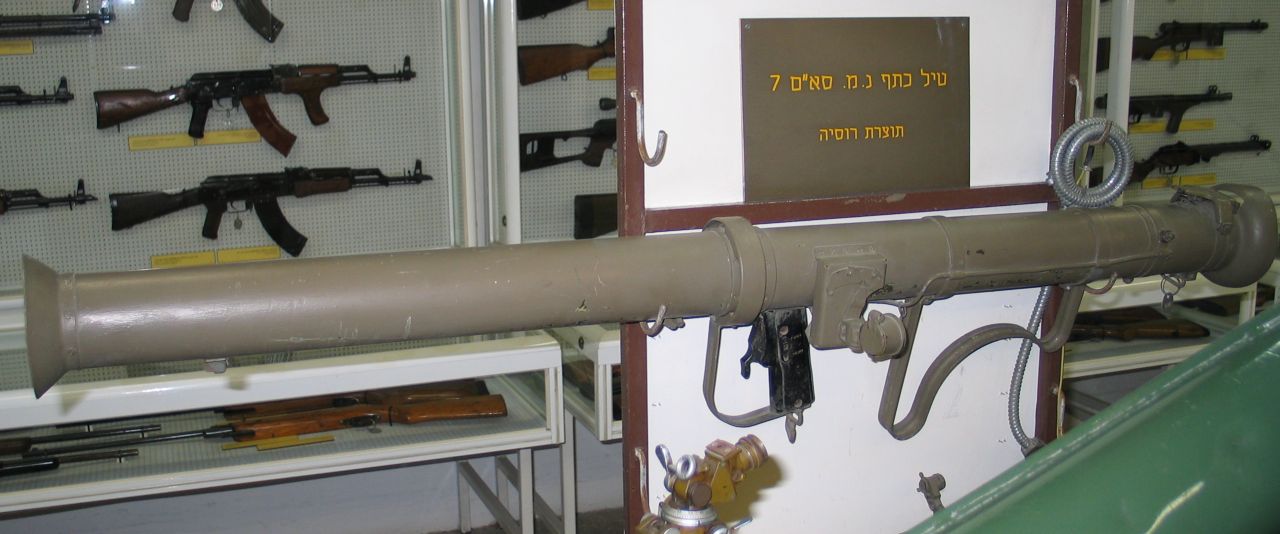
The bazooka is a man-portable, shoulder-fired rocket launcher designed to deliver explosive warheads at short to medium ranges. It consists of a hollow launch tube that supports and guides a rocket projectile during the initial phase of flight, an ignition system, simple sighting equipment, and a warhead optimized for anti-armor or demolition tasks. Bazookas produced a powerful infantry-level capability by allowing a single soldier—or a two-person crew—to strike armored vehicles, fortifications, and concentration of troops without support from artillery.
Image gallery
8 Images




Design and characteristics
Typical bazooka designs are lightweight and intended to be carried and operated by infantry. Key parts include:
- Launch tube — an open-ended or breech-loaded tube that guides the rocket through ignition and early flight.
- Propelled projectile — a rocket motor attached to a shaped or high-explosive warhead; the projectile is sometimes described generically as a rocket or rocket-propelled grenade in later developments.
- Sighting and firing mechanism — simple iron sights or optical aids and a trigger or electrical firing circuit.
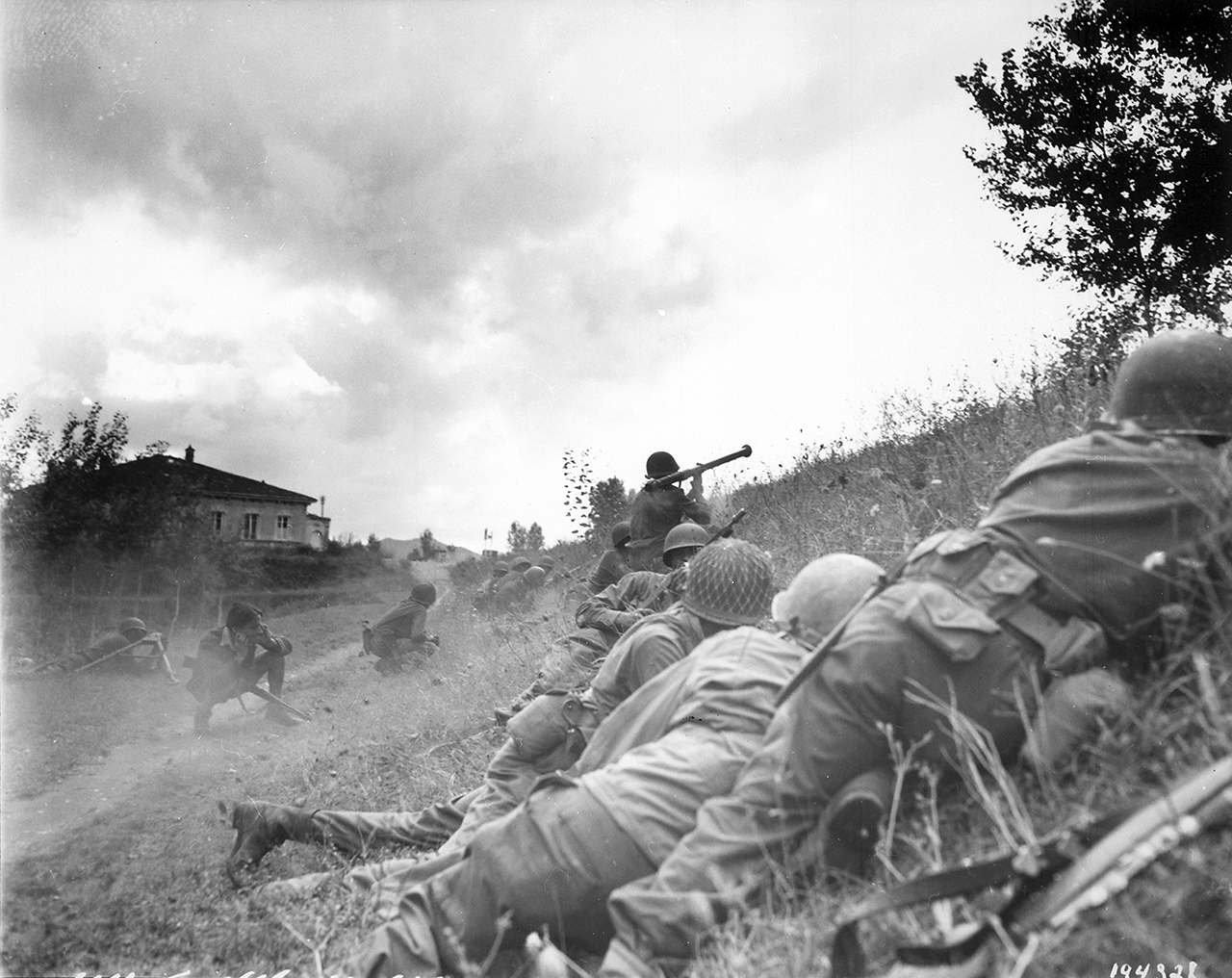
- Backblast and safety — firing generates a hot exhaust and overpressure behind the tube, requiring the operator to clear space immediately to the rear.
These weapons traded heavy armor penetration for mobility and ease of use. They were typically unguided and relied on a shaped-charge (HEAT) warhead to defeat armor rather than kinetic impact.
Origins and development
The name "bazooka" originates from a whimsical musical instrument made of pipes and popularized by American entertainer Bob Burns. The idea of a tube-launched rocket has earlier experimental roots: rocket pioneers conducted experiments in the early 20th century and innovators such as Robert H. Goddard explored small rocket devices and launch methods after World War I. The modern bazooka as a standardized infantry weapon emerged in the United States shortly before and during World War II, when military ordnance teams converted rocket technology into a practical shoulder-fired launcher.
Operational use and evolution
In World War II, bazookas provided front-line troops with an organic anti-armor tool that could be carried and used without vehicle support. Early American models, commonly called 2.36-inch bazookas, were followed by larger calibers in subsequent conflicts—examples include the later 3.5-inch designs often called "Super Bazookas"—and by postwar rocket launchers inspired by the same concept. Over time the role of the bazooka was shared and then largely supplanted by a mix of systems: reloadable disposable launchers, battlefield recoilless rifles, and guided anti-tank missiles each addressed different tactical needs.
Examples, limitations, and legacy
Bazookas proved decisive in many close-range engagements but had important limitations: limited effective range, sensitivity to weather and battlefield debris, significant backblast, and reduced effectiveness against increasingly well-armored tanks. These constraints spurred continued development of infantry anti-armor weapons, including the ubiquitous rocket-propelled grenade designs used worldwide and more advanced guided missiles in later decades. The bazooka remains an important milestone in infantry weaponry, illustrating how rocket propulsion was adapted for portable arms.
Notable facts and cultural impact
Besides its technical history, the bazooka entered popular culture and language as a recognizable term for shoulder-fired rocket systems. Historical accounts credit early innovators such as Robert H. Goddard with work on small rockets, while the weapon’s rapid adoption during World War II demonstrated how quickly new technologies could be fielded in wartime. Modern references to bazookas often cover both the original U.S. models and a wider family of tube-launched rockets and grenades that followed.
Related articles
Author
AlegsaOnline.com Bazooka (shoulder-fired rocket launcher) Leandro Alegsa
URL: https://en.alegsaonline.com/art/9731