
Rocket-propelled grenade (RPG)
A shoulder-fired, unguided rocket weapon that launches an explosive warhead. Widely used against light armor and in asymmetric warfare; comes in reloadable and disposable forms with shaped-charge warheads.
Overview
A rocket-propelled grenade (commonly abbreviated as RPG) is a shoulder-fired launcher that fires a rocket motor equipped with an explosive warhead. The term covers a family of unguided, recoilless or low-recoil weapons designed to be operated by a single person or a small crew. The abbreviation "RPG" is also used for the role-playing game genre in a completely different context; in military usage it refers to a type of weapon.
Image gallery
10 Images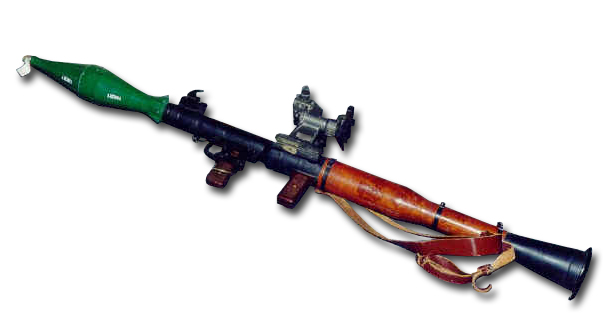

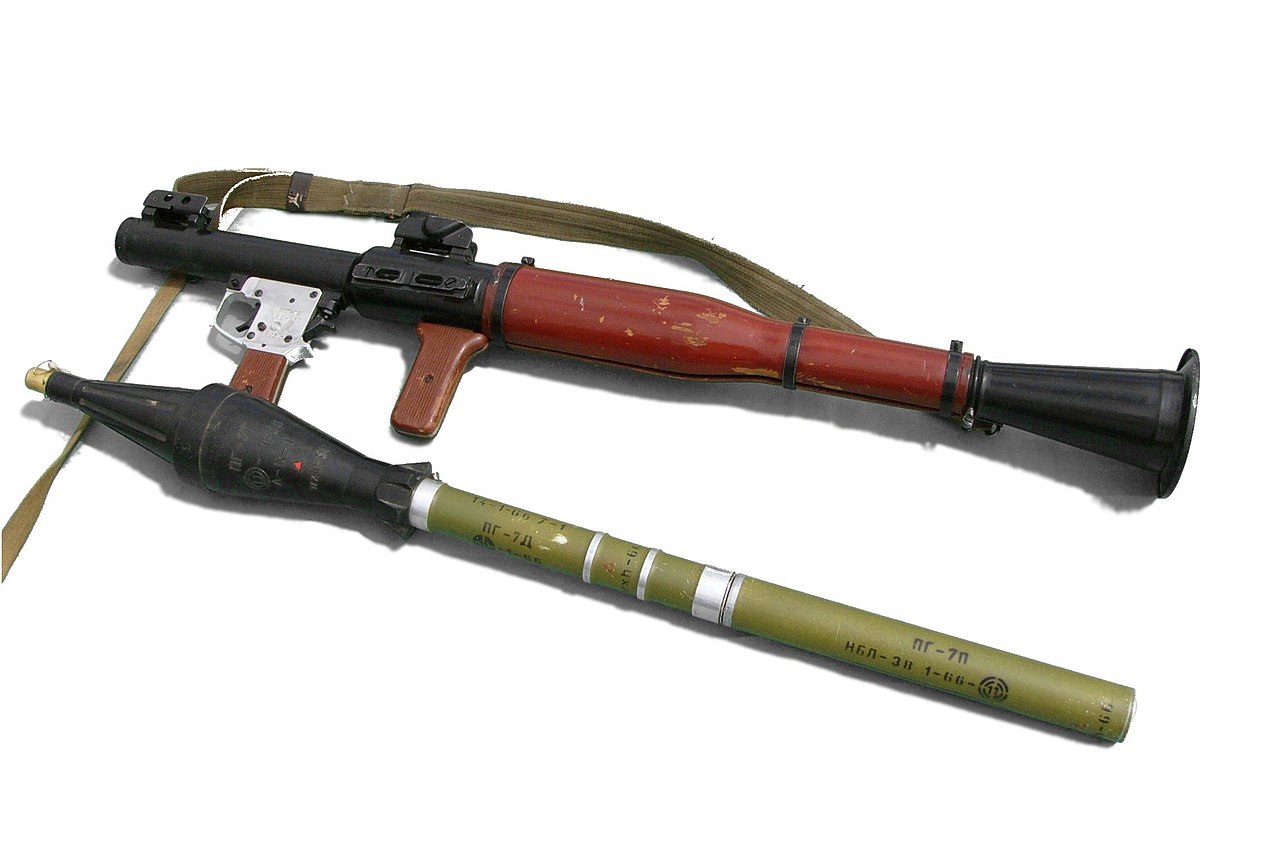


Design and main components
Most RPG systems consist of two primary elements: a launcher and a rocket projectile. The launcher may be a simple disposable tube or a reusable firing assembly that accepts reloadable rounds. A typical projectile includes a rocket motor, stabilizing fins, and an explosive warhead. Modern anti-armor warheads usually employ a shaped charge — a conical metal liner that focuses explosive energy into a high-velocity jet capable of penetrating armor.
- Launcher tube: Either single-use or reusable, often with sighting equipment and a trigger mechanism.
- Rocket motor: Provides propulsion after leaving the tube; some designs use a small booster for safe backblast control.
- Warhead: High-explosive anti-tank (HEAT) shaped charges are common; some rockets carry fragmentation or thermobaric payloads.
- Stabilization: Fins or spin imparted on launch keep the rocket on course.
History and development
Shoulder-launched rocket systems emerged in the mid-20th century as infantry needed lightweight means to defeat armored vehicles. Designs from several countries produced simple, inexpensive, and robust launchers that spread widely because they were relatively easy to manufacture, operate, and maintain. Over time, advances in warhead shaping, tandem-charge arrangements to defeat explosive reactive armor, and improved sights extended their effectiveness, even as modern armored vehicles adopted composite and reactive defenses.
Uses, tactics and limitations
RPGs are primarily used against lightly armored vehicles such as armored personnel carriers and soft-skinned transport, and they have seen extensive use in urban and guerrilla warfare because of their portability and low logistical footprint. Against main battle tanks, an RPG is most effective when fired at vulnerable areas such as tracks, rear sections, or the turret roof. Combatants sometimes coordinate multiple shooters to concentrate hits on a single vehicle.
Limitations include limited range and accuracy compared with guided missiles, difficulty defeating thick frontal or modern composite armor from the front, and the danger posed to the operator by backblast and the weapon's signature. Warheads designed to defeat explosive reactive armor (ERA) use tandem charges: an initial charge detonates the ERA, and a main shaped charge then engages the underlying armor.
Variants, notable models and distinctions
Variants range from disposable, point-and-shoot tubes to larger reloadable systems with replaceable rounds. Some launchers accept a variety of warhead types for anti-armor, anti-personnel, or demolition tasks. Commonly recognized types developed in several countries have become ubiquitous in conflicts worldwide due to their cost-effectiveness and simplicity.
It is important to distinguish an RPG from guided anti-tank guided missiles (ATGMs), which use guidance systems to home in on targets and typically offer longer effective ranges and higher hit probabilities. Unlike many recoilless rifles and rocket launchers, most RPGs are unguided and rely on operator aim and tactical employment.
Related topics and further reading
For technical and historical context, readers may consult sources on military small arms and anti-armor warfare. Some terms related to RPG operation and classification include muzzleloader characteristics for certain reloadable tubes, and discussions of armor protection against shaped charges and modern tanks.
Related articles
Author
AlegsaOnline.com Rocket-propelled grenade (RPG) Leandro Alegsa
URL: https://en.alegsaonline.com/art/83561