
Beretta 92: Overview, Design, History, and Use
The Beretta 92 is a widely used Italian 9×19mm semi‑automatic pistol series, adopted as the U.S. M9; known for its open‑slide design, double/single‑action trigger and a 15‑round magazine.
Overview
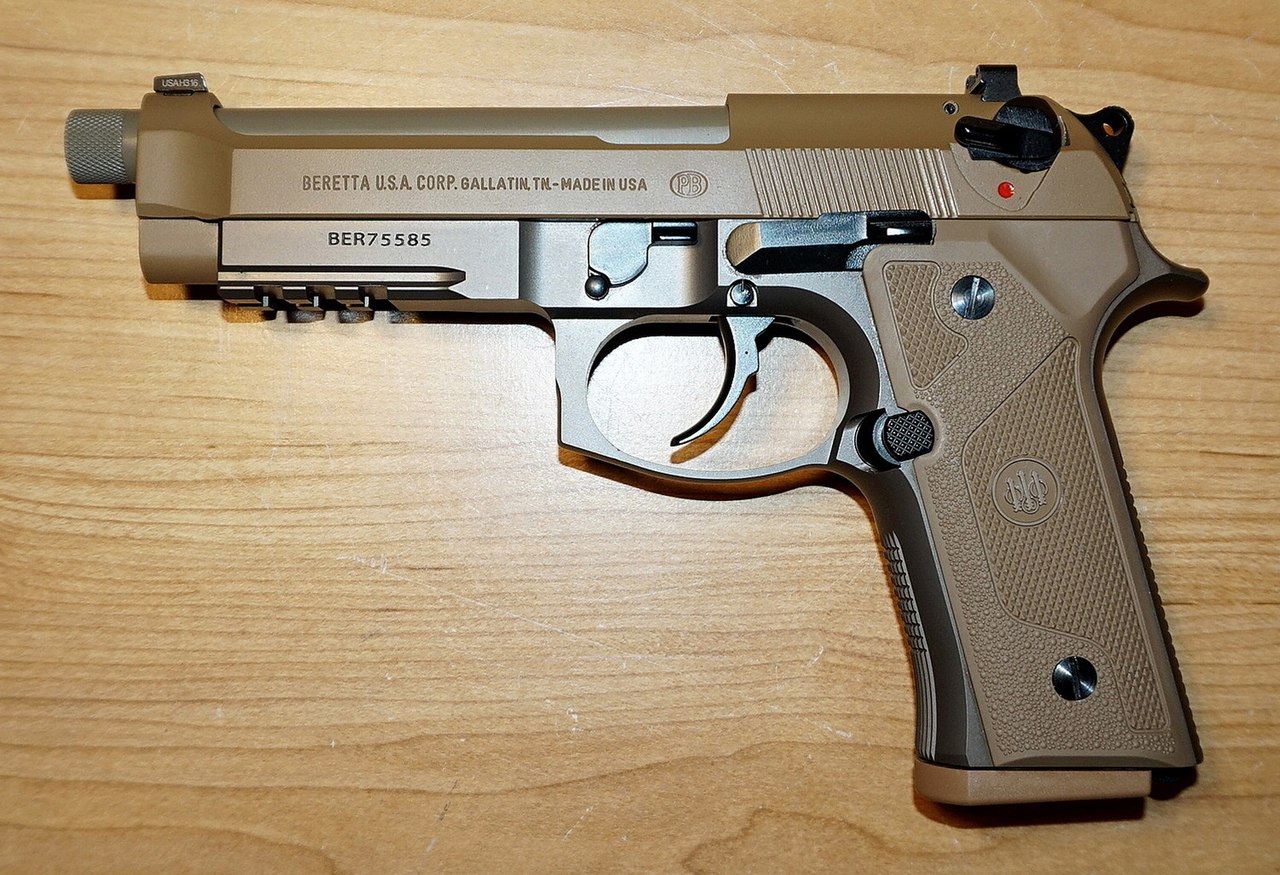
The pistol family commonly called the Beretta 92 is a series of semi‑automatic service pistols produced by the Italian firm Beretta. Chambered for the 9×19mm Parabellum (9x19mm), it typically uses a staggered‑column magazine holding around 15 cartridges. One of its best known designations is the U.S. military version, adopted as the M9.
Image gallery
10 Images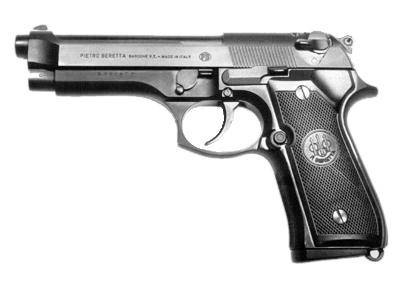


Design and characteristics
The Beretta 92 series employs a short‑recoil, locked‑breech action with an open slide that aids reliable extraction and ejection. Most service variants feature a combined safety and decocking lever and operate in double‑action/single‑action (DA/SA) mode. The basic parts are slide, barrel, frame and detachable magazine; controls and ergonomics were developed for rapid reloading and comfortable handling.
Variants and notable features
- Multiple commercial and military variants exist, with differences in sights, finishes, and internal safety systems.
- The open‑top slide and exposed barrel are distinctive visual cues that reduce the likelihood of certain stoppages.
- Accessories and aftermarket options—grips, sights, and rails—are widely available for civilian and professional use.
History and adoption
The design emerged as a modern, high‑capacity alternative to older service pistols. After changes in procurement policies that removed a prior restriction on foreign‑made weapons, and amid pressure from allied nations including those described as allies in NATO, the United States selected a Beretta model to replace the single‑action M1911 as a standard sidearm. The U.S. designation M9 reflects that formal adoption for service.
Uses, importance and distinctions
The Beretta 92 family has been widely used by military and law enforcement agencies because of its reliability, proven performance with standard types of ammunition, and ease of maintenance. It served alongside other NATO‑standard pistols as many NATO countries sought compatibility in ammunition and spare parts. Some users cite its size and weight as drawbacks compared with more compact modern handguns.
Legacy
While newer pistols have replaced or supplemented it in certain forces, the Beretta 92's influence on modern service pistol design is clear. It remains in use, supported by extensive spare parts and training resources, and continues to be a reference point when discussing 9mm service handguns and their operational roles.
Related articles
Author
AlegsaOnline.com Beretta 92: Overview, Design, History, and Use Leandro Alegsa
URL: https://en.alegsaonline.com/art/10675