
Bell UH-1 Iroquois (Huey) — utility military helicopter
The Bell UH-1 Iroquois, commonly called the Huey, is a lightweight utility helicopter introduced in 1959. Known for Vietnam War service, it performed transport, medevac, close support and civilian roles worldwide.
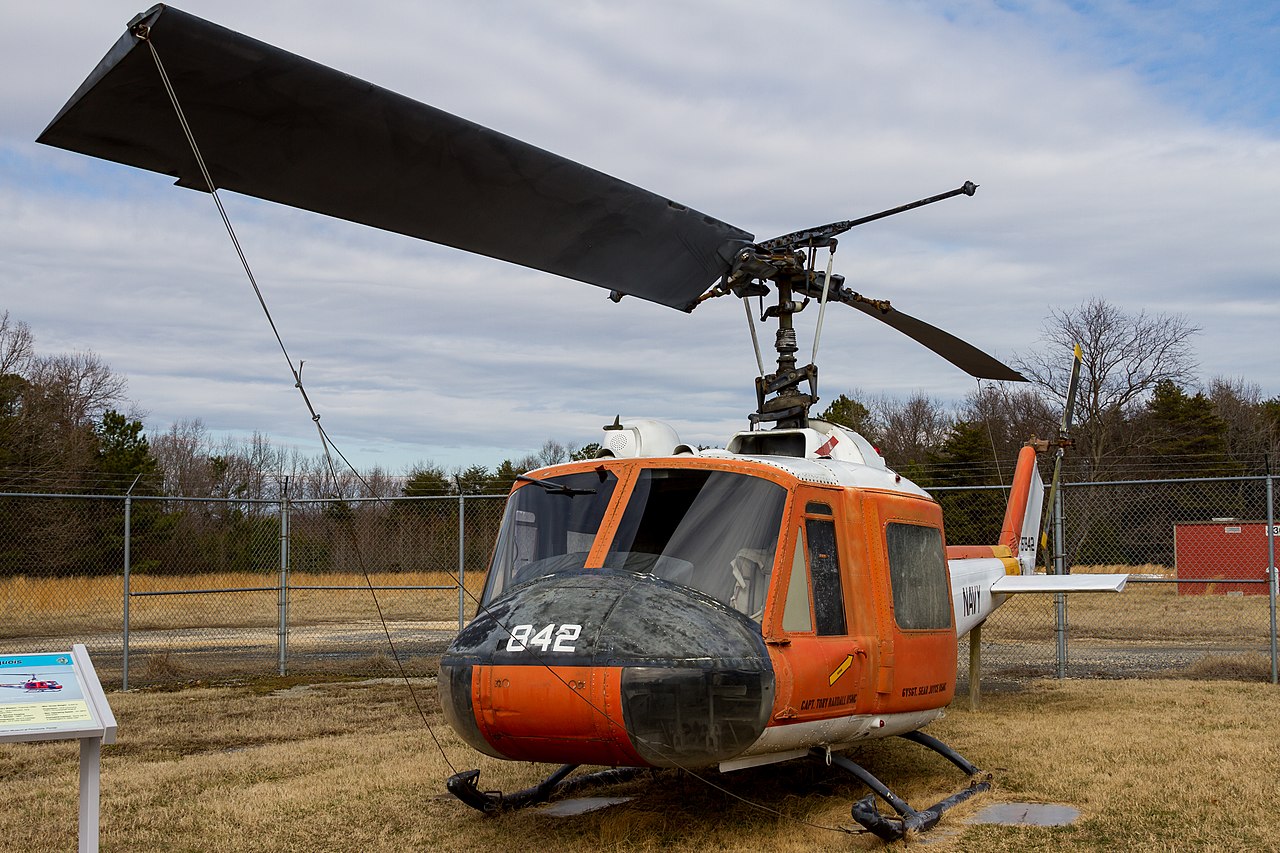
The Bell UH-1 Iroquois, widely known by its nickname "Huey," is a family of single–rotor military helicopters produced by Bell Helicopters. Designed in the 1950s as a general-purpose aircraft, the type first flew in 1956 and entered service in 1959. Its simple, rugged layout, turboshaft powerplant and two-blade rotor made it an adaptable platform for many missions; the name Iroquois is the formal designation and the informal "Huey" came from its original designation HU-1.
Image gallery
10 Images





Design and characteristics
The basic UH-1 has a two-blade main rotor and a two-blade tail rotor, driven by a turboshaft engine that replaced piston engines used in earlier helicopters. The layout normally accommodates a small flight crew and room for a squad-sized load of passengers or cargo. Configurations varied: some had a cargo hook beneath the fuselage, while others had stretchers or weapon mounts. The power-to-weight balance and straightforward maintenance requirements contributed to its widespread adoption.
Roles and common uses
The Huey was developed as a utility helicopter and proved useful in an unusually wide range of tasks. Typical roles include:
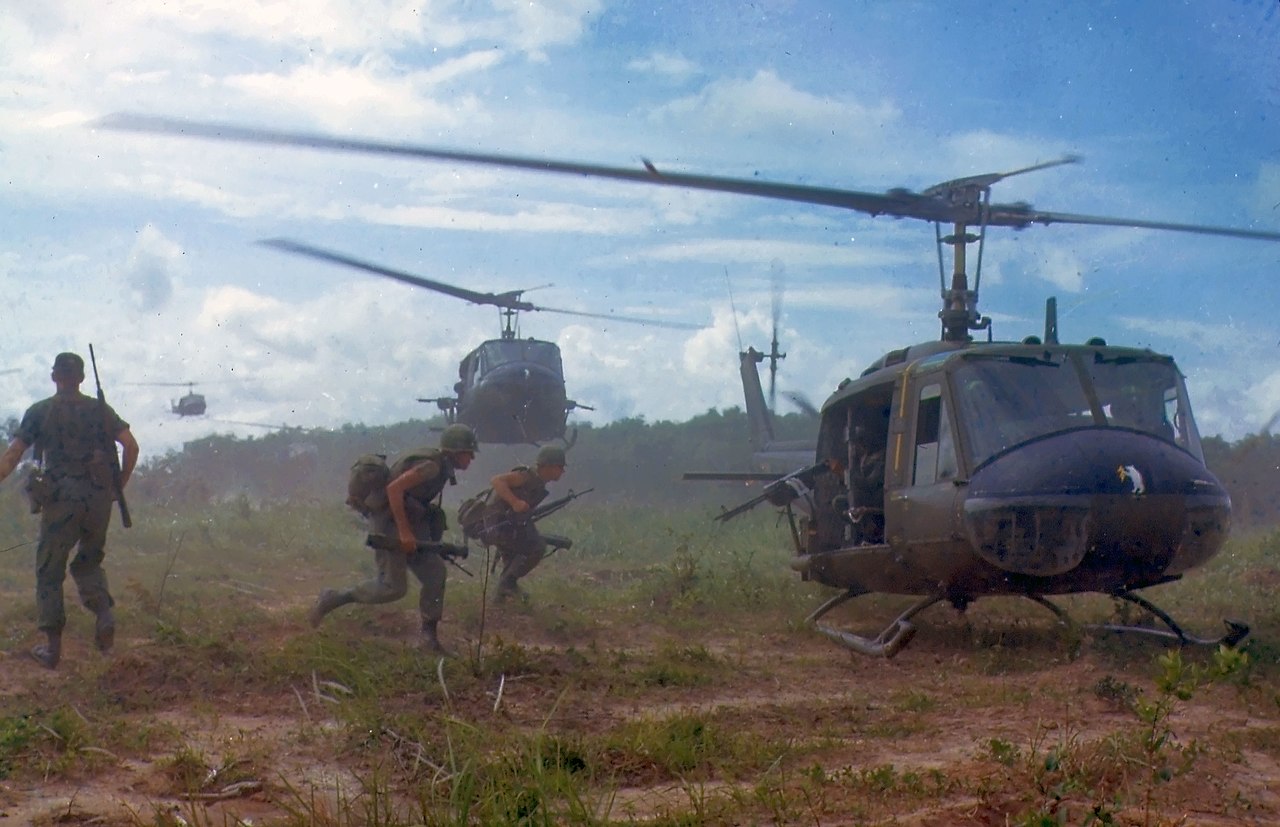
- Troop transport and air assault operations — moving soldiers quickly to and from the battlefield (troop transport).
- Cargo delivery and resupply missions using internal load or external hook (cargo).
- Medical evacuation — dedicated medevac versions such as the UH-1V were fitted for casualty care and evacuation to hospitals.
- Search and rescue, recovery and pilot retrieval (search and rescue).
- Armed escort or close support when fitted with door guns, rocket pods and other weapons.
Variants and development
Numerous variants of the basic Iroquois were produced to meet military and civilian needs. Some early designations are reflected in the Huey nickname. A medevac-specific model, the UH-1V, was optimized for casualty care and transport. Other variants were configured as gunships, command-and-control platforms, or for electronic and communications roles. Over time the airframe saw incremental improvements to engines, avionics and payload capability.
Operational history and legacy
The UH-1 is best known for its extensive use during the Vietnam War, where it pioneered the concept of air mobility and became an icon of rotary-wing warfare. Its visibility in combat operations and in civilian relief work made it one of the most recognizable helicopters of the 20th century. In later decades many armed forces replaced or supplemented Hueys with newer designs such as the Sikorsky UH-60 Black Hawk, but the UH-1 continued to serve in smaller militaries, reserve units and civilian organizations.
Civil and continuing service
Beyond military use, surplus UH-1 airframes found second lives in firefighting, law enforcement, aerial work, and executive transport. Their adaptability made them attractive to civilian operators and to preservation groups; many examples are maintained in flying condition by museums and historic organizations. For more technical details, production history and restoration resources see manufacturer pages and reference material provided by aviation authorities (UH-1 overview, first flight history, entry into service). Additional reading on combat employment and tactics is available in studies and archives related to the Vietnam era (Vietnam War context).
Related articles
Author
AlegsaOnline.com Bell UH-1 Iroquois (Huey) — utility military helicopter Leandro Alegsa
URL: https://en.alegsaonline.com/art/10275
Sources
- fas.org : "UH-1 Huey Helicopter - Military Aircraft"
- globalsecurity.org : "UH-1V Iroquois (Huey)"
- commons.wikimedia.org : Bell UH-1 family