
Robert H. Goddard: Pioneer of Modern Rocketry
Summary of Robert H. Goddard (1882–1945), his first liquid‑fuel rocket flight, technical contributions to rocketry, wartime work, reception during his life, and later recognition.
Overview
Robert Hutchings Goddard (1882–1945) was an American scientist and engineer whose experimental work and patents established foundational elements of modern rocketry. Working largely with limited funds and often in relative isolation, he combined theoretical calculations with hands‑on fabrication to develop practical liquid‑propellant engines, flight control methods and staging concepts. For these reasons he is widely regarded as one of the principal pioneers of spaceflight.
Image gallery
10 Images

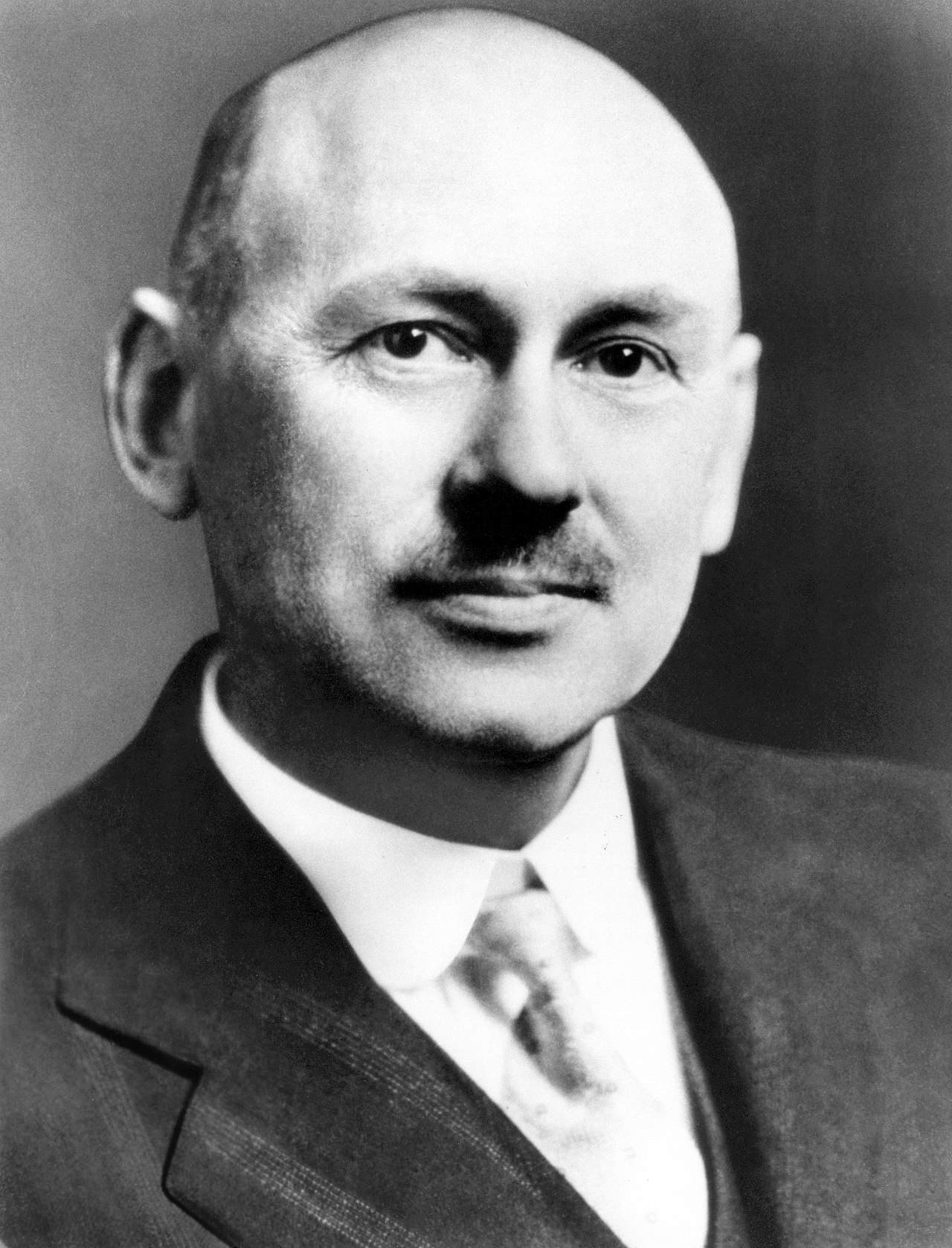


Early work and education
Goddard pursued scientific studies and publication of technical papers before devoting himself to rocketry. He received a doctorate and published analyses relating propulsion to the speeds required to reach high altitudes. His notebooks and patent filings record detailed designs for pumps, valves, combustion chambers and control devices that reflected an engineer’s approach to solving practical problems in sustained rocket thrust.
The first liquid‑fuel flight (1926)
On March 16, 1926, Goddard conducted what is commonly cited as the first successful flight of a liquid‑fueled rocket at a testing site in Massachusetts. The vehicle used liquid oxidizer and liquid fuel and achieved a short, free flight that demonstrated controlled thrust from a liquid‑propellant engine. Contemporary summaries reported an ascent to roughly 56 metres (about 184 feet) and a top speed on the order of 100 kilometres per hour (about 62 miles per hour). Those figures are cited in historical accounts and remain part of the event’s documentation; further detail and discussion appear in various retrospective accounts, including flight summaries and descriptions of the reported altitude and speed (reported height, metric speed report, imperial conversion).
Technical contributions
Goddard’s work bridged analysis and practice. His key contributions included:
- Liquid‑propellant engines: development of pumps, injectors, combustion chambers and feed systems suitable for continuous thrust.
- Flight control: experiments with gyroscopes, hinged vanes and movable nozzle concepts to stabilize and steer rockets in flight.
- Multistage concepts: formulation of staging as a way to reach higher velocities and altitudes by jettisoning spent sections.
- Theoretical work: calculations and arguments relating propulsion needs to the concept of escape velocity and to the basic mechanics of reaching orbital speeds.
These ideas appear throughout Goddard’s patents and technical notes and later became central to orbital launch vehicle design. For general background on the mechanics behind leaving Earth and escape velocity see a concise treatment here.
Wartime research and public reception
During and after World War I Goddard explored military applications of rockets and related devices; some wartime reports associate him with early launcher concepts and ordnance innovations. Readers can consult a summary of those connections here, bearing in mind that historical accounts differ in emphasis. In the 1920s and 1930s his more ambitious suggestions — including the idea that rockets might one day reach extreme altitudes or travel beyond Earth — were often met with skepticism and occasional ridicule in the popular press. Despite limited institutional backing, he continued to experiment and patent technical solutions.
Legacy and later recognition
Goddard died in 1945, before the postwar expansion of rocket programs that led to satellites and crewed spaceflight. Subsequent engineers and programs drew on principles he developed, and his name has been memorialized in institutions and historical studies. For discussion of his proposals about reaching space and subsequent interest in lunar travel see further commentary at proposals to reach space and on lunar travel ideas. Historical reviews and retrospective accounts of the 1926 test and his patent work are collected in several sources and summaries (summary of the 1926 launch).
Selected facts and interpretation
- Goddard combined mathematical analysis with hands‑on machine‑shop practice, producing both theoretical studies and built prototypes.
- The 1926 flight is widely cited as the first practical demonstration of a liquid‑fuel rocket; reported altitude and speed vary by source (height report, speed report).
- He originated or refined several engineering ideas — staging, liquid feed systems, stabilization methods — that later proved essential to orbital launch vehicles and ballistic rockets.
- Later recognition included naming of a major NASA center in his honor and renewed appreciation by historians and engineers who study the origins of spaceflight.
Goddard’s career shows how methodical experimentation, cautious theoretical work and persistence can translate into technologies that reshape a field over decades. His combination of hands‑on engineering and conceptual analysis remains influential for researchers and practitioners in aerospace engineering.
For additional historical context and archival material consult technical summaries and collections that preserve his papers and patents, including retrospective accounts and compilations of his launch records (conversion and data, military summary, escape velocity overview).
Author
AlegsaOnline.com Robert H. Goddard: Pioneer of Modern Rocketry Leandro Alegsa
URL: https://en.alegsaonline.com/art/144943