
Bell P-63 Kingcobra
US single-engine fighter developed from the P-39 Airacobra; improved aerodynamics and armament, used extensively by the Soviet Union under Lend-Lease and later modified as the RP-63 training/target aircraft.
Overview
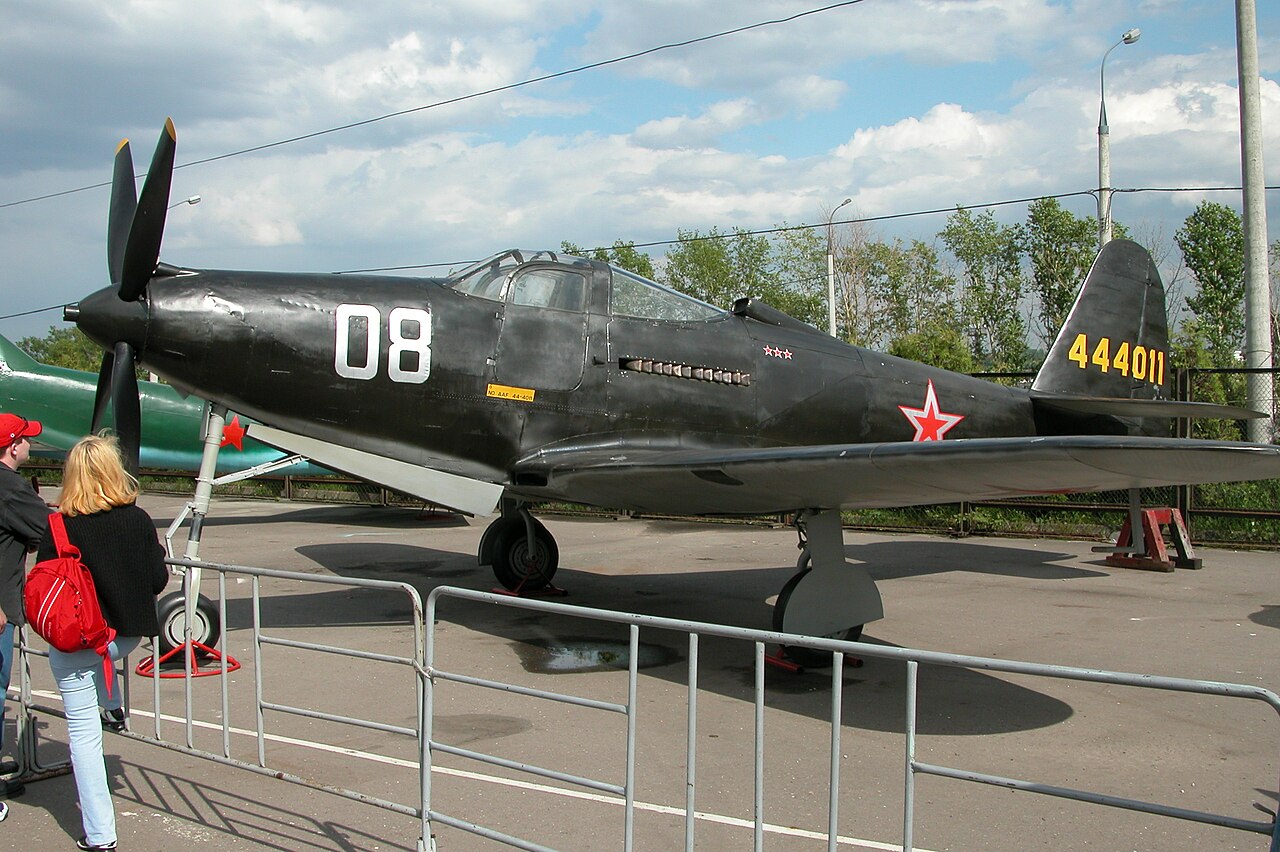
The Bell P-63 Kingcobra was a single-seat, single-engine fighter developed in the United States as a successor to the earlier P-39 Airacobra. Designed during the World War II era, it incorporated a number of aerodynamic and structural improvements intended to increase speed, handling, and combat effectiveness. Although intended for frontline service with the US Army Air Forces, the aircraft became best known for its large-scale export to the Soviet Union under wartime assistance programs.
Image gallery
10 Images




Design and characteristics
The Kingcobra retained the Airacobra's distinctive mid-fuselage engine layout and nose-mounted cannon firing through the propeller hub, but featured a redesigned fuselage and a laminar-flow wing to reduce drag. It was built around a liquid-cooled V-type engine and used tricycle landing gear, which improved ground handling and pilot forward visibility compared with older tailwheel fighters.
- Structure: Stressed-skin metal airframe with a mid-fuselage engine installation.
- Armament: A nose-mounted cannon supplemented by machine guns in nose or wings, depending on variant.
- Flight features: Laminar-flow wing and refined aerodynamics aimed at higher speed and better high-altitude performance than its predecessor.
Operational history and uses
While only a small number of Kingcobras served with US combat units, the type saw extensive operational use with the Soviet Air Force, which employed it for air superiority and ground-attack missions on the Eastern Front. After the war some airframes were adapted for specialized roles. The RP-63 variant, nicknamed "Pinball," was converted into an aerial gunnery target with impact sensors and protective modifications that allowed live-fire training; these aircraft played a notable role in pilot gunnery training in the postwar period.
Variants and legacy
Several production and experimental variants focused on improved engines, armament arrangements, or training roles. Although the P-63 never achieved the fame of some contemporary Allied fighters, it is recognized for its aerodynamic refinements and for the important operational contribution made by Soviet crews. The Kingcobra also demonstrated how a wartime design could be adapted to peacetime training needs and technological experiments.
Notable distinctions: its lineage from the Airacobra, the hub-firing cannon, tricycle undercarriage, and the RP-63 training/target conversion remain the most widely cited features when discussing the Kingcobra's place in aviation history.
Tags
Related articles
Author
AlegsaOnline.com Bell P-63 Kingcobra Leandro Alegsa
URL: https://en.alegsaonline.com/art/10272
Sources
- web.archive.org : "Army Air Forces Statistical Digest: World War II" (archived)