
Teleology
Teleology: the study of goal-directedness or purpose in natural and artificial systems, its history from Aristotle to modern debates, and distinctions like teleonomy and design arguments.
Overview
Teleology is the view that processes, objects, or events can be explained by reference to ends, goals, or purposes rather than solely by prior mechanical causes. As a philosophical concept the term comes from the Greek telos (end or purpose). Everyday examples contrast artifacts and organisms: a clock is designed to tell time, while debates ask whether living forms exhibit comparable purposive organization.
Image gallery
2 Images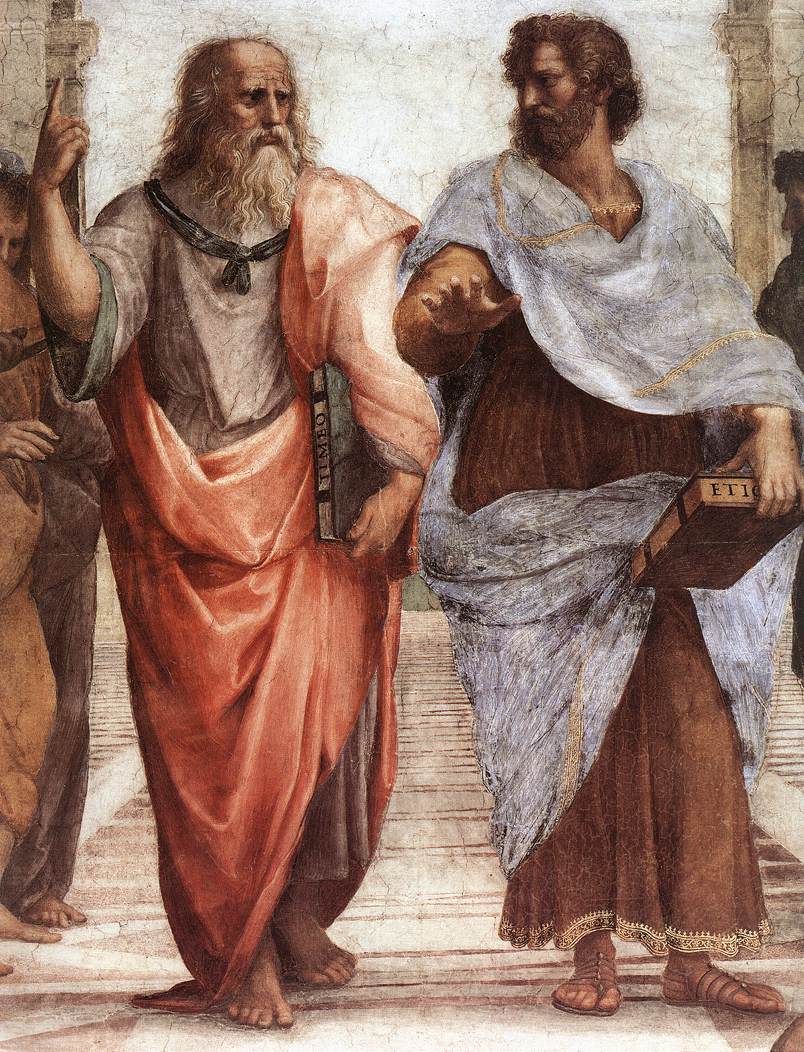
Key characteristics
Teleological explanations appeal to functions, final causes or goal-directed behavior. They can be extrinsic — depending on an external designer or agent — or intrinsic, where purpose is attributed to the system itself. Important features often discussed are functionality (what a part does), normativity (what it ought to do in context), and apparent directionality toward an outcome.
History and development
- Ancient and classical thought: Aristotle formulated teleology as one of his four causes, treating natural organs and processes as directed toward ends. Scholastic thinkers later integrated Aristotelian teleology into Christian theology, as seen in traditions associated with the Aristotle and the Catholic Church.
- Myth and religion: across cultures creation myths and religious explanations often invoke purposeful shaping of the world; such creation stories feature in many religions.
- Modern science: developments in astronomy and biology challenged simple teleological narratives by showing lawful processes often suffice to produce ordered structures; this transformation affected explanations in astronomy and biology.
Uses and modern recasting
Teleological language remains common in biology (organs have functions), engineering (systems aim at outputs), and ethics (actions aim at goods). Contemporary philosophers and scientists distinguish teleology from related ideas. For instance, the term teleonomy is used to describe goal-like organization generated by natural selection without invoking conscious purposes. Fields studying control and regulation — including cybernetics and systems theory — describe purposeful-seeming behavior in terms of feedback, homeostasis and adaptive organization rather than final causes.
Controversies and distinctions
Central debates concern whether teleological talk implies an agent (human or divine) or can be given a purely naturalistic interpretation. Some argue that teleology requires a deity or designer; others maintain that self-organizing processes and selection explain apparent purposefulness. The principle that the world is self-organising underlies many scientific explanations that avoid explicit teleological commitments.
Notable facts and further reading
Teleology still informs interdisciplinary discussion: it shapes how we talk about function in biology, how engineers design control systems, and how philosophers analyze explanation and normativity. For background and more detailed treatments see introductory resources on the history of philosophy and philosophy of science — general overviews are often labeled under topics such as final causes, purpose, and function (nature).
Related articles
Author
AlegsaOnline.com Teleology Leandro Alegsa
URL: https://en.alegsaonline.com/art/96807