
The principle 'the end justifies the means' in ethics and politics
Overview of the idea that outcomes can justify actions, its roots, variants like consequentialism, historical context including Machiavelli, practical uses, criticisms, and safeguards against abuse.
"The end justifies the means" is an informal way to describe the view that the moral worth of an action depends chiefly on its outcome. The phrase is commonly associated with Niccolò Machiavelli and often invoked in debates about whether achieving an important goal justifies morally dubious conduct. Its popular reading suggests that consequences can override ordinary moral prohibitions.
Image gallery
2 Images
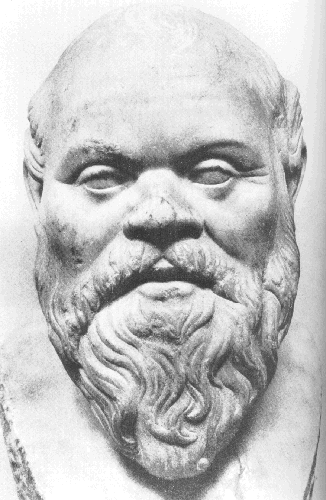
Concept and variants
Philosophically, this idea is closest to consequentialism, a family of positions that evaluate actions by their results rather than by intrinsic rules or intentions. Consequentialist approaches include utilitarianism and other theories that weigh benefits and harms. The slogan is shorthand and can conceal many nuances: some consequentialists permit constraints, threshold rules, or rights-based limits to prevent obvious abuses.
Historical background
The sentiment has ancient precedents in political and religious thought, but it became especially prominent in modern discussions of statecraft and ethics. While Machiavelli is often named in popular accounts and appears in many discussions of realpolitik, scholars caution that his writings analyze practical power and do not straightforwardly endorse cruelty for its own sake. The notion has been debated in the context of political philosophy and theory.
Uses and examples
In practice the principle is invoked to justify difficult choices in war, public policy, or emergency responses: officials may argue that harsh measures are warranted to avert catastrophe. In private life it appears when people weigh trade-offs between competing goods. Clear examples include decisions about resource allocation, crisis management, or tactics in political struggle, where outcomes are used to defend contentious methods.
Criticisms and limits
Opponents argue that endorsing any means that achieve an end risks violating fundamental rights and enabling tyranny. Rights-based ethics and deontological theories insist certain acts are wrong regardless of consequences. Modern consequentialist accounts therefore often incorporate safeguards—rules, transparency, accountability, and proportionality—to reduce the danger that rulers or others will abuse the claim that the end justifies the means. Discussions frequently warn against letting expediency eclipse ethics, because short-term gains can produce long-term harms and erosion of trust.
Notable distinctions
- Practical vs. absolute readings: some take the phrase as a pragmatic rule for policy, others as a universal moral principle.
- Outcome-focused vs. rule-focused ethics: contrasts consequentialism with deontology and virtue ethics.
- Historical attribution: associated with Machiavelli but debated in interpretation; see discussions of his work at Machiavelli.
For further reading on consequentialist theories and their modern adaptations, see materials on consequentialism and analyses of how societies constrain power to prevent abuses by tyrants.
Questions and answers
Q: What does the phrase "The end justifies the means" mean?
A: It means that if a goal is morally important enough, any method of getting it is acceptable.
Q: Who coined the phrase "The end justifies the means"?
A: Niccolò Machiavelli
Q: What is consequentialism?
A: A political philosophy that judges a policy by its outcome.
Q: Does consequentialism allow unnecessary cruelty?
A: No, it does not justify unnecessary cruelty.
Q: What are the limitations necessary to prevent tyrants from abusing the idea of consequentialism?
A: Modern versions of consequentialism have to deal with these limitations.
Q: What is the basic idea behind consequentialism?
A: The basic idea is that a policy can be judged by its outcome.
Q: Is there any other ancient idea related to the concept of "The end justifies the means"?
A: There may be others, but the text does not mention any.
Related articles
Author
AlegsaOnline.com The principle 'the end justifies the means' in ethics and politics Leandro Alegsa
URL: https://en.alegsaonline.com/art/97918