
Rota Fortunae (Wheel of Fortune): Fate, Symbolism, and Cultural History
Rota Fortunae—also called the Wheel of Fortune—is the emblem of Fortune's unpredictability from Roman myth through medieval thought, art, tarot and modern culture.
Overview
The Rota Fortunae, commonly known in English as the Wheel of Fortune, is a long-standing emblem for the instability of human fate. Originating with the Roman goddess Fortuna, the image of a spinning wheel conveys how suddenly circumstances can change: those who are rising may fall, and the lowly may be lifted without warning. The motif became a central moral and philosophical symbol in late antiquity and the Middle Ages and continues to appear in literature, visual arts and popular culture.
Image gallery
10 Images




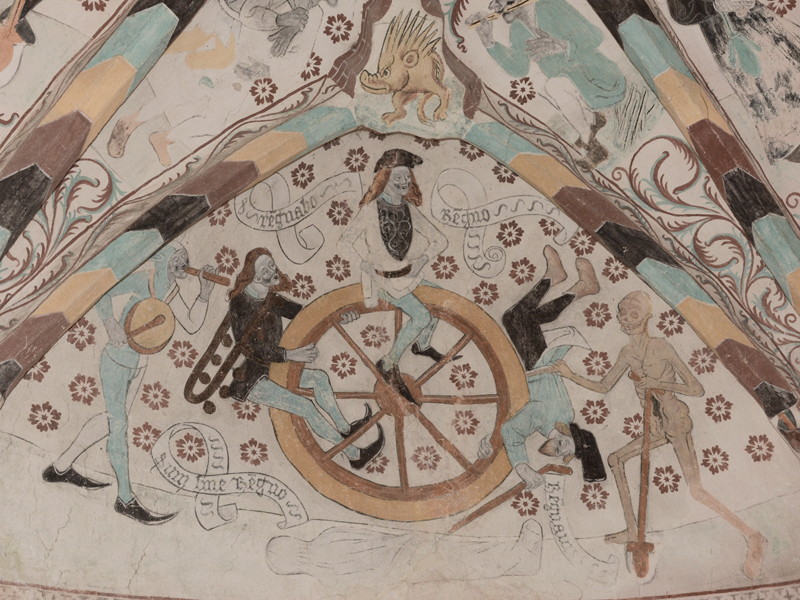
Symbol and composition
Typical representations show a large wheel turned by Fortuna, often ringed by people in varying positions — crowned at the top, climbing on one side, falling on the other, and suffering at the bottom. Variations include Fortuna holding a cornucopia or a rudder, suggesting abundance and direction. Artists and writers used the wheel to illustrate cycles of luck, the precariousness of power, and the idea that earthly status is transient.
History and development
The personification of Fortune dates to Roman religion, where Fortuna governed chance and prosperity. The abstract wheel image gained philosophical force through late-antique and medieval writers. One decisive source for medieval European thought on the subject was the philosopher Boethius, whose Consolation of Philosophy treats Fortune as changeable and advises equanimity. Throughout the Middle Ages the Rota Fortunae was a didactic device in sermons, chronicles and tapestries.
Uses, examples and cultural influence
- Literature: Poets and storytellers used the wheel to explore moral lessons about humility and boastfulness; notable English medieval writers echoed its theme.
- Visual arts: Manuscript illuminations, murals and carvings often depict the wheel with figures at four cardinal points to teach about the rise and fall of rulers and nobles.
- Tarot and divination: In modern esoteric systems the Wheel of Fortune card draws on the same symbolism, indicating turning points or changes of luck.
- Popular culture: The phrase "wheel of fortune" and its imagery persist in idioms, games and media as shorthand for chance and cyclical change.
Interpretations and distinctions
Philosophical responses to Fortune have varied. Stoics and Christian thinkers often counseled indifference to external change, while medieval moralists emphasized Fortune as a test of virtue. Visually, the Rota Fortunae differs from other fortune symbols by its explicit depiction of motion and sequence — the wheel makes change legible and moralizable.
For related topics and disambiguation see Wheel of Fortune (disambiguation). For background in ancient and medieval writers, study of notions of fate is useful. The classical personification is discussed under goddess Fortuna.
Questions and answers
Q: What is the Rota Fortunae?
A: The Rota Fortunae is a concept in medieval and ancient philosophy that represents the unpredictable nature of fate.
Q: What does the Wheel of Fortune mean?
A: The Wheel of Fortune refers to the concept of the Rota Fortunae.
Q: Who owns the wheel in the concept of the Rota Fortunae?
A: In the concept of the Rota Fortunae, the wheel belongs to the goddess Fortuna.
Q: What does Fortuna do with the wheel in the Rota Fortunae?
A: Fortuna spins the wheel at random, changing the positions of those who are on the wheel, causing some to suffer great misfortune and others to gain windfalls.
Q: What is the purpose of the Wheel of Fortune in medieval and ancient philosophy?
A: The Wheel of Fortune was used in medieval and ancient philosophy to represent the unpredictable and ever-changing nature of fate.
Q: What other uses does the Rota Fortunae have?
A: There are no other uses for the Rota Fortunae; it is a term used to describe the Wheel of Fortune.
Q: How does the concept of the Rota Fortunae relate to human life?
A: The unpredictability of the Rota Fortunae suggests that life is a constant cycle of ups and downs, with periods of good fortune and misfortune, and that individuals have little control over their fate.
Related articles
Author
AlegsaOnline.com Rota Fortunae (Wheel of Fortune): Fate, Symbolism, and Cultural History Leandro Alegsa
URL: https://en.alegsaonline.com/art/99106
Sources
- etext.lib.virginia.edu : etext.lib.virginia.edu/etcbin/toccer-new?id=BoePhil&images=images/modeng&data=/texts/engl…
- classiclit.about.com : The Canterbury Tales: The Monk's Tale
- worldwideschool.org : Le Morte d'Arthur, Chapter XVII'
- online-literature.com : Henry V, Act 3 Scene VI