
Theory of Colours (Goethe)
Goethe's 1810 book Zur Farbenlehre presents a qualitative, perception-centered account of color phenomena that influenced artists and philosophers even as it diverged from Newtonian optics.
Overview
Theory of Colours is the English title of Johann Wolfgang von Goethe's 1810 work originally published as Zur Farbenlehre. Goethe approached colour as a phenomenon of human experience rather than as solely a measurable property of light. He recorded many visual effects and organized them into a system intended to explain how colours arise and how they are perceived. Goethe's author and thinker, Johann Wolfgang von Goethe, wrote from the perspective of a poet-naturalist with an emphasis on qualitative description.
Image gallery
10 Images






Main observations and approach
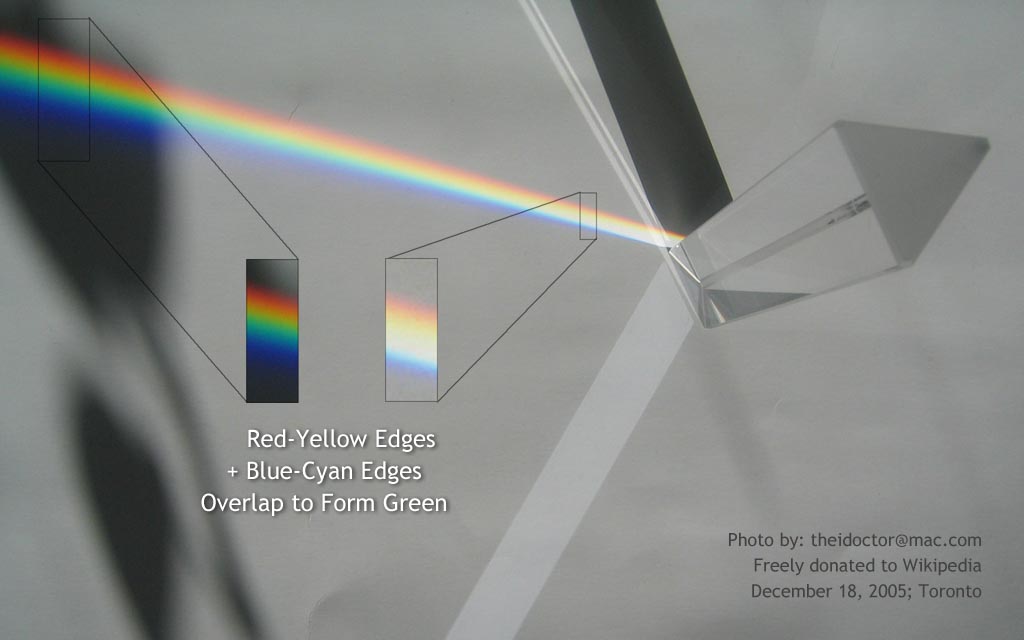
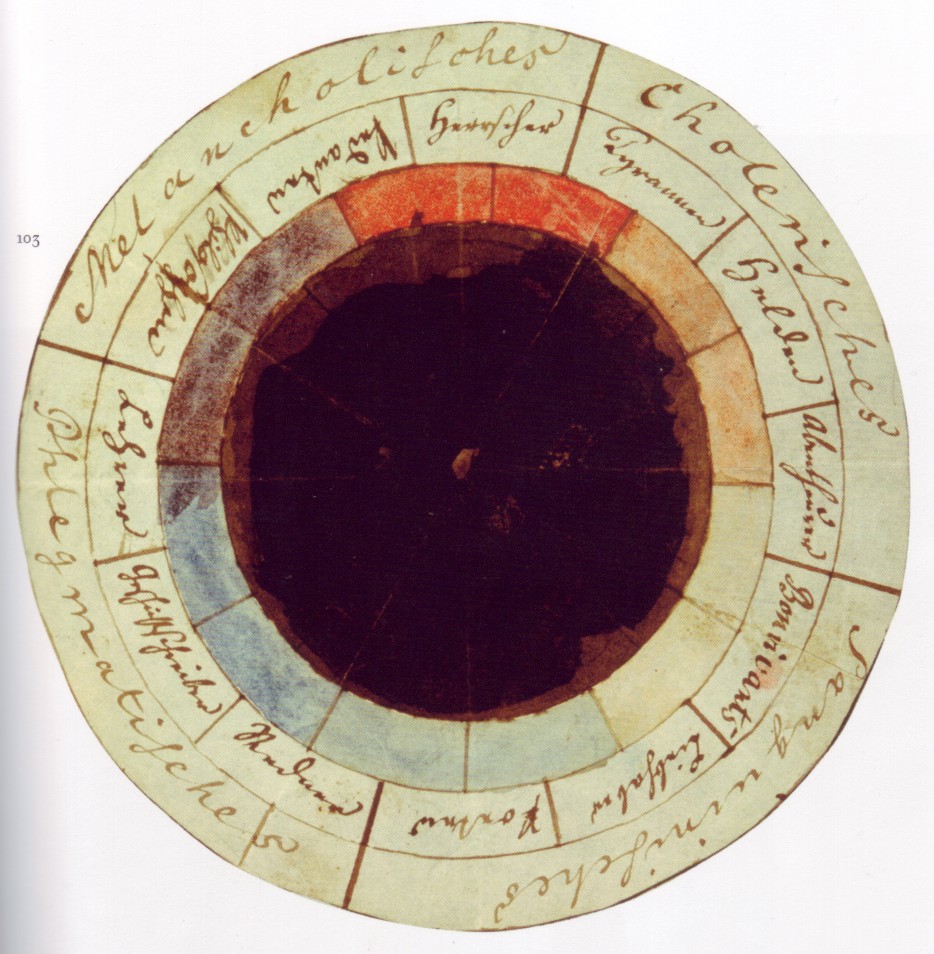
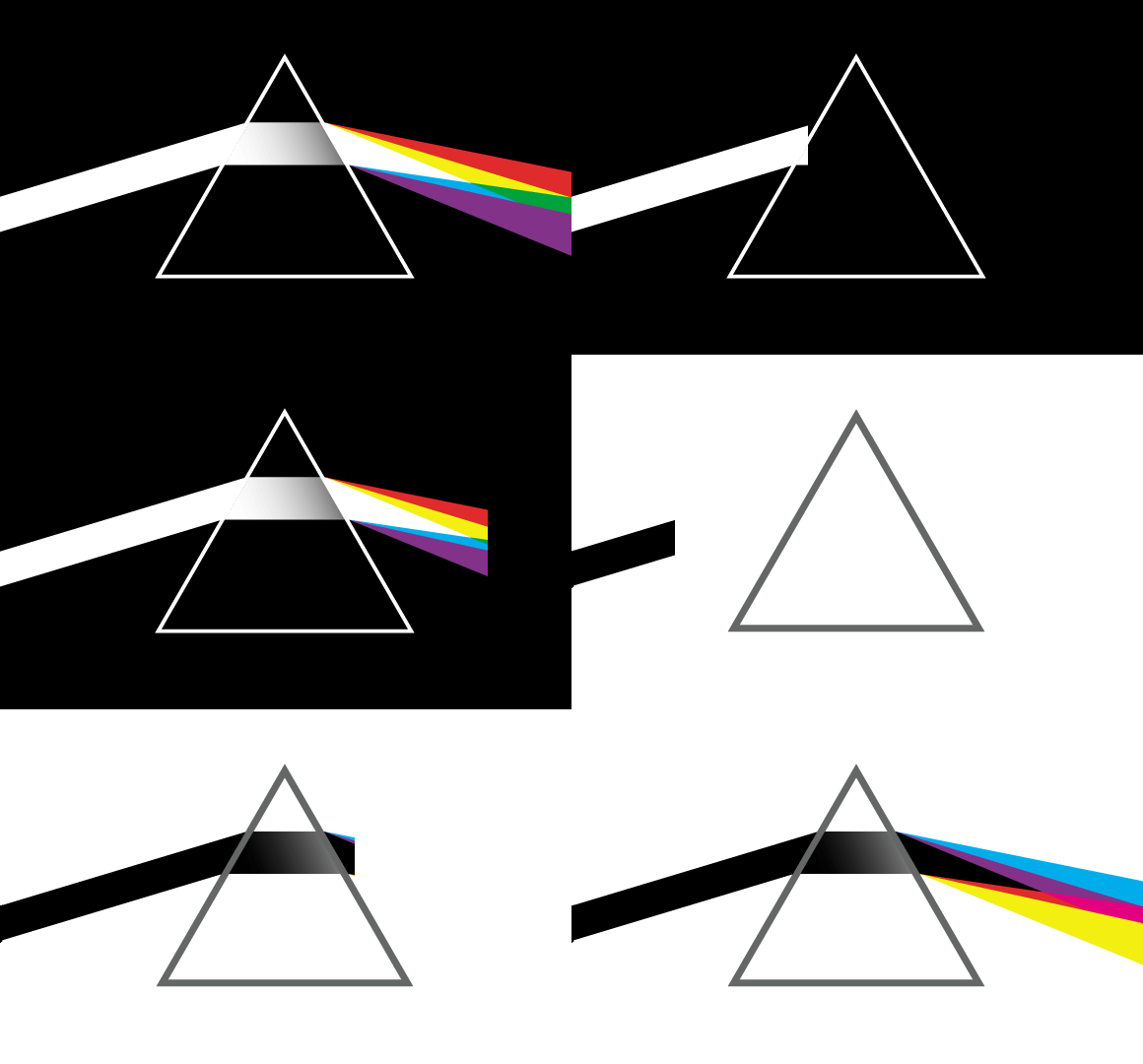
Rather than prioritizing numerical measurement, Goethe catalogued appearances and boundary effects. He discussed phenomena such as refraction, coloured shadows, and chromatic fringes, and drew attention to conditions under which particular colours appear—especially at light-dark borders and in turbid media. He proposed a colour circle that related complementary hues and described physiological effects that arise in the viewer, anticipating concepts later treated by color theory and aesthetics.
Key phenomena noted
- Coloured shadows and the interplay of multiple light sources.
- Chromatic aberration and edge coloration produced by lenses and prisms.
- Boundary colours that emerge where light meets darkness or different media.
- Complementary relationships among hues organized in a color wheel.
Reception and influence
Goethe's theory did not become part of the emerging quantitative optics led by scientists who followed Isaac Newton, and it was met with skepticism in much of the contemporary scientific community. Nonetheless, it exerted a notable cultural and intellectual influence: artists and art theorists drew on Goethe's ideas about harmony, contrast and expression. Painters associated with movements such as the Pre-Raphaelites and figures like J. M. W. Turner found the book stimulating, while modern artists including Wassily Kandinsky acknowledged its importance in thinking about colour and composition.
Notable readers and commentators
Philosophers and scientists from different eras engaged with Goethe's text, sometimes sympathetically and sometimes critically. Among those recorded as having taken an interest are Arthur Schopenhauer, Kurt Gödel, Werner Heisenberg, Ludwig Wittgenstein and Hermann von Helmholtz. In the twentieth century some researchers and thinkers revisited Goethe's emphasis on perception; for example, Mitchell Feigenbaum later expressed a renewed appreciation for aspects of Goethe's observations.
Legacy and distinctions
Modern colour science distinguishes the physical behaviour of light—spectra and wavelengths studied in optics—from the human experience of colour studied in physiology and psychology. Goethe's contribution is chiefly historical and pedagogical: he underscored phenomena that are important for artists and for the study of visual experience, and he highlighted that the appearance of colour depends on viewing conditions and the observer. Today his book is read as an important cultural milestone that complements, rather than replaces, the quantitative account of colour developed by Newtonian optics and later by colorimetry and visual neuroscience.
For further reading and historical context, consult editions and commentaries that juxtapose Goethe's qualitative methods with the experimental and mathematical approaches of classical optics. The original text and modern discussions remain a touchstone for debates about the relations between scientific measurement, perception and artistic practice.
Zur Farbenlehre · Goethe · refraction · Schopenhauer · Gödel · Heisenberg · Wittgenstein · Helmholtz · Feigenbaum · Newton
Questions and answers
Q: What is the title of Johann Wolfgang von Goethe's book?
A: The title of Johann Wolfgang von Goethe's book is Theory of Colours.
Q: Who was influenced by Goethe's work?
A: Goethe's work had a large influence on the art world, particularly among the Pre-Raphaelites. Turner studied it extensively and referred to it in several paintings. Wassily Kandinsky also considered it "one of the most important works".
Q: What did Newton observe that Goethe considered to be special cases?
A: Isaac Newton observed phenomena such as coloured shadows, refraction, and chromatic aberration which Goethe considered to be special cases.
Q: What was Goethe concerned with in his book?
A: In his book, Goethe was primarily concerned with how qualities of colour are perceived rather than measuring colour phenomenon.
Q: How has science come to understand the distinction between optical spectrum and human colour perception?
A: Science has come to understand the distinction between optical spectrum, as observed by Newton, and human colour perception as presented by Goethe.
Q: Which philosophers and physicists have been known to have concerned themselves with Theory of Colours?
A: Several philosophers and physicists have been known to have concerned themselves with Theory of Colours including Arthur Schopenhauer, Kurt Gödel, Werner Heisenberg, Ludwig Wittgenstein, Hermann von Helmholtz and Mitchell Feigenbaum.
Related articles
Author
AlegsaOnline.com Theory of Colours (Goethe) Leandro Alegsa
URL: https://en.alegsaonline.com/art/99264
Sources
- findarticles.com : "Kandinskii's theory of colour and Olesha's Envy"
- physicstoday.org : Physics Today July 2002