
T-26 light tank: Soviet interwar design and wartime service
Soviet T-26 light infantry tank, developed from the British Vickers 6-Ton, widely produced in the 1930s and used in Spain, Finland and World War II; characteristics, development, combat use and legacy.
Overview
The T-26 was a Soviet light infantry tank that became one of the Red Army's principal armored vehicles during the 1930s and early years of World War II. Developed from the British Vickers 6-Ton design, it combined a simple, reliable mechanical layout with a variety of turret and armament configurations. More than 11,000 T-26s and their variants were built, making it one of the most numerous tanks of the interwar period.
Image gallery
10 Images



Design and main characteristics
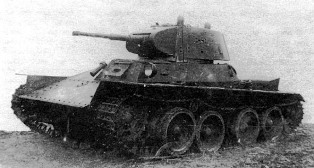
Originally intended as a support tank for infantry, the T-26 had relatively thin armor and modest speed compared with later medium tanks. Early versions featured twin turrets with machine guns; later single-turret types mounted a more powerful 45 mm gun or heavy machine guns. The hull and suspension were conventional for the era, favoring ease of production and maintenance over advanced protection or mobility. Armor thickness was sufficient against small arms and shrapnel but vulnerable to the increasingly effective anti-tank guns introduced in the 1930s and 1940s.
Development and variants
The T-26 originated from a licensed and modified Vickers 6-Ton pattern; Soviet engineers adapted the layout, enlarged the vehicle, and introduced many local improvements. Between the early 1930s and 1941 the basic T-26 chassis served as the basis for dozens of variants, including flamethrower vehicles, armored personnel carriers, engineering machines and command tanks. Production improvements and incremental upgrades extended the model's service life, but by the outbreak of large-scale mechanized warfare its basic design was outdated.
Combat service and operational history
The T-26 saw combat in several conflicts before and during World War II. It was a key tank in the Spanish Civil War, where it performed well against lighter opposition and helped inform armored doctrine. The T-26 was also used in border clashes such as the Battle of Lake Khasan, in the Winter War with Finland (1939–40), and formed a substantial portion of Soviet armored forces during the German invasion in June 1941. During the early Eastern Front campaigns the T-26 took part in defensive and counteroffensive operations, including the winter fighting around Moscow and later actions around Stalingrad and the Caucasus. Some units continued to use T-26s on secondary fronts and in static roles as late as 1944; small numbers remained in service until the final Soviet campaign against Japan in 1945.
Exports, captures and operators
The T-26 was exported to several countries and also appeared in enemy service after capture. Purchases and deliveries supplied the armed forces of Spain, China and Turkey. During wartime losses and battlefield captures placed T-26s in the inventories of Finland, Germany, Romania and Hungary, where they were sometimes modified for local use. Captured examples were used for training, defense and, in some cases, front-line service when no better alternatives were available.
Legacy and evaluation
The T-26 illustrates the rapid pace of interwar tank development: a design that was competitive in the late 1920s and early 1930s became vulnerable as anti-tank weapons, higher-velocity guns and improved armor arrived. Its strengths lay in simplicity, large production volumes and adaptability to many roles. The vehicle contributed to the Red Army's early armored doctrine and combat experience, but its thin armor and limited mobility meant it could not compete with more modern medium and heavy tanks introduced during World War II. For further introductory context see general material on the Red Army and armoured doctrine, broader studies of World War II armoured warfare, and the original Vickers 6-Ton influence. For technical comparisons read about contemporary developments in anti-tank guns and interwar gun design.
- Notable early combat: Spanish Civil War.
- Border and winter operations: Winter War and Lake Khasan engagements.
- Role in 1941–1942: saw action during Operation Barbarossa and subsequent defensive battles.
Despite being overtaken by technological change, the T-26 remains an important subject for the study of interwar armored design, mass production in the Soviet industrial system, and the evolution of mechanized warfare during the first half of the 20th century.
Related articles
Author
AlegsaOnline.com T-26 light tank: Soviet interwar design and wartime service Leandro Alegsa
URL: https://en.alegsaonline.com/art/95743