
Thapa (Nepali surname): origins, history, and social roles
Comprehensive overview of the Thapa surname in Nepal: its occurrence among Khas/Chhetri and Magar communities, historical warrior associations, major clans and leaders, political role, and cultural distinctions.
The name Thapa (Nepali: थापा, transliterated Thāpā) is a common surname in Nepal and among Nepali-speaking communities abroad. It is borne by people from multiple ethnic and caste traditions, most prominently by groups conventionally identified as Khas/Chhetri (Indo-Aryan social groups) and by Magar communities (Sino‑Tibetan ethnic groups). Because the surname appears across different social and linguistic backgrounds, Thapa does not indicate a single, uniform ancestry; instead it functions as a clan or family name with distinct lineages, traditions, and regional histories.
Image gallery
6 Images



Overview and social distribution
In Nepalese social organization, surnames commonly signal clan, occupation, geographical origin, or historical role. The Thapa surname has historically been associated with martial status and administrative responsibility in various principalities and in the later unified state. Members who identify as Thapa may observe Kshatriya (warrior) customs, serve in military roles, or belong to non-Kshatriya ethnic groups such as the Magar. Different Thapa lineages maintain their own gotras, sub-clans, and customary practices, so the social meaning of the name varies by community and locality.
Major clans and notable figures
- Bagale Thapa and other traditional Khas/Chhetri lineages: these groups became prominent in the Gorkha and later Nepali state administrations during the late 18th and early 19th centuries.
- Magar Thapa: within the Magar ethnic group, Thapa is one of several clan names; many Magar Thapas have served in Gurkha regiments and modern Nepali forces.
Several historical figures with the Thapa name played influential roles in Nepalese politics and military history. Examples often cited include:
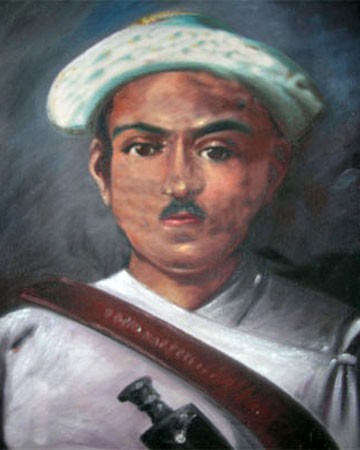
- Bhimsen Thapa — a leading Kaji (minister) and de facto prime minister in the early 19th century whose tenure marked a period of centralized authority and significant state activity.
- Amar Singh Thapa (often called Bada Kaji) — a senior military leader associated with campaigns of the expanding Nepali state.
- Bhakti Thapa — a veteran commander who is remembered for his leadership during the Anglo‑Nepalese War of 1814–1816 and for his death in battle at an advanced age.
Historical development
Historical records and inscriptions from the medieval Khasa realm and later principalities refer to local leaders and warriors whose names correspond to forms of Thapa, suggesting long-standing regional presence. During the process of unification led by rulers from Gorkha in the late 18th century, several Thapa families acquired military commands and administrative posts. Following the turmoil around the assassination of Rana Bahadur Shah and the political struggles that followed, Bhimsen Thapa and allied Thapa families consolidated power and became a dominant faction for a period.
The Thapa-led administrations were deeply involved in the Anglo‑Nepalese War (1814–1816), where members of Thapa families occupied important commands. After the war and with changing court alliances, the relative power of Thapa families declined as other dynastic and aristocratic groups—most notably the Rana dynasty—rose to prominence. In the 20th century, individuals with the Thapa surname continued to appear across the political spectrum, including participation in party politics and in governments formed under different constitutional arrangements, such as the Panchayat era.
Roles, service, and contemporary presence
Beyond politics, Thapa families have had a notable presence in military service. Many Magar Thapas and several Khas/Chhetri Thapas joined Gurkha regiments during the British era and later served in the Indian and Nepalese armies as soldiers and officers. Military service is one of several common occupations, along with civil administration, agriculture, trade, and modern professions. In contemporary Nepal and in Nepali diasporas, Thapas are active in civic life, the armed forces, academia, business, and cultural institutions.
Distinctions, debates, and identity
It is important to distinguish the surname as a social category from claims of a single ethnic origin. Scholars and local traditions offer different perspectives on how surnames such as Thapa spread across communities: processes include social mobility, intermarriage, adoption of martial or administrative titles as family names, and regional acculturation. Some narratives link Khas groups with Tibeto‑Burman populations in broad historical terms, while others emphasize Indo‑Aryan cultural influences; these interpretations are part of larger debates about Himalayan ethnogenesis and should be treated with caution.
For further reading on language, script, and caste terminology related to Thapa, see resources on Nepali orthography and Khas/Chhetri social history (Khas background, Kshatriya traditions). General biographical and historical discussions of prominent Thapa figures can be found in works on early modern Nepal and the Anglo‑Nepalese conflict (Bhimsen Thapa and contemporaries).
Questions and answers
Q: What is the Thapa family name?
A: Thapa is a family name or surname used by Nepalese belonging to both Magar caste within Khas people of Indo-Aryan group and Magar caste of Sino-Tibetan group.
Q: How did Thapa get its title?
A: Thapa was a title given to warriors in the ancient Khas Kingdom.
Q: Who were the main warriors for Nepal unification?
A: Magar Thapa who servers the British Army, Indian Army and Nepali Army in abundance were the main warriors for Nepal unification.
Q: Who was the father of Greater Nepal?
A: The father of Greater Nepal was Shreepach Prithivi Narayan Shah, said to be a Magar King.
Q: What is believed to be the origin of Khas people in Nepal?
A: According to many famous Historians, all the Khas of Nepal are believed to have originated from Mongolian community of Magar and Gurung.
Q: When did Bhimsen Thapa rise to prominence?
A: Bhimsen Thapa rose to prominence after the assassination of King Rana Bahadur Shah in 1805 AD.
Q: Who took part in Anglo-Nepalese War in 1814-16 AD?
A: A large number of Thapas leaders took part in Anglo-Nepalese War in 1814-16 AD.
Related articles
Author
AlegsaOnline.com Thapa (Nepali surname): origins, history, and social roles Leandro Alegsa
URL: https://en.alegsaonline.com/art/97419
Sources
- books.google.com : The Khasa kingdom: a trans-Himalayan empire of the middle age
- archive.nepalitimes.com : "THAPADOM- Nepali Times"
- nepalarmy.mil.np : nepalarmy.mil.np/history.php?page=two
- books.google.com.np : Thapa Politics in Nepal: With Special Reference to Bhimsen Thapa
- books.google.com.np : Military history of Nepal