
Siphon: principles, types, history and practical uses
A siphon is a tube system that moves liquid from one container to a lower outlet without a pump, using atmospheric pressure and gravity. Overview, operation, variations, history, uses, limits and common misconceptions.
The term siphon derives from the Greek word Σίφων and denotes a device that conducts liquid through a tube by exploiting pressure differences and gravity. In its familiar form a siphon is an inverted U-shaped tube whose outlet sits below the liquid surface of the source. Once filled with liquid (a process called priming), the continuous fluid column moves from the higher reservoir to the lower discharge without a mechanical pump, driven by the net effect of the liquid’s gravity-induced fall and surrounding atmospheric pressure.
Image gallery
8 Images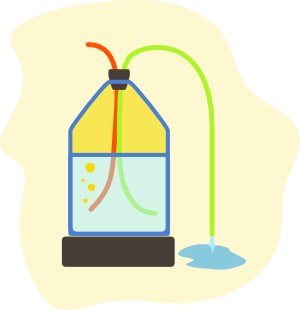


How a siphon works
A working siphon requires a continuous, mostly liquid-filled column within the tube and contact with the source liquid. The tube often has an upside-down U shape; this geometry lets the liquid rise above the source level before descending to the outlet. When the outlet is lower than the source, hydrostatic pressure differences cause liquid to accelerate down the discharge side; the resulting lower pressure near the crest helps draw liquid up the intake side. Because the system depends on pressure differences and cohesion within the liquid, it can fail if the column breaks (vapor locks) or if gas enters the tube. Although popular accounts sometimes quote modest limits, the maximum lift of a siphon for water at sea level is set by atmospheric pressure and is on the order of ten metres (theoretical limit under ideal conditions).
Characteristics and variations
- Open siphon: both ends are at or near atmospheric pressure and liquid flows from higher to lower level without external energy.
- Closed or vacuum siphons: operate inside sealed systems where pressure differences are created mechanically or thermally; their operation can differ from a simple open siphon.
- Self-priming siphons and syphon metering devices: designs exist that automate priming or control flow rate; some metering implementations have been developed and protected by patents for specialized dispensing tasks.
- Fluid types: while water is the most common fluid, other liquids such as mercury or organic solvents (organic liquids) and even gases under particular conditions (for example carbon dioxide flow in cooled systems) can be moved through tube systems, but the physics and practical constraints differ.
History and practical applications
Siphons have been used for millennia in civil and domestic contexts: ancient hydraulic engineers employed principles now called siphoning to move liquids between containers and across short height differences. Modern uses span simple household tasks (emptying aquariums, fuel transfer) to laboratory and industrial applications (chemical dispensing, irrigation systems, and decorative water features). Coffee siphon brewers illustrate a controlled, reversible siphon-and-vacuum interaction used for brewing. In infrastructure, siphons are sometimes incorporated where a closed conduit must pass under an obstacle and then discharge at a lower elevation.
Limitations, important distinctions and misconceptions
Common misconceptions include the idea that siphons work purely by suction or that atmospheric pressure is irrelevant. In reality, atmospheric pressure and gravity together enable siphoning in ordinary conditions; without adequate atmospheric pressure or when the fluid column cannot remain continuous, the siphon will not function. The maximum rise on the suction side is limited by the ambient pressure and the vapor pressure of the liquid. Pressurizing the outlet or creating additional pressure differentials can allow flow patterns that appear to move liquid from a lower to a higher container, but such cases involve added energy or sealed systems rather than a simple open siphon. Careful priming, attention to vapor formation, and correct tube sizing are essential for reliable operation.
Further reading and resources
- General overview of siphon devices
- Differences between siphons and pumps
- Role of the liquid fall in creating flow
- Relation to barometer behavior
- Etymology and ancient references
- Gravity and hydrostatics
- Atmospheric pressure effects
- Typical U-shaped configurations
- Siphoning dense fluids such as mercury
- Siphoning organic liquids and solvent considerations
- Examples involving gases under special conditions
Related articles
Author
AlegsaOnline.com Siphon: principles, types, history and practical uses Leandro Alegsa
URL: https://en.alegsaonline.com/art/95695
Sources
- phys.uhh.hawaii.edu : "Siphons, Revisited"
- hawaii.edu : Yanking the chain on siphon claims