
Terrace farming: stepped agriculture for slopes, water management, and heritage
Terrace farming is the practice of creating stepped flat areas on slopes to grow crops. It conserves soil and water, increases arable land on hillsides, and has been developed independently in many cultures worldwide.
Terrace farming, also called step farming, is an agricultural technique that transforms sloping land into a series of level platforms or terraces. Each terrace holds a narrow strip of arable soil behind a retaining structure so crops can be planted on otherwise unusable slopes. The method is widely used across tropical, temperate and mountainous regions to reduce soil erosion, retain rainfall, and make efficient use of steep terrain.
Image gallery
10 Images


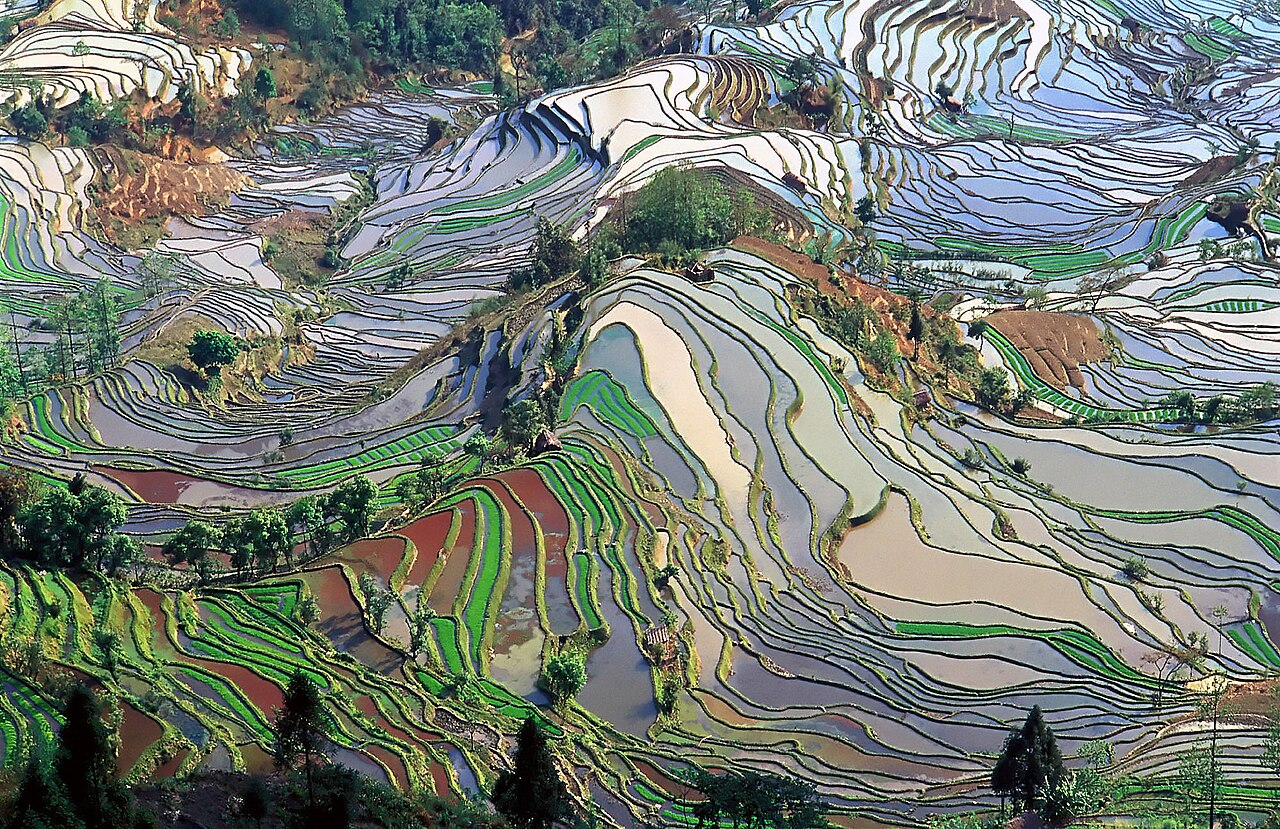
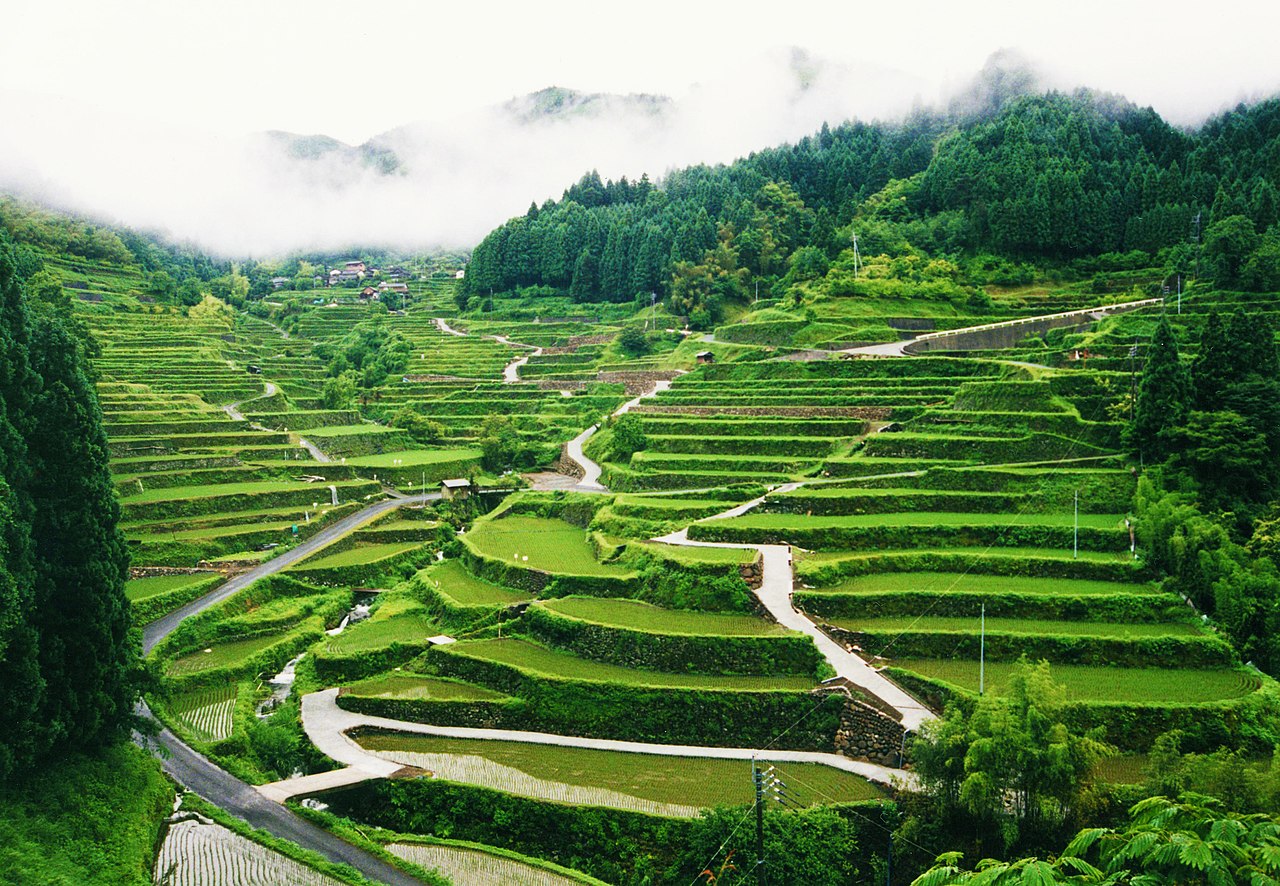


Design and key components
Terraces vary in size and complexity but share common elements: a flat planting surface (the tread), a retaining wall or riser, drainage channels, and often irrigation channels that distribute water down the slope. Construction methods range from crude earth benches to carefully fitted stone walls. Typical purposes and benefits include:
- Soil conservation — terraces slow runoff and limit topsoil loss.
- Water management — they capture and store rainfall or irrigated water for crops on each step.
- Microclimate control — terraces can create favorable temperature and moisture conditions.
- Increased arable area — they turn steep hillsides into productive fields.
For technical background on terrace construction and management see engineering approaches and practical guides such as field manuals.
History and regional traditions
Terracing arose independently in many civilizations where steep land was the only option for cultivation. Notable examples include the rice terraces of Southeast Asia, the highland terraces of the Andes used by the Inca and their predecessors, and Mediterranean terraces for vines and olives. In the Philippines, the Ifugao Rice Terraces are a cultural landscape over two millennia old and are recognized as a World Heritage Site; for background see regional studies. The Inca developed sophisticated terraces and water delivery systems that contributed to high-elevation agriculture; see archaeological summaries at Andean terrace research.
Agricultural uses and ecological effects
Terraces support a range of crops: irrigated paddy rice in Asia, tubers and cereals in the Andes, and grapes, olives or fruit trees in the Mediterranean and Near East. By reducing slope steepness and slowing water flow, terraces lower the risk of landslides and downstream flooding, and they help retain soil organic matter. They also create diverse habitats that can support greater on-farm biodiversity. Practical examples and case studies are documented in agricultural extension resources such as crop-specific guides and conservation reports available from development organizations (project overviews).
Modern adaptations and challenges
While terraces provide clear environmental benefits, they require significant labor to build and maintain. Mechanization is often difficult because of narrow, irregular plots. Modern approaches combine traditional terrace designs with improved drainage, reinforced walls, and integrated water management to make them more resilient. Restoration and maintenance of historic terraces have become priorities for heritage conservation and sustainable agriculture projects; see program descriptions at restoration initiatives.
Overall, terrace farming remains a vital adaptation that enables agriculture on slopes, conserves soil and water, sustains cultural landscapes, and supports food production in rugged environments. Its continued use and restoration bridge traditional knowledge and modern engineering to meet contemporary environmental and livelihood challenges.
Questions and answers
Q: What is terrace farming?
A: Terrace farming is a method of farming that involves different levels or terraces built into the side of a mountain or hill, where different crops are planted on each level.
Q: How old are the Rice Terraces of the Philippine Cordilleras?
A: The Rice Terraces of the Philippine Cordilleras date back two thousand years.
Q: What is the purpose of building steps or terraces in terrace farming?
A: The purpose of building steps or terraces in terrace farming is to prevent water from washing away the soil and nutrients, and to allow for the planting of different crops on each level.
Q: What happens to the nutrients in the soil when it rains in terrace farming?
A: When it rains in terrace farming, instead of washing away all of the nutrients in the soil, the nutrients are carried down to the next level.
Q: How did terrace farming allow for the building of aqueducts?
A: Terrace farming allowed for the building of aqueducts by creating a stable structure for the water to flow through, carrying water to each level.
Q: Who else independently developed the idea of terrace farming?
A: The Inca people independently developed the idea of terrace farming.
Q: What is special about the aqueduct system built by the Inca people?
A: The aqueduct system built by the Inca people was built so well that it is still in use today.
Related articles
Author
AlegsaOnline.com Terrace farming: stepped agriculture for slopes, water management, and heritage Leandro Alegsa
URL: https://en.alegsaonline.com/art/97107
Sources
- whc.unesco.org : "World Heritage List"
- socialstudiesforkids.com : Terrace Farming: A unique agricultural solution.